Muse Image

Muse Image is Meta's flagship image generation model from Meta Superintelligence Labs. It is built for prompt-faithful image creation, precision editing, and multi-reference composition, with strong text rendering and the ability to refine existing photos through localized markup-based edits. Meta positions it as an agentic image model that plans layouts, uses search and coding tools to improve accuracy, blends multiple visual references intelligently, and handles both creative generation and practical visual tasks such as infographics, QR codes, restorations, product-style mockups, and photobomber removal.
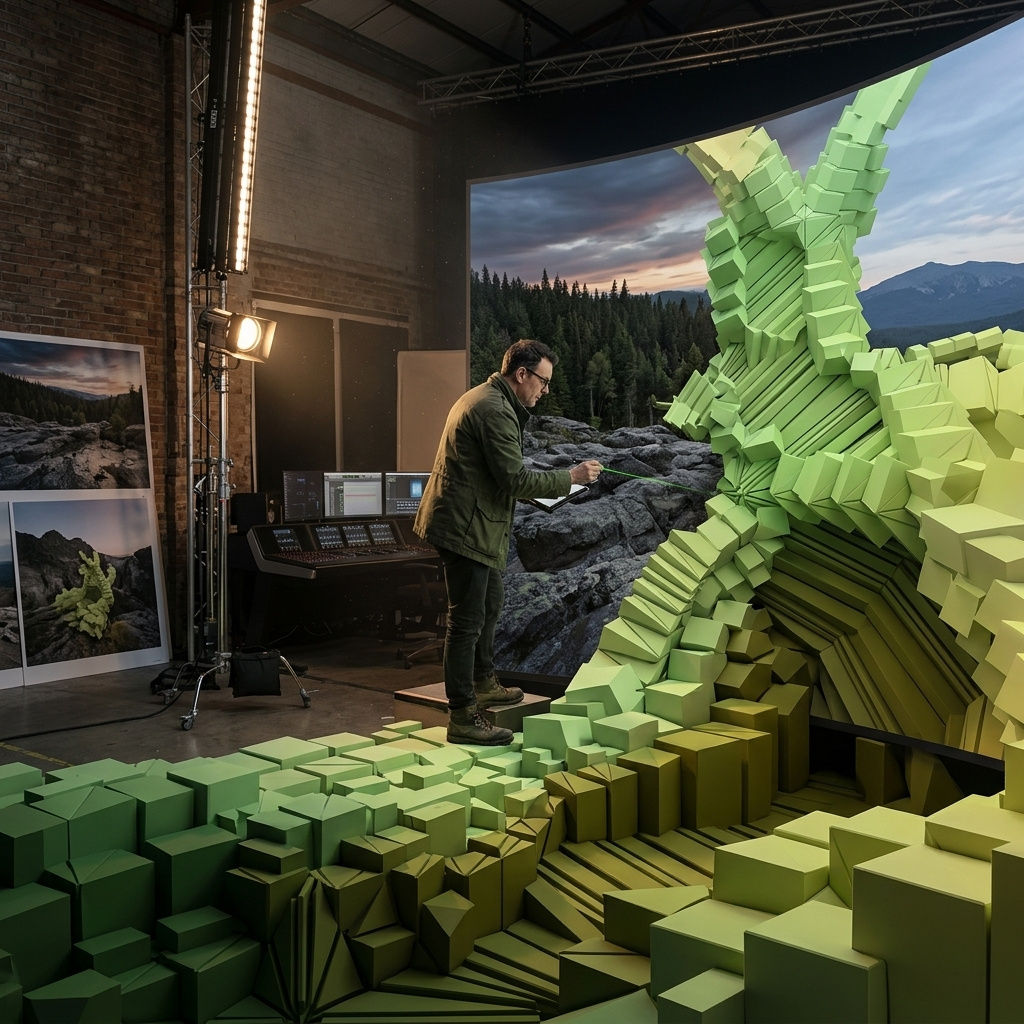
Prompting
How to prompt Muse Image: writing a brief it can plan a layout from, setting the thinking level, picking one of the eight size pairs, and working without a seed.
Introduction
Muse Image is Meta's image model from Meta Superintelligence Labs, and it plans the image before it renders one. The request arrives as a single instruction. The model reads all of it, works out a layout, reaches for its own tools when the brief needs a fact or a visual reference, then checks the result against what you asked for and repairs what missed, either by editing one region or by rendering again. What comes back is the image at the end of that loop.
That changes what a prompt is worth. A brief that names the layout, the props, the camera, and the light is read as a specification rather than as a bag of keywords, and the planning pass spends its effort on the things you wrote down.

A product-page hero photograph for a modular carry-on suitcase brand. A matte charcoal hard-shell carry-on lies open on a low oak bench in a bright hotel room, the left compartment packed with three folded linen shirts in cream and sand and a slim navy packing cube, the right compartment holding a rolled grey knit and a small leather wash bag. A passport and a pair of tortoiseshell sunglasses sit on the bench beside the case. Late morning daylight through a tall window on the left throws the soft shadow of the window frame across the pale plaster wall behind. Bench-height shot from a three-quarter angle, 45mm lens, shallow depth of field with the open case sharp and the bed behind it falling out of focus. Photoreal commercial product photography, warm neutral palette.
This guide covers the request shape, how to write a brief the planner can use, the two thinking levels, the eight size pairs, and how to work with a model that renders something different on every call. Every example on this page is a plain text-to-image request with settings.shell, settings.webSearch, and settings.imageSearch left at their defaults, so the model can still reach for code or search when it decides a prompt needs one.
The request
A call needs model and positivePrompt. Everything else has a default: the image comes back at 1600 × 1600 and the model plans at its high thinking level unless you say otherwise.
import { createClient } from '@runware/sdk'

const client = await createClient({ apiKey: process.env.RUNWARE_API_KEY })
await client.connect()

const [result] = await client.run({
  model: 'meta:muse@image',
  positivePrompt: 'A product-page hero photograph for a modular carry-on suitcase brand. A matte charcoal hard-shell carry-on lies open on a low oak bench in a bright hotel room, the left compartment packed with three folded linen shirts in cream and sand and a slim navy packing cube, the right compartment holding a rolled grey knit and a small leather wash bag. A passport and a pair of tortoiseshell sunglasses sit on the bench beside the case. Late morning daylight through a tall window on the left throws the soft shadow of the window frame across the pale plaster wall behind. Bench-height shot from a three-quarter angle, 45mm lens, shallow depth of field with the open case sharp and the bed behind it falling out of focus. Photoreal commercial product photography, warm neutral palette.',
  width: 1920,
  height: 1280
})
import asyncio
import os
from runware import Runware
async def main():
async with Runware(api_key=os.environ["RUNWARE_API_KEY"]) as client:
results = await client.run({
"model": "meta:muse@image",
"positivePrompt": "A product-page hero photograph for a modular carry-on suitcase brand. A matte charcoal hard-shell carry-on lies open on a low oak bench in a bright hotel room, the left compartment packed with three folded linen shirts in cream and sand and a slim navy packing cube, the right compartment holding a rolled grey knit and a small leather wash bag. A passport and a pair of tortoiseshell sunglasses sit on the bench beside the case. Late morning daylight through a tall window on the left throws the soft shadow of the window frame across the pale plaster wall behind. Bench-height shot from a three-quarter angle, 45mm lens, shallow depth of field with the open case sharp and the bed behind it falling out of focus. Photoreal commercial product photography, warm neutral palette.",
"width": 1920,
"height": 1280
})
asyncio.run(main())curl https://api.runware.ai/v1 \
-H "Authorization: Bearer $RUNWARE_API_KEY" \
-H "Content-Type: application/json" \
-d '[
{
  "taskType": "imageInference",
  "taskUUID": "4c1d9e2f-7a83-4b56-9e1d-2f3a4b5c6d7e",
  "model": "meta:muse@image",
  "positivePrompt": "A product-page hero photograph for a modular carry-on suitcase brand. A matte charcoal hard-shell carry-on lies open on a low oak bench in a bright hotel room, the left compartment packed with three folded linen shirts in cream and sand and a slim navy packing cube, the right compartment holding a rolled grey knit and a small leather wash bag. A passport and a pair of tortoiseshell sunglasses sit on the bench beside the case. Late morning daylight through a tall window on the left throws the soft shadow of the window frame across the pale plaster wall behind. Bench-height shot from a three-quarter angle, 45mm lens, shallow depth of field with the open case sharp and the bed behind it falling out of focus. Photoreal commercial product photography, warm neutral palette.",
  "width": 1920,
  "height": 1280
}
]'runware run meta:muse@image \
positivePrompt="A product-page hero photograph for a modular carry-on suitcase brand. A matte charcoal hard-shell carry-on lies open on a low oak bench in a bright hotel room, the left compartment packed with three folded linen shirts in cream and sand and a slim navy packing cube, the right compartment holding a rolled grey knit and a small leather wash bag. A passport and a pair of tortoiseshell sunglasses sit on the bench beside the case. Late morning daylight through a tall window on the left throws the soft shadow of the window frame across the pale plaster wall behind. Bench-height shot from a three-quarter angle, 45mm lens, shallow depth of field with the open case sharp and the bed behind it falling out of focus. Photoreal commercial product photography, warm neutral palette." \
width=1920 \
height=1280{
"taskType": "imageInference",
"taskUUID": "4c1d9e2f-7a83-4b56-9e1d-2f3a4b5c6d7e",
"model": "meta:muse@image",
"positivePrompt": "A product-page hero photograph for a modular carry-on suitcase brand. A matte charcoal hard-shell carry-on lies open on a low oak bench in a bright hotel room, the left compartment packed with three folded linen shirts in cream and sand and a slim navy packing cube, the right compartment holding a rolled grey knit and a small leather wash bag. A passport and a pair of tortoiseshell sunglasses sit on the bench beside the case. Late morning daylight through a tall window on the left throws the soft shadow of the window frame across the pale plaster wall behind. Bench-height shot from a three-quarter angle, 45mm lens, shallow depth of field with the open case sharp and the bed behind it falling out of focus. Photoreal commercial product photography, warm neutral palette.",
"width": 1920,
"height": 1280
}Response
[
  {
    "taskType": "imageInference",
    "taskUUID": "4c1d9e2f-7a83-4b56-9e1d-2f3a4b5c6d7e",
    "imageUUID": "b8f0a3d1-6c24-4e79-8a5b-1d2e3f4a5b6c",
    "imageURL": "https://im.runware.ai/image/os/a14d18/ws/2/ii/b8f0a3d1-6c24-4e79-8a5b-1d2e3f4a5b6c.jpg"
  }
]
Image tasks run synchronously, so the render comes back on the same call. The rest of the surface, with the parameter list in the model reference:
widthandheightare set together from a fixed list of eight pairs, covered below.resolutionis the alternative to a pair. Its only value is"2K", and it requiresinputs.referenceImages, since the output takes the aspect ratio of the image you pass in. See multi-reference composition.settings.thinkingLevelsets how much planning happens before the render, covered below.settings.shell,settings.webSearch, andsettings.imageSearchswitch the tools. The code tool is covered in infographics and charts, the two search tools in grounded generation.inputs.referenceImagestakes one to ten images, for composition or for editing an image you already have.
Writing a brief the model can plan from
The planner works from what you wrote down. Anything you leave out is a decision the model makes for you, and it makes a reasonable one, just not necessarily yours. A prompt that names a subject and stops gets the model's idea of that subject, rendered well and shaped like nothing in particular.
The clauses worth writing are the ones a photographer would settle before the shoot: who or what is in frame, what they are doing, what they are wearing, which props are in the shot and where they sit, the setting, the framing and the camera angle, the light and where it comes from, and what is in focus. The blog header below names all of them.

An editorial header photograph for a meal-kit brand blog. A woman in her thirties with dark curly hair tied back, wearing a striped apron over a white tee, plates a bowl of roasted vegetables and grains, one hand steadying the bowl while the other spoons a green herb dressing over it, at a light oak kitchen counter, two prepped ingredient trays and a folded recipe card to her right, a chopping board with lemon halves to her left. Even midday daylight from a window behind the counter, soft shadows across the worktop. Waist-up shot from slightly above, 35mm lens, the counter running out of frame to the right, shallow depth of field with the bowl and her hands sharp. Photoreal editorial food photography, bright natural palette.
The trays sit to her right and the board to her left because the prompt put them there, and the counter runs out of frame to the right because the framing clause asked for it. The layout is the part most worth writing down, since it is the first thing the model plans and the hardest thing to fix afterwards.
Naming the deliverable in the opening clause is worth the words on this model. "An editorial header photograph for a meal-kit brand blog" tells the planner what the image has to do, and it composes toward that instead of toward a generic centred subject.
Say the number and say the place
A number in the prompt comes back as that number of objects, and a stated position comes back as that position. "Some bottles on a shelf" gets you however many bottles the planner settles on, in an arrangement that changes from call to call. Three bottles with the tallest in the centre and a sprig in front of the left one is arithmetic rather than taste, and the model treats it that way.

A category banner for a skincare brand shop page. Three amber glass dropper bottles stand in a row on a pale travertine ledge, evenly spaced, the tallest in the centre and the two shorter ones flanking it, each with a matte cream label and a black cap. A single eucalyptus sprig lies flat in front of the left bottle. Behind them a curved off-white wall catches a soft gradient of light from the upper right, casting three separate soft shadows down to the lower left. Straight-on eye-level shot, 85mm lens, the bottles occupying the middle third of the frame with clear space on both sides. Photoreal studio product photography, warm neutral palette.
Empty space is a specification too. Asking for the bottles in the middle third with clear space on both sides gets a banner a designer can set type into, rather than a centred product shot that has to be recropped. Copy rendered inside the image follows different rules and has its own guide.
How long a prompt can run
positivePrompt accepts up to 200,000 characters, far past what a single image needs. A full production brief fits in that budget without trimming, so the prompt you send can be the whole instruction you would have handed a photographer.
Length pays while every clause is a decision you are keeping. It stops paying at the point where clauses start repeating or contradicting each other. A contradiction gets resolved by the planner, silently, and you have no way to see which side it took. Say each thing once, in the clause where it belongs, and cut any adjective that doesn't change what appears on screen.
Thinking level
settings.thinkingLevel sets how much reasoning happens before the render. It defaults to high, and low is the shorter path. The planning pass is what decides the layout and the relationships between the things in it, so high pays off on a prompt with a layout to work out and costs you time on one without.
The flat-lay below is the demanding kind, with nine objects at named positions and even spacing asked for across the frame. The same prompt ran at each level.

An overhead flat-lay for a fitness brand recovery collection page. On a pale oak floor, a charcoal massage gun sits at the centre with its open case beside it, a dark grey foam roller runs along the top of the frame, three resistance bands in olive, rust, and sand are coiled in the lower left, a folded white towel and a stainless steel water bottle sit in the lower right, and a rolled cork yoga mat closes the left edge. Even diffuse daylight from above, soft shadows, every item squared to the frame with equal spacing between them. Top-down camera, 50mm lens, the whole arrangement inside the frame with a hand's width of floor visible around it. Photoreal commercial product photography, warm neutral palette.

An overhead flat-lay for a fitness brand recovery collection page. On a pale oak floor, a charcoal massage gun sits at the centre with its open case beside it, a dark grey foam roller runs along the top of the frame, three resistance bands in olive, rust, and sand are coiled in the lower left, a folded white towel and a stainless steel water bottle sit in the lower right, and a rolled cork yoga mat closes the left edge. Even diffuse daylight from above, soft shadows, every item squared to the frame with equal spacing between them. Top-down camera, 50mm lens, the whole arrangement inside the frame with a hand's width of floor visible around it. Photoreal commercial product photography, warm neutral palette.
Both renders contain the kit. The high version holds the spacing and the edge alignment the prompt asked for, while the low version arranges the same objects more loosely and drifts on the small placement rules. The gap shows up on layout, not on rendering quality, so it widens with the number of things that have to be positioned.
A single subject in a simple frame does fine at low, whether that is a portrait or a lifestyle shot with one person and a background. Keep high for frames with several elements in stated relationships, and for anything the model has to work out before it can draw it. Since one pair of images is a single sample from a model that never repeats itself, treat a level change the way you would treat a prompt change and judge it over a few takes.
Choosing a size
width and height travel together, and only eight pairs are valid:
- 1600 × 1600 (1:1, the default)
- 1920 × 1280 (3:2)
- 1280 × 1920 (2:3)
- 1792 × 1344 (4:3)
- 1344 × 1792 (3:4)
- 2048 × 1152 (16:9)
- 1152 × 2048 (9:16)
- 2352 × 1008 (21:9)
Pick by delivery target. Landscape 3:2 and 4:3 suit article headers and product pages, 16:9 suits web banners and video thumbnails, 21:9 suits a full-bleed strip across the top of a page, square suits feed posts and category tiles, and the two portrait pairs suit stories and app screens. The four renders below are one campaign prompt at four of the pairs.

A campaign photograph for a strength-training app. A woman in her late twenties with braided hair, wearing a black tank and olive leggings, mid-set with a kettlebell held at chest height in a bright functional-training gym, chalk dust in the air, racks of dumbbells and a rowing machine behind her. Tall windows on the left throw hard morning light across the rubber floor. Three-quarter angle from slightly below, 35mm lens, shallow depth of field with the gym falling off behind her. Photoreal athletic lifestyle photography, high contrast, cool neutral palette.

A campaign photograph for a strength-training app. A woman in her late twenties with braided hair, wearing a black tank and olive leggings, mid-set with a kettlebell held at chest height in a bright functional-training gym, chalk dust in the air, racks of dumbbells and a rowing machine behind her. Tall windows on the left throw hard morning light across the rubber floor. Three-quarter angle from slightly below, 35mm lens, shallow depth of field with the gym falling off behind her. Photoreal athletic lifestyle photography, high contrast, cool neutral palette.

A campaign photograph for a strength-training app. A woman in her late twenties with braided hair, wearing a black tank and olive leggings, mid-set with a kettlebell held at chest height in a bright functional-training gym, chalk dust in the air, racks of dumbbells and a rowing machine behind her. Tall windows on the left throw hard morning light across the rubber floor. Three-quarter angle from slightly below, 35mm lens, shallow depth of field with the gym falling off behind her. Photoreal athletic lifestyle photography, high contrast, cool neutral palette.

A campaign photograph for a strength-training app. A woman in her late twenties with braided hair, wearing a black tank and olive leggings, mid-set with a kettlebell held at chest height in a bright functional-training gym, chalk dust in the air, racks of dumbbells and a rowing machine behind her. Tall windows on the left throw hard morning light across the rubber floor. Three-quarter angle from slightly below, 35mm lens, shallow depth of field with the gym falling off behind her. Photoreal athletic lifestyle photography, high contrast, cool neutral palette.
Each pair is a different shot rather than a different crop. The 16:9 banner keeps the racks and the windows in the frame. The square tile drops most of the room and gives the lift the space. The 9:16 story gains the ceiling rig above her and the floor below. The 21:9 strip pushes her off centre and fills the rest with lit floor, which is the one a designer can set a headline into. Choose the pair before you write the prompt, since a clause like "the counter running out of frame to the right" needs a canvas with room for it.
width and height on one side and resolution on the other are mutually exclusive. A request carrying both fails validation. resolution: "2K" also requires inputs.referenceImages, so a text-to-image call sizes with a pair or takes the default.
Working without a seed
There is no seed parameter anywhere on this model. Two identical requests return two different images, and there is no way back to the one you got yesterday. That changes the workflow in two places.
Pin what has to be right in words. Anything left to the model is re-decided on every call, so the clauses you write are the only part of the image that carries across runs. A subject that has to stay identical across a set needs reference images rather than a careful description.
Then ask for more than one. A batch of takes turns non-determinism into a selection problem instead of a retry loop:
import { createClient } from '@runware/sdk'

const client = await createClient({ apiKey: process.env.RUNWARE_API_KEY })
await client.connect()

const [result] = await client.run({
  model: 'meta:muse@image',
  positivePrompt: 'A lookbook photograph for an outerwear brand autumn collection. A woman in her thirties with short dark hair, wearing a camel double-breasted wool coat over a cream rollneck and straight dark denim, stands on a city sidewalk with one hand in her pocket, looking off to the left of camera. Behind her a row of parked bicycles and a plain brick wall, out of focus. Overcast afternoon light, soft and even. Full-length shot from eye level, 50mm lens, the subject slightly left of centre, shallow depth of field with the wall softened behind her. Photoreal fashion e-commerce photography, muted palette.',
  width: 1280,
  height: 1920,
  numberResults: 3
})
import asyncio
import os
from runware import Runware
async def main():
async with Runware(api_key=os.environ["RUNWARE_API_KEY"]) as client:
results = await client.run({
"model": "meta:muse@image",
"positivePrompt": "A lookbook photograph for an outerwear brand autumn collection. A woman in her thirties with short dark hair, wearing a camel double-breasted wool coat over a cream rollneck and straight dark denim, stands on a city sidewalk with one hand in her pocket, looking off to the left of camera. Behind her a row of parked bicycles and a plain brick wall, out of focus. Overcast afternoon light, soft and even. Full-length shot from eye level, 50mm lens, the subject slightly left of centre, shallow depth of field with the wall softened behind her. Photoreal fashion e-commerce photography, muted palette.",
"width": 1280,
"height": 1920,
"numberResults": 3
})
asyncio.run(main())curl https://api.runware.ai/v1 \
-H "Authorization: Bearer $RUNWARE_API_KEY" \
-H "Content-Type: application/json" \
-d '[
{
  "taskType": "imageInference",
  "taskUUID": "9a2b7c34-5d61-4e08-b7f9-1c2d3e4f5a6b",
  "model": "meta:muse@image",
  "positivePrompt": "A lookbook photograph for an outerwear brand autumn collection. A woman in her thirties with short dark hair, wearing a camel double-breasted wool coat over a cream rollneck and straight dark denim, stands on a city sidewalk with one hand in her pocket, looking off to the left of camera. Behind her a row of parked bicycles and a plain brick wall, out of focus. Overcast afternoon light, soft and even. Full-length shot from eye level, 50mm lens, the subject slightly left of centre, shallow depth of field with the wall softened behind her. Photoreal fashion e-commerce photography, muted palette.",
  "width": 1280,
  "height": 1920,
  "numberResults": 3
}
]'runware run meta:muse@image \
positivePrompt="A lookbook photograph for an outerwear brand autumn collection. A woman in her thirties with short dark hair, wearing a camel double-breasted wool coat over a cream rollneck and straight dark denim, stands on a city sidewalk with one hand in her pocket, looking off to the left of camera. Behind her a row of parked bicycles and a plain brick wall, out of focus. Overcast afternoon light, soft and even. Full-length shot from eye level, 50mm lens, the subject slightly left of centre, shallow depth of field with the wall softened behind her. Photoreal fashion e-commerce photography, muted palette." \
width=1280 \
height=1920 \
numberResults=3{
"taskType": "imageInference",
"taskUUID": "9a2b7c34-5d61-4e08-b7f9-1c2d3e4f5a6b",
"model": "meta:muse@image",
"positivePrompt": "A lookbook photograph for an outerwear brand autumn collection. A woman in her thirties with short dark hair, wearing a camel double-breasted wool coat over a cream rollneck and straight dark denim, stands on a city sidewalk with one hand in her pocket, looking off to the left of camera. Behind her a row of parked bicycles and a plain brick wall, out of focus. Overcast afternoon light, soft and even. Full-length shot from eye level, 50mm lens, the subject slightly left of centre, shallow depth of field with the wall softened behind her. Photoreal fashion e-commerce photography, muted palette.",
"width": 1280,
"height": 1920,
"numberResults": 3
}Response
[
  {
    "taskType": "imageInference",
    "taskUUID": "9a2b7c34-5d61-4e08-b7f9-1c2d3e4f5a6b",
    "imageUUID": "1f3a5c70-8b92-4d16-a4e7-0c9b8a7d6e5f",
    "imageURL": "https://im.runware.ai/image/os/a14d18/ws/2/ii/1f3a5c70-8b92-4d16-a4e7-0c9b8a7d6e5f.jpg"
  },
  {
    "taskType": "imageInference",
    "taskUUID": "9a2b7c34-5d61-4e08-b7f9-1c2d3e4f5a6b",
    "imageUUID": "2e4b6d81-9ca3-4f27-b5f8-1d0c9b8a7e6d",
    "imageURL": "https://im.runware.ai/image/os/a14d18/ws/2/ii/2e4b6d81-9ca3-4f27-b5f8-1d0c9b8a7e6d.jpg"
  },
  {
    "taskType": "imageInference",
    "taskUUID": "9a2b7c34-5d61-4e08-b7f9-1c2d3e4f5a6b",
    "imageUUID": "3d5c7e92-0db4-4a38-c6a9-2e1d0c9b8f7e",
    "imageURL": "https://im.runware.ai/image/os/a14d18/ws/2/ii/3d5c7e92-0db4-4a38-c6a9-2e1d0c9b8f7e.jpg"
  }
]
A lookbook photograph for an outerwear brand autumn collection. A woman in her thirties with short dark hair, wearing a camel double-breasted wool coat over a cream rollneck and straight dark denim, stands on a city sidewalk with one hand in her pocket, looking off to the left of camera. Behind her a row of parked bicycles and a plain brick wall, out of focus. Overcast afternoon light, soft and even. Full-length shot from eye level, 50mm lens, the subject slightly left of centre, shallow depth of field with the wall softened behind her. Photoreal fashion e-commerce photography, muted palette.

A lookbook photograph for an outerwear brand autumn collection. A woman in her thirties with short dark hair, wearing a camel double-breasted wool coat over a cream rollneck and straight dark denim, stands on a city sidewalk with one hand in her pocket, looking off to the left of camera. Behind her a row of parked bicycles and a plain brick wall, out of focus. Overcast afternoon light, soft and even. Full-length shot from eye level, 50mm lens, the subject slightly left of centre, shallow depth of field with the wall softened behind her. Photoreal fashion e-commerce photography, muted palette.

A lookbook photograph for an outerwear brand autumn collection. A woman in her thirties with short dark hair, wearing a camel double-breasted wool coat over a cream rollneck and straight dark denim, stands on a city sidewalk with one hand in her pocket, looking off to the left of camera. Behind her a row of parked bicycles and a plain brick wall, out of focus. Overcast afternoon light, soft and even. Full-length shot from eye level, 50mm lens, the subject slightly left of centre, shallow depth of field with the wall softened behind her. Photoreal fashion e-commerce photography, muted palette.
The coat, the rollneck, the denim, and the overcast light hold across the three, because the prompt named them. Everything it left open is a fresh draw: the pose, the exact spot on the pavement, where the bicycles sit, and how much of the wall shows. A set of images for one campaign stays coherent for the same reason, as long as the wardrobe and the light are spelled out in every call.
Iterating one variable at a time
Because you cannot hold the rest of the image constant, a rewrite that changes four things at once tells you nothing about which one worked. Add one layer per pass, then change one clause at a time once the brief is complete. Three passes on a landing-page hero:
Pass 1, get the subject right. Start with the shortest prompt that names what is in the picture. If the subject or the setting is wrong, fix that before anything else.

A person using a habit-tracking app at home.
Pass 2, pin the person and the props. Age, wardrobe, the action, and the objects that have to be in frame. Nothing about the camera yet.

A man in his early thirties with a short beard, wearing a heather grey sweatshirt, sits at a pale ash desk in a home study tapping through a checklist on his phone, an open notebook with a week of ticked boxes and a glass of water on the desk beside him, a small stack of books and a low fern further along the desk.
Pass 3, direct the shot. Light and its direction, framing and angle, where the subject sits in the frame, and what is in focus. This is also where the layout for the page gets set, since a landing hero needs somewhere to put the headline.

A man in his early thirties with a short beard, wearing a heather grey sweatshirt, sits at a pale ash desk in a home study tapping through a checklist on his phone, an open notebook with a week of ticked boxes and a glass of water on the desk beside him, a small stack of books and a low fern further along the desk. Early morning light through a tall window on the right, chest-height shot from a three-quarter angle, 35mm lens, the subject to the left of frame with the desk running right into open space, shallow depth of field with his hands and the phone sharp. Photoreal lifestyle photography for a landing-page hero, bright airy palette.
The subject shifts between passes even where the wording didn't change, which is the non-determinism at work rather than a reaction to your edit. Read each pass for the layer you added. When a pass lands, its structure usually transfers: swap the subject and the props for the next hero on the page and keep the camera and lighting clauses as they are.
Moderation
settings.moderation sets how strictly the request is filtered. The default auto applies standard filtering that limits certain categories of potentially age-inappropriate content. low is the less restrictive setting, worth reaching for when a legitimate brief keeps getting caught, such as swimwear or intimates photography for a retailer. It applies per request, so loosen it on the calls that need it rather than across your whole pipeline.
Tips
-
Write the brief, then paste it. The model reads a long structured instruction better than a keyword string, so the fastest path is to write out what the shot has to contain and send that.
-
Open with the deliverable. "A product-page hero" or "a category banner for a shop page" gives the planner a target to compose toward, and it reserves space and picks a crop accordingly.
-
State counts and positions. Unstated quantities and placements are re-decided on every call, along with what ends up in focus. Stated ones survive.
-
Drop to
lowfor simple frames. A single subject on a plain background rarely needs the long planning pass. Keephighfor layouts with several placed elements or anything the model has to work out first. -
Ask for takes, not for the take. With no seed, a batch is how you get a choice, and it is also how you judge whether a prompt change actually helped.
-
Use references when identity has to hold. A description keeps a wardrobe and a light consistent, not a face or a product. Attach reference images when the same subject has to appear across a set.