The complexity of AI infra should never stand in the way of human creativity.
Runware is the inference platform behind more than a million developers’ products: one API, serverless compute and dedicated capacity, on hardware we design and run. Our mission is to make AI inference cost as close to the price of electricity as physically possible, on infrastructure that runs on renewable power, consumes no water, and doesn’t draw on the resources communities already depend on.
Rewriting the economics
of AI compute.
Runware is an inference platform: on-demand model APIs, serverless compute for your own code, and dedicated capacity, run as one network on hardware we design and build ourselves. Founded in 2023, Runware rebuilt AI infrastructure to cost less. Four layers make that possible.
One API, 400,000+ models
Image, video, audio, 3D and language models behind one endpoint, with LoRAs, ControlNets and your own uploads stacked per request. Switching models is a string change.
Model APIServerless for your own code
Bring your containers and weights and run them without provisioning anything. Scheduling, scaling to zero, multi-tenant isolation and per-second metering are the problems we work on every day.
ServerlessOne distributed inference network
Every pod and every hyperscaler region we use runs as a node in a single network. Models stay warm on the node, traffic reroutes around failures, and capacity is managed on one routing layer.
Sonic Inference EngineOur own hardware underneath
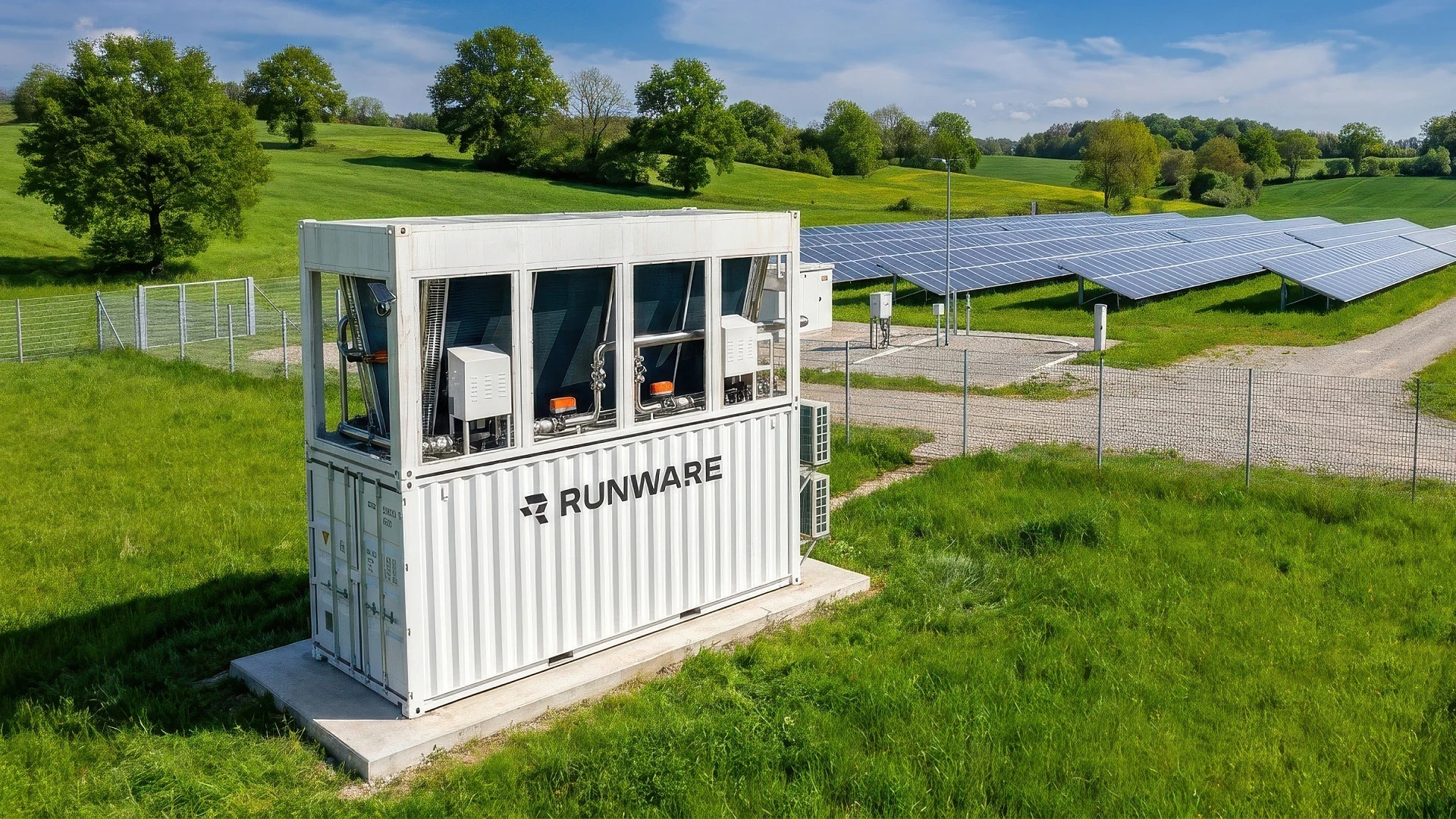
Servers and modular data centers we design, build and operate: Sonic Pods, 1MW in a 20-foot container, sited at renewable power, bringing the delivered cost of AI down by up to 10×.
Sonic Pods


Powering the world’s intelligence.
From a kitchen table
to global scale.

None of it began as a plan to build data centers. Co-founder Flaviu Rădulescu had built PicFinder, an image generation app released shortly after Stable Diffusion that made image generation as fast as search, returning results in under a second while comparable apps took thirty. It reached millions of users in less than two months. His co-founder Ioana Hreninciuc had spent fifteen years in product, almost all of it in gaming, where you learn to think in margin per user and per session long before you think about hardware.
Keeping PicFinder up meant renting GPUs from every provider they could find, and identical specs delivered wildly different throughput. They traced it to CPU clock speed: providers sell GPU-hours, so nothing around the GPU gets optimized, and for inference that is exactly what matters. Rented GPUs were never going to get cheap enough to support the product they wanted, and renting meant they could not tune the parts that mattered. Hardware had stopped being a cost question and become a control question, so they built their own.
In 2023 that meant hand-assembling three liquid-cooled servers on Ioana’s kitchen table, then spending the summer swapping components and tuning the software until the same GPUs gave about 50% more performance. When a raise for the consumer app failed, the conclusion was clear: the app was not the business. The engine underneath it was.
The software platform had to exist first. Most of the first half of 2024 went into building Runware itself: the inference engine, the model catalogue and the API around them. It launched in October 2024 and scaled quickly, and the GPU bill grew with it, which settled any remaining argument about owning the hardware.
Today Runware is a trusted backbone for over 1 million developers and enterprise innovators worldwide, including global platforms like Wix and Higgsfield, processing more than 20 billion AI requests for 500 million end users across 400,000+ models. The two people who built those first servers still run the company.
Read the full story- 012023a16z Speedrun
- 02Dec 2023Oversubscribed pre-seed
- 03Oct 2024Runware platform launches
- 04Dec 2025$50M Series A
- 05Aug 2026Sonic Inference Pod unveiled
Founders
Flaviu Rădulescu
Co-founder and CEO
Built PicFinder, the image generation app released shortly after Stable Diffusion that reached millions of users in less than two months. Earlier, head of R&D and managing director at an infrastructure company running data centers with hundreds of thousands of servers, and co-founder of a bare-metal cloud. He conceived the Sonic Inference Pod and led its engineering.
Ioana Hreninciuc
Co-founder
Fifteen years in product before Runware, almost all of it in gaming: Hostway, Bigstep, then GameAnalytics, where she went from head of product to COO to CEO, and later chief product officer at Homa Games and Huuuge Games. Her through-line is unit economics: margin per user and per session, long before hardware.


Renewable power.
Zero water.
Our mission promises infrastructure that runs on renewable power, consumes no water, and doesn’t draw on the resources communities already depend on. Evaporative cooling consumes around 550 billion liters of water a year globally, and that is the cost of one cooling method, not of running AI. Owning the hardware let us choose differently, and it shapes where our pods can go and what they ask of the places they go.
- 01
Zero water
Pods cool with a single closed loop that recirculates the same water. There is no evaporative cooling, no connection to a water main, and no water consumed in normal operation.
- 02
Renewable power
Pods are sited directly at wind farms, solar parks and hydro facilities, buying power at generation price with no transmission losses between the generator and the GPU. They can run entirely on renewable power.
- 03
Nothing taken from communities
A pod asks nothing of local utilities: no draw on the water mains or power grids communities already depend on, so compute can go where utilities are already constrained.
- 04
No warehouse
No hundred-acre site to clear, no multi-year build, no permitting queue. A 20-foot container on an existing power site, live in a day.
Backed by $66 million in funding.
Building hardware, pods and the engine on top of them takes capital as well as conviction. Runware is backed by $66 million from global investors, including a $50 million Series A in December 2025 led by Dawn Capital, with Comcast Ventures, Speedinvest, Insight Partners and a16z Speedrun.
Press enquiries: [email protected]
How we work.
The principles behind how we build and run Runware, and what we look for in the people who join.
Take initiative
We don’t wait for direction. If something needs doing, we step in and move it forward. Ownership isn’t assigned, it’s taken.
Be constructive
We call things out, but we bring solutions with them. Feedback is direct, practical, and focused on improving the product.
Be reliable
We follow through. Work is consistent, communication is clear, and people can rely on us to deliver without being chased.
Choose simplicity
We keep things clear and focused. We avoid unnecessary complexity and favour straightforward execution that moves things forward.

Come join us.
All of this is built by a friendly, dedicated team collaborating across 10 countries and 6 time zones. We value long-term relationships with potential team members, so if you don’t see a perfect fit, reach out anyway. We’d love to hear from you.
- Senior Product Marketing ManagerRemote · United States
- Senior Software EngineerRemote · United States, France, Germany +2
- Senior Software Engineer - ServerlessRemote · United States, France, Germany +2
- Senior Software Engineer - Web App & DevExRemote · United Kingdom, France, Germany +3
- Staff Software Engineer - ServerlessRemote · United Kingdom, United States, France +3
- Creative Engineer / AI Creative TechnologistRemote · United Kingdom, Spain, France
5 more on the careers board.