Muse Image

Muse Image is Meta's flagship image generation model from Meta Superintelligence Labs. It is built for prompt-faithful image creation, precision editing, and multi-reference composition, with strong text rendering and the ability to refine existing photos through localized markup-based edits. Meta positions it as an agentic image model that plans layouts, uses search and coding tools to improve accuracy, blends multiple visual references intelligently, and handles both creative generation and practical visual tasks such as infographics, QR codes, restorations, product-style mockups, and photobomber removal.
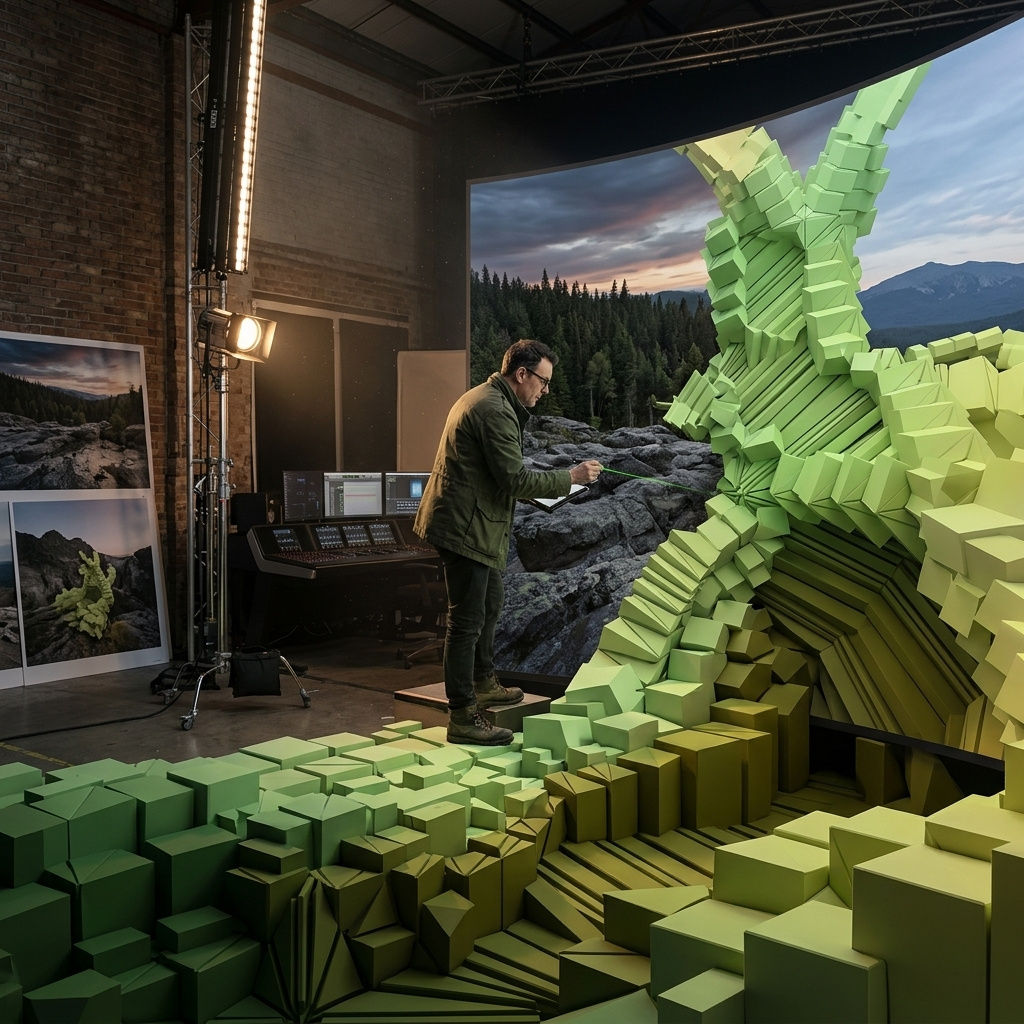
text-to-image
Equine Ultrasound Campaign Hero$0.01~36s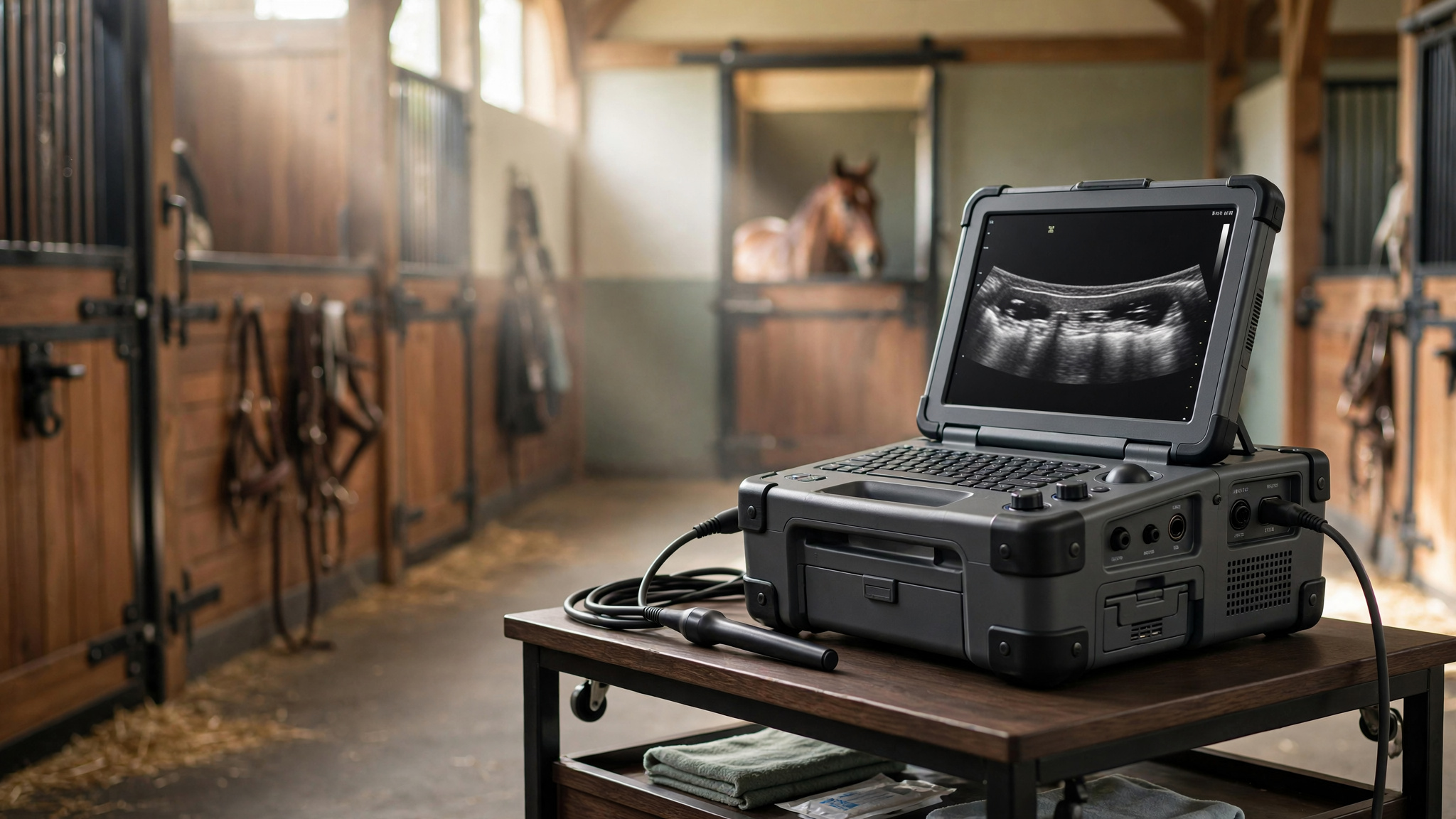
Create a polished landscape campaign hero for a manufacturer of portable equine veterinary ultrasound equipment. The hero product is a compact, rugged ultrasound console resting on a clean dark-oak examination cart inside an upscale working horse stable. Show credible industrial and medical details: matte charcoal impact-resistant housing, reinforced corners, fold-up high-resolution display, compact sealed keyboard, trackball and control dials, ventilation slots, battery compartment, clearly differentiated probe ports, and one connected linear transducer with its cable arranged naturally beside the unit. The screen displays a realistic grayscale ultrasound scan without patient data, branding, labels, or readable text. Compose the product prominently in the right-center foreground at a three-quarter angle, fully visible and sharply focused, with enough uncluttered negative space across the left third for a website headline that will be added later. In the softly receding stable aisle, include warm timber stall fronts, black powder-coated hardware, neatly hung leather tack, subtle straw texture, and a calm chestnut horse visible over a stall door in the middle distance. The horse must remain secondary and slightly out of focus. Early morning sunlight enters through high stable windows, creating restrained golden shafts and soft highlights along the equipment edges, balanced by cool neutral shadows. Premium editorial product photography, authentic equine-clinic atmosphere, natural materials, precise perspective, physically plausible reflections, realistic cable behavior, subtle dust in the light, refined warm brown, charcoal, cream, and muted sage palette. Sophisticated, calm, dependable mood. No people, no logos, no invented brand, no promotional lettering, no watermark, no border, no UI overlay, and no excessive props.
import { createClient } from '@runware/sdk'

const client = await createClient({ apiKey: process.env.RUNWARE_API_KEY })
await client.connect()

const [result] = await client.run({
  model: 'meta:muse@image',
  positivePrompt: 'Create a polished landscape campaign hero for a manufacturer of portable equine veterinary ultrasound equipment. The hero product is a compact, rugged ultrasound console resting on a clean dark-oak examination cart inside an upscale working horse stable. Show credible industrial and medical details: matte charcoal impact-resistant housing, reinforced corners, fold-up high-resolution display, compact sealed keyboard, trackball and control dials, ventilation slots, battery compartment, clearly differentiated probe ports, and one connected linear transducer with its cable arranged naturally beside the unit. The screen displays a realistic grayscale ultrasound scan without patient data, branding, labels, or readable text.\n\nCompose the product prominently in the right-center foreground at a three-quarter angle, fully visible and sharply focused, with enough uncluttered negative space across the left third for a website headline that will be added later. In the softly receding stable aisle, include warm timber stall fronts, black powder-coated hardware, neatly hung leather tack, subtle straw texture, and a calm chestnut horse visible over a stall door in the middle distance. The horse must remain secondary and slightly out of focus. Early morning sunlight enters through high stable windows, creating restrained golden shafts and soft highlights along the equipment edges, balanced by cool neutral shadows. Premium editorial product photography, authentic equine-clinic atmosphere, natural materials, precise perspective, physically plausible reflections, realistic cable behavior, subtle dust in the light, refined warm brown, charcoal, cream, and muted sage palette. Sophisticated, calm, dependable mood. No people, no logos, no invented brand, no promotional lettering, no watermark, no border, no UI overlay, and no excessive props.',
  width: 2048,
  height: 1152,
  settings: {
    imageSearch: true,
    shell: true,
    thinkingLevel: 'high',
    webSearch: true
  }
})
import asyncio
import os
from runware import Runware
async def main():
async with Runware(api_key=os.environ["RUNWARE_API_KEY"]) as client:
results = await client.run({
"model": "meta:muse@image",
"positivePrompt": "Create a polished landscape campaign hero for a manufacturer of portable equine veterinary ultrasound equipment. The hero product is a compact, rugged ultrasound console resting on a clean dark-oak examination cart inside an upscale working horse stable. Show credible industrial and medical details: matte charcoal impact-resistant housing, reinforced corners, fold-up high-resolution display, compact sealed keyboard, trackball and control dials, ventilation slots, battery compartment, clearly differentiated probe ports, and one connected linear transducer with its cable arranged naturally beside the unit. The screen displays a realistic grayscale ultrasound scan without patient data, branding, labels, or readable text.\n\nCompose the product prominently in the right-center foreground at a three-quarter angle, fully visible and sharply focused, with enough uncluttered negative space across the left third for a website headline that will be added later. In the softly receding stable aisle, include warm timber stall fronts, black powder-coated hardware, neatly hung leather tack, subtle straw texture, and a calm chestnut horse visible over a stall door in the middle distance. The horse must remain secondary and slightly out of focus. Early morning sunlight enters through high stable windows, creating restrained golden shafts and soft highlights along the equipment edges, balanced by cool neutral shadows. Premium editorial product photography, authentic equine-clinic atmosphere, natural materials, precise perspective, physically plausible reflections, realistic cable behavior, subtle dust in the light, refined warm brown, charcoal, cream, and muted sage palette. Sophisticated, calm, dependable mood. No people, no logos, no invented brand, no promotional lettering, no watermark, no border, no UI overlay, and no excessive props.",
"width": 2048,
"height": 1152,
"settings": {
"imageSearch": True,
"shell": True,
"thinkingLevel": "high",
"webSearch": True
}
})
asyncio.run(main())curl https://api.runware.ai/v1 \
-H "Authorization: Bearer $RUNWARE_API_KEY" \
-H "Content-Type: application/json" \
-d '[
{
  "taskType": "imageInference",
  "taskUUID": "9a0e1620-9a18-49b4-9b5c-b4f628aecadc",
  "model": "meta:muse@image",
  "positivePrompt": "Create a polished landscape campaign hero for a manufacturer of portable equine veterinary ultrasound equipment. The hero product is a compact, rugged ultrasound console resting on a clean dark-oak examination cart inside an upscale working horse stable. Show credible industrial and medical details: matte charcoal impact-resistant housing, reinforced corners, fold-up high-resolution display, compact sealed keyboard, trackball and control dials, ventilation slots, battery compartment, clearly differentiated probe ports, and one connected linear transducer with its cable arranged naturally beside the unit. The screen displays a realistic grayscale ultrasound scan without patient data, branding, labels, or readable text.\n\nCompose the product prominently in the right-center foreground at a three-quarter angle, fully visible and sharply focused, with enough uncluttered negative space across the left third for a website headline that will be added later. In the softly receding stable aisle, include warm timber stall fronts, black powder-coated hardware, neatly hung leather tack, subtle straw texture, and a calm chestnut horse visible over a stall door in the middle distance. The horse must remain secondary and slightly out of focus. Early morning sunlight enters through high stable windows, creating restrained golden shafts and soft highlights along the equipment edges, balanced by cool neutral shadows. Premium editorial product photography, authentic equine-clinic atmosphere, natural materials, precise perspective, physically plausible reflections, realistic cable behavior, subtle dust in the light, refined warm brown, charcoal, cream, and muted sage palette. Sophisticated, calm, dependable mood. No people, no logos, no invented brand, no promotional lettering, no watermark, no border, no UI overlay, and no excessive props.",
  "width": 2048,
  "height": 1152,
  "settings": {
    "imageSearch": true,
    "shell": true,
    "thinkingLevel": "high",
    "webSearch": true
  }
}
]'runware run meta:muse@image \
positivePrompt="Create a polished landscape campaign hero for a manufacturer of portable equine veterinary ultrasound equipment. The hero product is a compact, rugged ultrasound console resting on a clean dark-oak examination cart inside an upscale working horse stable. Show credible industrial and medical details: matte charcoal impact-resistant housing, reinforced corners, fold-up high-resolution display, compact sealed keyboard, trackball and control dials, ventilation slots, battery compartment, clearly differentiated probe ports, and one connected linear transducer with its cable arranged naturally beside the unit. The screen displays a realistic grayscale ultrasound scan without patient data, branding, labels, or readable text.
Compose the product prominently in the right-center foreground at a three-quarter angle, fully visible and sharply focused, with enough uncluttered negative space across the left third for a website headline that will be added later. In the softly receding stable aisle, include warm timber stall fronts, black powder-coated hardware, neatly hung leather tack, subtle straw texture, and a calm chestnut horse visible over a stall door in the middle distance. The horse must remain secondary and slightly out of focus. Early morning sunlight enters through high stable windows, creating restrained golden shafts and soft highlights along the equipment edges, balanced by cool neutral shadows. Premium editorial product photography, authentic equine-clinic atmosphere, natural materials, precise perspective, physically plausible reflections, realistic cable behavior, subtle dust in the light, refined warm brown, charcoal, cream, and muted sage palette. Sophisticated, calm, dependable mood. No people, no logos, no invented brand, no promotional lettering, no watermark, no border, no UI overlay, and no excessive props." \
width=2048 \
height=1152 \
settings.imageSearch=true \
settings.shell=true \
settings.thinkingLevel=high \
settings.webSearch=true{
"taskType": "imageInference",
"taskUUID": "9a0e1620-9a18-49b4-9b5c-b4f628aecadc",
"model": "meta:muse@image",
"positivePrompt": "Create a polished landscape campaign hero for a manufacturer of portable equine veterinary ultrasound equipment. The hero product is a compact, rugged ultrasound console resting on a clean dark-oak examination cart inside an upscale working horse stable. Show credible industrial and medical details: matte charcoal impact-resistant housing, reinforced corners, fold-up high-resolution display, compact sealed keyboard, trackball and control dials, ventilation slots, battery compartment, clearly differentiated probe ports, and one connected linear transducer with its cable arranged naturally beside the unit. The screen displays a realistic grayscale ultrasound scan without patient data, branding, labels, or readable text.\n\nCompose the product prominently in the right-center foreground at a three-quarter angle, fully visible and sharply focused, with enough uncluttered negative space across the left third for a website headline that will be added later. In the softly receding stable aisle, include warm timber stall fronts, black powder-coated hardware, neatly hung leather tack, subtle straw texture, and a calm chestnut horse visible over a stall door in the middle distance. The horse must remain secondary and slightly out of focus. Early morning sunlight enters through high stable windows, creating restrained golden shafts and soft highlights along the equipment edges, balanced by cool neutral shadows. Premium editorial product photography, authentic equine-clinic atmosphere, natural materials, precise perspective, physically plausible reflections, realistic cable behavior, subtle dust in the light, refined warm brown, charcoal, cream, and muted sage palette. Sophisticated, calm, dependable mood. No people, no logos, no invented brand, no promotional lettering, no watermark, no border, no UI overlay, and no excessive props.",
"width": 2048,
"height": 1152,
"settings": {
"imageSearch": true,
"shell": true,
"thinkingLevel": "high",
"webSearch": true
}
}Response
{
  "taskType": "imageInference",
  "taskUUID": "9a0e1620-9a18-49b4-9b5c-b4f628aecadc",
  "imageUUID": "199e04b4-8145-49ad-9f44-1645a4d2be34",
  "imageURL": "https://im.runware.ai/image/os/a05d22/ws/3/ii/199e04b4-8145-49ad-9f44-1645a4d2be34.jpg",
  "seed": 1361878847,
  "cost": 0.01
}
text-to-image
Antikythera Exhibition Banner Expansion$0.01~26s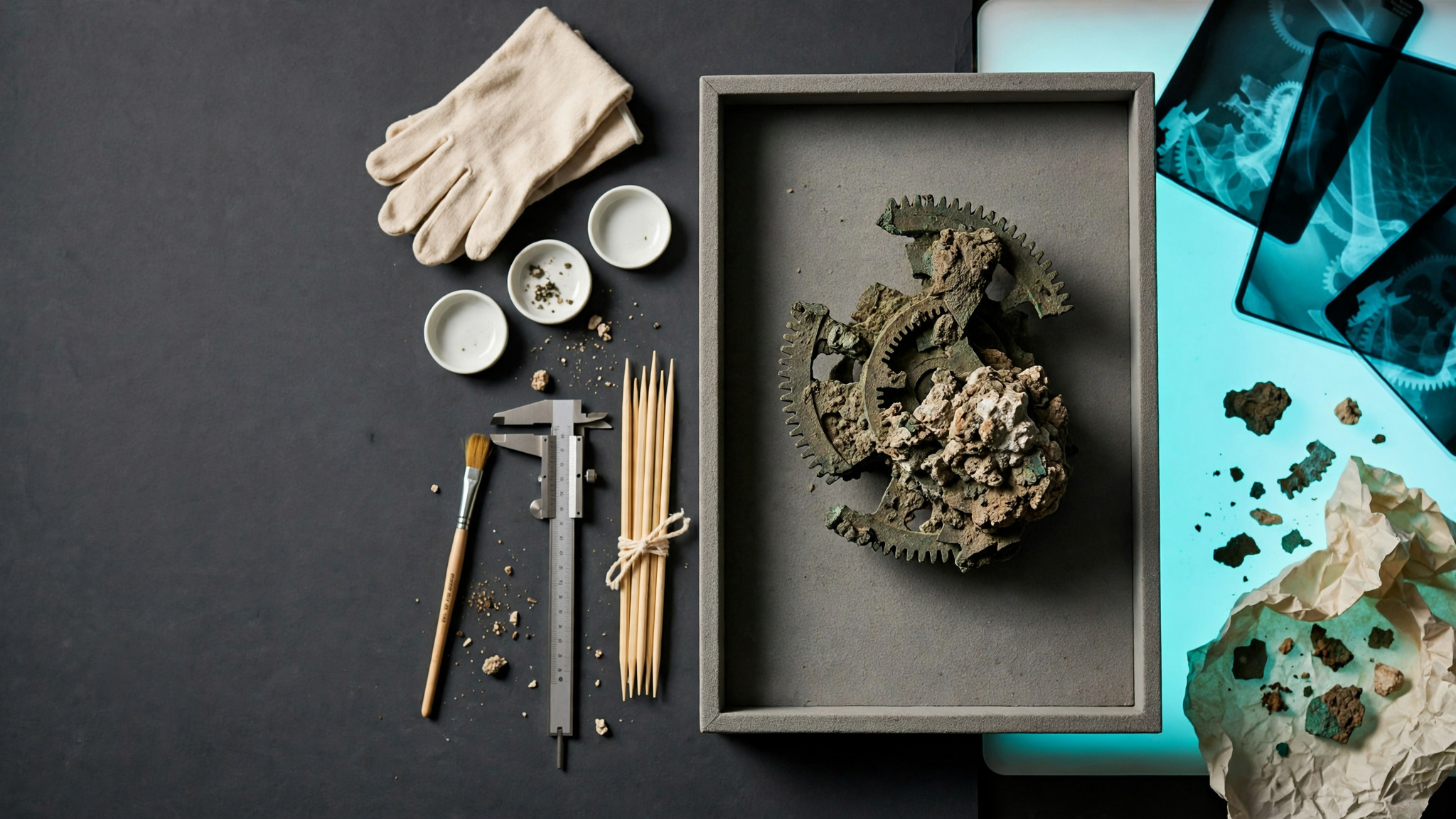
Create a finished 16:9 panoramic hero image for a maritime archaeology museum exhibition about the Antikythera mechanism. Compose it as a seamless outpaint-style expansion of an imagined tight vertical conservation photograph: preserve a visually concentrated central zone containing the mechanism’s largest corroded bronze gear fragment, then extend the scene naturally far to both sides with a wider conservation workbench and generous negative space. Show the authentic artifact as irregular, mineral-encrusted bronze fragments with recognizable intermeshing gear teeth, fractured plates, green verdigris, brown corrosion and limestone accretions—scientifically plausible, precious and fragile, not a polished fantasy clock. Top-down oblique museum conservation photography, artifact supported on archival charcoal-gray foam inside a shallow neutral tray. Expand leftward into neatly arranged conservation tools: bamboo picks, a soft sable brush, calipers, cotton gloves and small unlabeled specimen dishes. Expand rightward into partially visible X-radiography films on a cool cyan light pad, archival tissue and additional tiny bronze fragments, all spatially coherent with the central scene. Deliberate horizontal visual rhythm, the main gear fragment near center-right, uncluttered dark slate negative space across the left third for later curatorial typography, but include no text in the image. Controlled raking light reveals gear teeth and layered corrosion; restrained palette of oxidized bronze, verdigris green, graphite gray and muted cyan. Premium institutional editorial art direction, forensic accuracy, subtle shadows, crisp micro-detail, realistic materials, seamless perspective and lighting across the expanded frame. No people, no modern electronics, no decorative steampunk additions, no invented complete machine, no labels, captions, logos, borders, crop marks, UI or mockup presentation.
import { createClient } from '@runware/sdk'

const client = await createClient({ apiKey: process.env.RUNWARE_API_KEY })
await client.connect()

const [result] = await client.run({
  model: 'meta:muse@image',
  positivePrompt: 'Create a finished 16:9 panoramic hero image for a maritime archaeology museum exhibition about the Antikythera mechanism. Compose it as a seamless outpaint-style expansion of an imagined tight vertical conservation photograph: preserve a visually concentrated central zone containing the mechanism’s largest corroded bronze gear fragment, then extend the scene naturally far to both sides with a wider conservation workbench and generous negative space. Show the authentic artifact as irregular, mineral-encrusted bronze fragments with recognizable intermeshing gear teeth, fractured plates, green verdigris, brown corrosion and limestone accretions—scientifically plausible, precious and fragile, not a polished fantasy clock. Top-down oblique museum conservation photography, artifact supported on archival charcoal-gray foam inside a shallow neutral tray. Expand leftward into neatly arranged conservation tools: bamboo picks, a soft sable brush, calipers, cotton gloves and small unlabeled specimen dishes. Expand rightward into partially visible X-radiography films on a cool cyan light pad, archival tissue and additional tiny bronze fragments, all spatially coherent with the central scene. Deliberate horizontal visual rhythm, the main gear fragment near center-right, uncluttered dark slate negative space across the left third for later curatorial typography, but include no text in the image. Controlled raking light reveals gear teeth and layered corrosion; restrained palette of oxidized bronze, verdigris green, graphite gray and muted cyan. Premium institutional editorial art direction, forensic accuracy, subtle shadows, crisp micro-detail, realistic materials, seamless perspective and lighting across the expanded frame. No people, no modern electronics, no decorative steampunk additions, no invented complete machine, no labels, captions, logos, borders, crop marks, UI or mockup presentation.',
  width: 2048,
  height: 1152,
  settings: {
    imageSearch: true,
    shell: true,
    thinkingLevel: 'high',
    webSearch: true
  }
})
import asyncio
import os
from runware import Runware
async def main():
async with Runware(api_key=os.environ["RUNWARE_API_KEY"]) as client:
results = await client.run({
"model": "meta:muse@image",
"positivePrompt": "Create a finished 16:9 panoramic hero image for a maritime archaeology museum exhibition about the Antikythera mechanism. Compose it as a seamless outpaint-style expansion of an imagined tight vertical conservation photograph: preserve a visually concentrated central zone containing the mechanism’s largest corroded bronze gear fragment, then extend the scene naturally far to both sides with a wider conservation workbench and generous negative space. Show the authentic artifact as irregular, mineral-encrusted bronze fragments with recognizable intermeshing gear teeth, fractured plates, green verdigris, brown corrosion and limestone accretions—scientifically plausible, precious and fragile, not a polished fantasy clock. Top-down oblique museum conservation photography, artifact supported on archival charcoal-gray foam inside a shallow neutral tray. Expand leftward into neatly arranged conservation tools: bamboo picks, a soft sable brush, calipers, cotton gloves and small unlabeled specimen dishes. Expand rightward into partially visible X-radiography films on a cool cyan light pad, archival tissue and additional tiny bronze fragments, all spatially coherent with the central scene. Deliberate horizontal visual rhythm, the main gear fragment near center-right, uncluttered dark slate negative space across the left third for later curatorial typography, but include no text in the image. Controlled raking light reveals gear teeth and layered corrosion; restrained palette of oxidized bronze, verdigris green, graphite gray and muted cyan. Premium institutional editorial art direction, forensic accuracy, subtle shadows, crisp micro-detail, realistic materials, seamless perspective and lighting across the expanded frame. No people, no modern electronics, no decorative steampunk additions, no invented complete machine, no labels, captions, logos, borders, crop marks, UI or mockup presentation.",
"width": 2048,
"height": 1152,
"settings": {
"imageSearch": True,
"shell": True,
"thinkingLevel": "high",
"webSearch": True
}
})
asyncio.run(main())curl https://api.runware.ai/v1 \
-H "Authorization: Bearer $RUNWARE_API_KEY" \
-H "Content-Type: application/json" \
-d '[
{
  "taskType": "imageInference",
  "taskUUID": "b047ff5e-17ae-4050-b340-2d17e1d40867",
  "model": "meta:muse@image",
  "positivePrompt": "Create a finished 16:9 panoramic hero image for a maritime archaeology museum exhibition about the Antikythera mechanism. Compose it as a seamless outpaint-style expansion of an imagined tight vertical conservation photograph: preserve a visually concentrated central zone containing the mechanism’s largest corroded bronze gear fragment, then extend the scene naturally far to both sides with a wider conservation workbench and generous negative space. Show the authentic artifact as irregular, mineral-encrusted bronze fragments with recognizable intermeshing gear teeth, fractured plates, green verdigris, brown corrosion and limestone accretions—scientifically plausible, precious and fragile, not a polished fantasy clock. Top-down oblique museum conservation photography, artifact supported on archival charcoal-gray foam inside a shallow neutral tray. Expand leftward into neatly arranged conservation tools: bamboo picks, a soft sable brush, calipers, cotton gloves and small unlabeled specimen dishes. Expand rightward into partially visible X-radiography films on a cool cyan light pad, archival tissue and additional tiny bronze fragments, all spatially coherent with the central scene. Deliberate horizontal visual rhythm, the main gear fragment near center-right, uncluttered dark slate negative space across the left third for later curatorial typography, but include no text in the image. Controlled raking light reveals gear teeth and layered corrosion; restrained palette of oxidized bronze, verdigris green, graphite gray and muted cyan. Premium institutional editorial art direction, forensic accuracy, subtle shadows, crisp micro-detail, realistic materials, seamless perspective and lighting across the expanded frame. No people, no modern electronics, no decorative steampunk additions, no invented complete machine, no labels, captions, logos, borders, crop marks, UI or mockup presentation.",
  "width": 2048,
  "height": 1152,
  "settings": {
    "imageSearch": true,
    "shell": true,
    "thinkingLevel": "high",
    "webSearch": true
  }
}
]'runware run meta:muse@image \
positivePrompt="Create a finished 16:9 panoramic hero image for a maritime archaeology museum exhibition about the Antikythera mechanism. Compose it as a seamless outpaint-style expansion of an imagined tight vertical conservation photograph: preserve a visually concentrated central zone containing the mechanism’s largest corroded bronze gear fragment, then extend the scene naturally far to both sides with a wider conservation workbench and generous negative space. Show the authentic artifact as irregular, mineral-encrusted bronze fragments with recognizable intermeshing gear teeth, fractured plates, green verdigris, brown corrosion and limestone accretions—scientifically plausible, precious and fragile, not a polished fantasy clock. Top-down oblique museum conservation photography, artifact supported on archival charcoal-gray foam inside a shallow neutral tray. Expand leftward into neatly arranged conservation tools: bamboo picks, a soft sable brush, calipers, cotton gloves and small unlabeled specimen dishes. Expand rightward into partially visible X-radiography films on a cool cyan light pad, archival tissue and additional tiny bronze fragments, all spatially coherent with the central scene. Deliberate horizontal visual rhythm, the main gear fragment near center-right, uncluttered dark slate negative space across the left third for later curatorial typography, but include no text in the image. Controlled raking light reveals gear teeth and layered corrosion; restrained palette of oxidized bronze, verdigris green, graphite gray and muted cyan. Premium institutional editorial art direction, forensic accuracy, subtle shadows, crisp micro-detail, realistic materials, seamless perspective and lighting across the expanded frame. No people, no modern electronics, no decorative steampunk additions, no invented complete machine, no labels, captions, logos, borders, crop marks, UI or mockup presentation." \
width=2048 \
height=1152 \
settings.imageSearch=true \
settings.shell=true \
settings.thinkingLevel=high \
settings.webSearch=true{
"taskType": "imageInference",
"taskUUID": "b047ff5e-17ae-4050-b340-2d17e1d40867",
"model": "meta:muse@image",
"positivePrompt": "Create a finished 16:9 panoramic hero image for a maritime archaeology museum exhibition about the Antikythera mechanism. Compose it as a seamless outpaint-style expansion of an imagined tight vertical conservation photograph: preserve a visually concentrated central zone containing the mechanism’s largest corroded bronze gear fragment, then extend the scene naturally far to both sides with a wider conservation workbench and generous negative space. Show the authentic artifact as irregular, mineral-encrusted bronze fragments with recognizable intermeshing gear teeth, fractured plates, green verdigris, brown corrosion and limestone accretions—scientifically plausible, precious and fragile, not a polished fantasy clock. Top-down oblique museum conservation photography, artifact supported on archival charcoal-gray foam inside a shallow neutral tray. Expand leftward into neatly arranged conservation tools: bamboo picks, a soft sable brush, calipers, cotton gloves and small unlabeled specimen dishes. Expand rightward into partially visible X-radiography films on a cool cyan light pad, archival tissue and additional tiny bronze fragments, all spatially coherent with the central scene. Deliberate horizontal visual rhythm, the main gear fragment near center-right, uncluttered dark slate negative space across the left third for later curatorial typography, but include no text in the image. Controlled raking light reveals gear teeth and layered corrosion; restrained palette of oxidized bronze, verdigris green, graphite gray and muted cyan. Premium institutional editorial art direction, forensic accuracy, subtle shadows, crisp micro-detail, realistic materials, seamless perspective and lighting across the expanded frame. No people, no modern electronics, no decorative steampunk additions, no invented complete machine, no labels, captions, logos, borders, crop marks, UI or mockup presentation.",
"width": 2048,
"height": 1152,
"settings": {
"imageSearch": true,
"shell": true,
"thinkingLevel": "high",
"webSearch": true
}
}Response
{
  "taskType": "imageInference",
  "taskUUID": "b047ff5e-17ae-4050-b340-2d17e1d40867",
  "imageUUID": "2e9aa7dc-e7f3-4206-8a10-2a4e27e2901d",
  "imageURL": "https://im.runware.ai/image/os/a05d22/ws/3/ii/2e9aa7dc-e7f3-4206-8a10-2a4e27e2901d.jpg",
  "seed": 1226742084,
  "cost": 0.01
}
reference-to-image
Beekeeping Swarm Crew Shirt Graphic$0.01~18s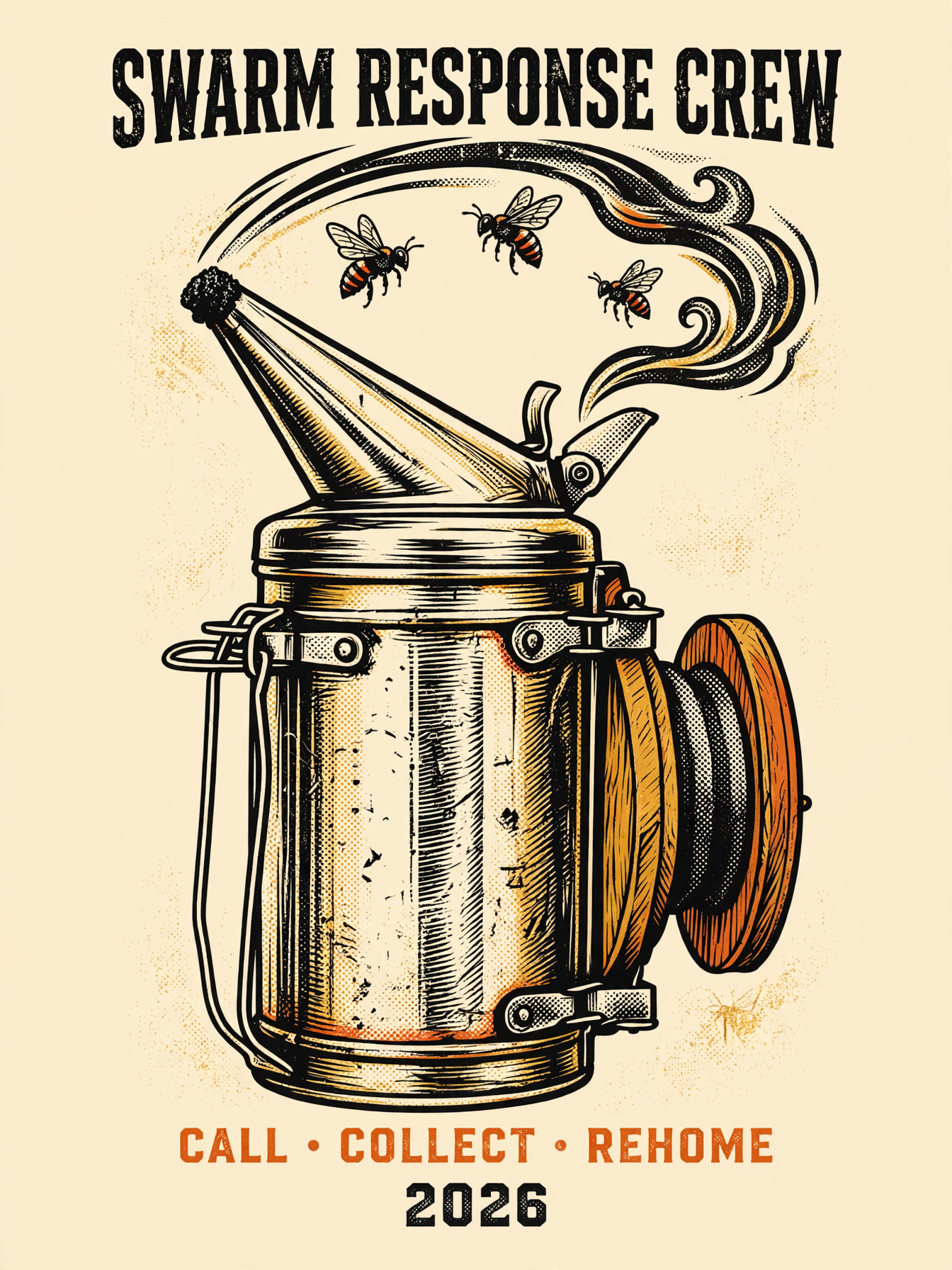
Transform the supplied beekeeper-smoker photograph into a finished portrait-format apparel graphic for a volunteer urban beekeeping swarm-response crew. Preserve the reference object's recognizable conical spout, wire heat guard, wooden bellows, proportions, dents, scratches, and soot marks so this specific piece of field equipment remains identifiable. Redraw it as a bold central woodcut emblem with chunky carved contours and controlled halftone texture. Add curling smoke above it that forms a clean arched frame containing a few small, anatomically credible honeybees in flight. Place the exact headline “SWARM RESPONSE CREW” in large condensed block lettering across the top. Add the exact smaller line “CALL • COLLECT • REHOME” beneath the smoker and the exact year “2026” at the bottom. Use a practical municipal-workwear aesthetic rather than a cute honey-brand look: strong symmetry, assertive hierarchy, rugged but polished linework, and excellent readability from a distance. Limit the design to four flat screen-print inks: carbon black, safety orange, golden ochre, and warm cream. Create believable overprint and slightly distressed ink texture while keeping all lettering crisp and correctly spelled. Center the composition with generous negative space and clean outer edges for easy garment printing. Deliver the standalone flat print artwork on a solid warm-cream background, not a shirt mockup, not a product photograph, no person, no hanger, no fabric folds, no extra logos, and no additional text.
import { createClient } from '@runware/sdk'

const client = await createClient({ apiKey: process.env.RUNWARE_API_KEY })
await client.connect()

const [result] = await client.run({
  model: 'meta:muse@image',
  positivePrompt: 'Transform the supplied beekeeper-smoker photograph into a finished portrait-format apparel graphic for a volunteer urban beekeeping swarm-response crew. Preserve the reference object\'s recognizable conical spout, wire heat guard, wooden bellows, proportions, dents, scratches, and soot marks so this specific piece of field equipment remains identifiable. Redraw it as a bold central woodcut emblem with chunky carved contours and controlled halftone texture. Add curling smoke above it that forms a clean arched frame containing a few small, anatomically credible honeybees in flight. Place the exact headline “SWARM RESPONSE CREW” in large condensed block lettering across the top. Add the exact smaller line “CALL • COLLECT • REHOME” beneath the smoker and the exact year “2026” at the bottom. Use a practical municipal-workwear aesthetic rather than a cute honey-brand look: strong symmetry, assertive hierarchy, rugged but polished linework, and excellent readability from a distance. Limit the design to four flat screen-print inks: carbon black, safety orange, golden ochre, and warm cream. Create believable overprint and slightly distressed ink texture while keeping all lettering crisp and correctly spelled. Center the composition with generous negative space and clean outer edges for easy garment printing. Deliver the standalone flat print artwork on a solid warm-cream background, not a shirt mockup, not a product photograph, no person, no hanger, no fabric folds, no extra logos, and no additional text.',
  width: 1344,
  height: 1792,
  settings: {
    imageSearch: false,
    shell: false,
    thinkingLevel: 'low',
    webSearch: false
  },
  inputs: {
    referenceImages: [
      'https://assets.runware.ai/assets/inputs/a2946e24-67ff-4371-a476-1c8cad698a7b.jpg'
    ]
  }
})
import asyncio
import os
from runware import Runware
async def main():
async with Runware(api_key=os.environ["RUNWARE_API_KEY"]) as client:
results = await client.run({
"model": "meta:muse@image",
"positivePrompt": "Transform the supplied beekeeper-smoker photograph into a finished portrait-format apparel graphic for a volunteer urban beekeeping swarm-response crew. Preserve the reference object's recognizable conical spout, wire heat guard, wooden bellows, proportions, dents, scratches, and soot marks so this specific piece of field equipment remains identifiable. Redraw it as a bold central woodcut emblem with chunky carved contours and controlled halftone texture. Add curling smoke above it that forms a clean arched frame containing a few small, anatomically credible honeybees in flight. Place the exact headline “SWARM RESPONSE CREW” in large condensed block lettering across the top. Add the exact smaller line “CALL • COLLECT • REHOME” beneath the smoker and the exact year “2026” at the bottom. Use a practical municipal-workwear aesthetic rather than a cute honey-brand look: strong symmetry, assertive hierarchy, rugged but polished linework, and excellent readability from a distance. Limit the design to four flat screen-print inks: carbon black, safety orange, golden ochre, and warm cream. Create believable overprint and slightly distressed ink texture while keeping all lettering crisp and correctly spelled. Center the composition with generous negative space and clean outer edges for easy garment printing. Deliver the standalone flat print artwork on a solid warm-cream background, not a shirt mockup, not a product photograph, no person, no hanger, no fabric folds, no extra logos, and no additional text.",
"width": 1344,
"height": 1792,
"settings": {
"imageSearch": False,
"shell": False,
"thinkingLevel": "low",
"webSearch": False
},
"inputs": {
"referenceImages": [
"https://assets.runware.ai/assets/inputs/a2946e24-67ff-4371-a476-1c8cad698a7b.jpg"
]
}
})
asyncio.run(main())curl https://api.runware.ai/v1 \
-H "Authorization: Bearer $RUNWARE_API_KEY" \
-H "Content-Type: application/json" \
-d '[
{
  "taskType": "imageInference",
  "taskUUID": "923836ae-b8fa-4641-89a4-e0a0a4e39cbb",
  "model": "meta:muse@image",
  "positivePrompt": "Transform the supplied beekeeper-smoker photograph into a finished portrait-format apparel graphic for a volunteer urban beekeeping swarm-response crew. Preserve the reference object's recognizable conical spout, wire heat guard, wooden bellows, proportions, dents, scratches, and soot marks so this specific piece of field equipment remains identifiable. Redraw it as a bold central woodcut emblem with chunky carved contours and controlled halftone texture. Add curling smoke above it that forms a clean arched frame containing a few small, anatomically credible honeybees in flight. Place the exact headline “SWARM RESPONSE CREW” in large condensed block lettering across the top. Add the exact smaller line “CALL • COLLECT • REHOME” beneath the smoker and the exact year “2026” at the bottom. Use a practical municipal-workwear aesthetic rather than a cute honey-brand look: strong symmetry, assertive hierarchy, rugged but polished linework, and excellent readability from a distance. Limit the design to four flat screen-print inks: carbon black, safety orange, golden ochre, and warm cream. Create believable overprint and slightly distressed ink texture while keeping all lettering crisp and correctly spelled. Center the composition with generous negative space and clean outer edges for easy garment printing. Deliver the standalone flat print artwork on a solid warm-cream background, not a shirt mockup, not a product photograph, no person, no hanger, no fabric folds, no extra logos, and no additional text.",
  "width": 1344,
  "height": 1792,
  "settings": {
    "imageSearch": false,
    "shell": false,
    "thinkingLevel": "low",
    "webSearch": false
  },
  "inputs": {
    "referenceImages": [
      "https://assets.runware.ai/assets/inputs/a2946e24-67ff-4371-a476-1c8cad698a7b.jpg"
    ]
  }
}
]'runware run meta:muse@image \
positivePrompt="Transform the supplied beekeeper-smoker photograph into a finished portrait-format apparel graphic for a volunteer urban beekeeping swarm-response crew. Preserve the reference object's recognizable conical spout, wire heat guard, wooden bellows, proportions, dents, scratches, and soot marks so this specific piece of field equipment remains identifiable. Redraw it as a bold central woodcut emblem with chunky carved contours and controlled halftone texture. Add curling smoke above it that forms a clean arched frame containing a few small, anatomically credible honeybees in flight. Place the exact headline “SWARM RESPONSE CREW” in large condensed block lettering across the top. Add the exact smaller line “CALL • COLLECT • REHOME” beneath the smoker and the exact year “2026” at the bottom. Use a practical municipal-workwear aesthetic rather than a cute honey-brand look: strong symmetry, assertive hierarchy, rugged but polished linework, and excellent readability from a distance. Limit the design to four flat screen-print inks: carbon black, safety orange, golden ochre, and warm cream. Create believable overprint and slightly distressed ink texture while keeping all lettering crisp and correctly spelled. Center the composition with generous negative space and clean outer edges for easy garment printing. Deliver the standalone flat print artwork on a solid warm-cream background, not a shirt mockup, not a product photograph, no person, no hanger, no fabric folds, no extra logos, and no additional text." \
width=1344 \
height=1792 \
settings.imageSearch=false \
settings.shell=false \
settings.thinkingLevel=low \
settings.webSearch=false \
inputs.referenceImages.0=https://assets.runware.ai/assets/inputs/a2946e24-67ff-4371-a476-1c8cad698a7b.jpg{
"taskType": "imageInference",
"taskUUID": "923836ae-b8fa-4641-89a4-e0a0a4e39cbb",
"model": "meta:muse@image",
"positivePrompt": "Transform the supplied beekeeper-smoker photograph into a finished portrait-format apparel graphic for a volunteer urban beekeeping swarm-response crew. Preserve the reference object's recognizable conical spout, wire heat guard, wooden bellows, proportions, dents, scratches, and soot marks so this specific piece of field equipment remains identifiable. Redraw it as a bold central woodcut emblem with chunky carved contours and controlled halftone texture. Add curling smoke above it that forms a clean arched frame containing a few small, anatomically credible honeybees in flight. Place the exact headline “SWARM RESPONSE CREW” in large condensed block lettering across the top. Add the exact smaller line “CALL • COLLECT • REHOME” beneath the smoker and the exact year “2026” at the bottom. Use a practical municipal-workwear aesthetic rather than a cute honey-brand look: strong symmetry, assertive hierarchy, rugged but polished linework, and excellent readability from a distance. Limit the design to four flat screen-print inks: carbon black, safety orange, golden ochre, and warm cream. Create believable overprint and slightly distressed ink texture while keeping all lettering crisp and correctly spelled. Center the composition with generous negative space and clean outer edges for easy garment printing. Deliver the standalone flat print artwork on a solid warm-cream background, not a shirt mockup, not a product photograph, no person, no hanger, no fabric folds, no extra logos, and no additional text.",
"width": 1344,
"height": 1792,
"settings": {
"imageSearch": false,
"shell": false,
"thinkingLevel": "low",
"webSearch": false
},
"inputs": {
"referenceImages": [
"https://assets.runware.ai/assets/inputs/a2946e24-67ff-4371-a476-1c8cad698a7b.jpg"
]
}
}Response
{
  "taskType": "imageInference",
  "taskUUID": "923836ae-b8fa-4641-89a4-e0a0a4e39cbb",
  "imageUUID": "6ec4c687-4442-4519-971b-7658eb018939",
  "imageURL": "https://im.runware.ai/image/os/a04d20/ws/4/ii/6ec4c687-4442-4519-971b-7658eb018939.jpg",
  "seed": 1147867774,
  "cost": 0.01
}
reference-to-image
Cello Restoration Social Media Ad$0.01~18s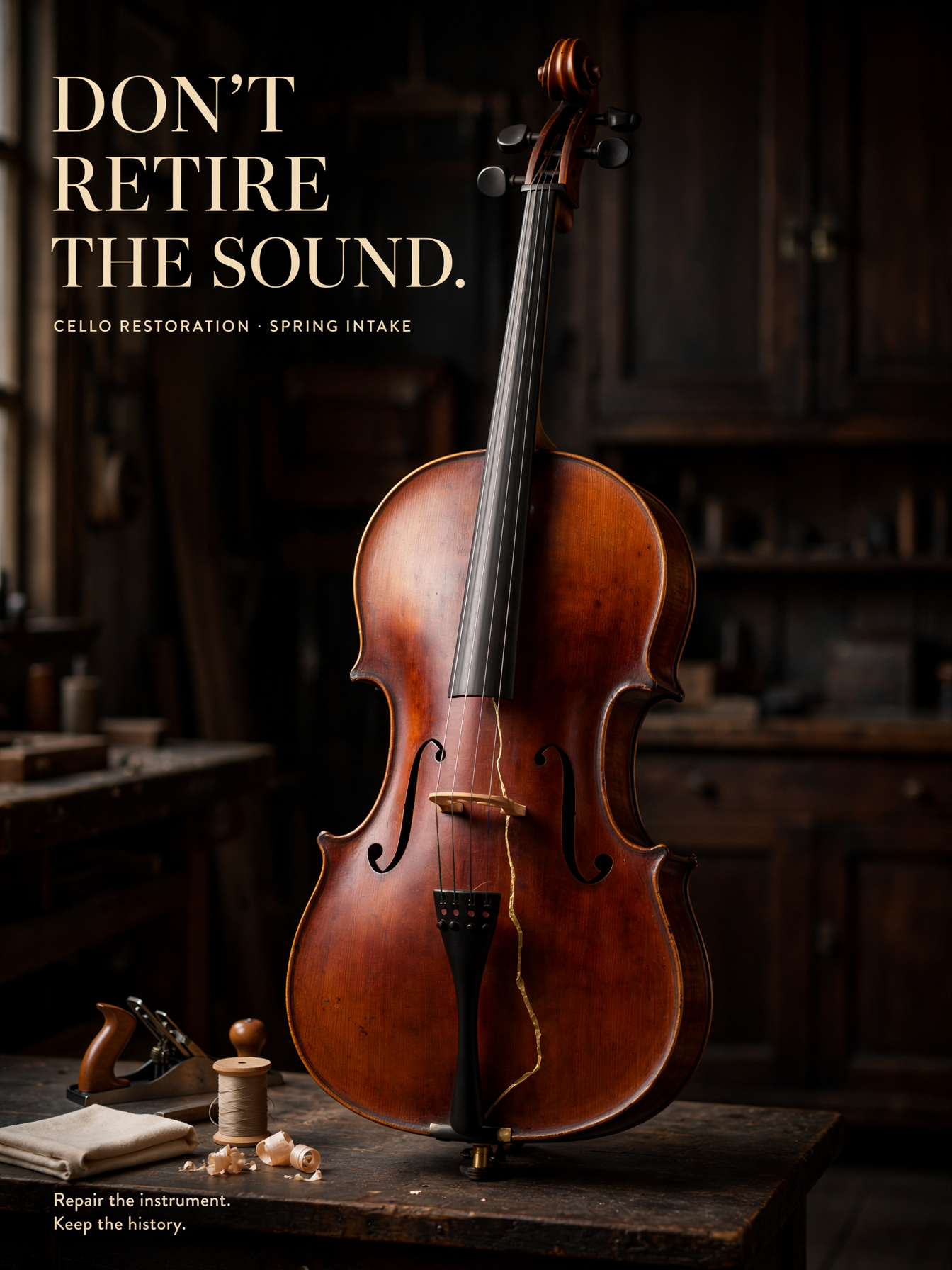
Create a finished 1344x1792 portrait social media advertisement for a specialist cello restoration workshop using the supplied reference image. Preserve the exact recognizable cello: its silhouette, proportions, scroll, pegs, strings, bridge, f-holes, reddish-brown varnish, distinctive grain, and visible crack location. Do not replace it with a different instrument. Transform the plain source photo into a refined editorial still life inside a traditional luthier's workshop. Position the cello upright as the dominant central subject, extending from the lower edge toward the upper third, with generous negative space above and to the left for typography. Show the damaged area treated with a subtle luminous gold repair seam, elegant and technically plausible rather than magical, communicating that an heirloom has been restored instead of discarded. Surround it sparingly with authentic hand tools on a dark wooden bench: one small finger plane, a spool of linen thread, a maple shaving, and a folded cream cloth. Background cabinetry should fall into soft shadow with no distracting clutter. Art direction: contemporary luxury campaign meets Dutch still-life photography; deep oxblood, burnt umber, amber, charcoal, and warm ivory palette; directional window light from upper left; crisp detail on the cello and repair; soft atmospheric falloff; tactile wood, varnish, and cloth textures; quiet, assured, emotionally resonant mood. Add clean, accurately rendered editorial typography integrated into the composition, not inside a button. Large warm-ivory serif headline in the upper-left negative space: “DON’T RETIRE THE SOUND.” Beneath it, much smaller uppercase sans-serif copy: “CELLO RESTORATION · SPRING INTAKE”. At the bottom-left, add a restrained line: “Repair the instrument. Keep the history.” Maintain generous margins and a clear mobile-feed hierarchy. No logo, no invented company name, no website, no price, no app interface, no social media UI, no mockup frame, no extra instruments, no musicians, and no fantasy effects.
import { createClient } from '@runware/sdk'

const client = await createClient({ apiKey: process.env.RUNWARE_API_KEY })
await client.connect()

const [result] = await client.run({
  model: 'meta:muse@image',
  positivePrompt: 'Create a finished 1344x1792 portrait social media advertisement for a specialist cello restoration workshop using the supplied reference image. Preserve the exact recognizable cello: its silhouette, proportions, scroll, pegs, strings, bridge, f-holes, reddish-brown varnish, distinctive grain, and visible crack location. Do not replace it with a different instrument. Transform the plain source photo into a refined editorial still life inside a traditional luthier\'s workshop. Position the cello upright as the dominant central subject, extending from the lower edge toward the upper third, with generous negative space above and to the left for typography. Show the damaged area treated with a subtle luminous gold repair seam, elegant and technically plausible rather than magical, communicating that an heirloom has been restored instead of discarded. Surround it sparingly with authentic hand tools on a dark wooden bench: one small finger plane, a spool of linen thread, a maple shaving, and a folded cream cloth. Background cabinetry should fall into soft shadow with no distracting clutter. Art direction: contemporary luxury campaign meets Dutch still-life photography; deep oxblood, burnt umber, amber, charcoal, and warm ivory palette; directional window light from upper left; crisp detail on the cello and repair; soft atmospheric falloff; tactile wood, varnish, and cloth textures; quiet, assured, emotionally resonant mood. Add clean, accurately rendered editorial typography integrated into the composition, not inside a button. Large warm-ivory serif headline in the upper-left negative space: “DON’T RETIRE THE SOUND.” Beneath it, much smaller uppercase sans-serif copy: “CELLO RESTORATION · SPRING INTAKE”. At the bottom-left, add a restrained line: “Repair the instrument. Keep the history.” Maintain generous margins and a clear mobile-feed hierarchy. No logo, no invented company name, no website, no price, no app interface, no social media UI, no mockup frame, no extra instruments, no musicians, and no fantasy effects.',
  width: 1344,
  height: 1792,
  settings: {
    imageSearch: false,
    shell: false,
    thinkingLevel: 'low',
    webSearch: false
  },
  inputs: {
    referenceImages: [
      'https://assets.runware.ai/assets/inputs/5fe95bf0-3261-404c-b3c5-ad2549346e08.jpg'
    ]
  }
})
import asyncio
import os
from runware import Runware
async def main():
async with Runware(api_key=os.environ["RUNWARE_API_KEY"]) as client:
results = await client.run({
"model": "meta:muse@image",
"positivePrompt": "Create a finished 1344x1792 portrait social media advertisement for a specialist cello restoration workshop using the supplied reference image. Preserve the exact recognizable cello: its silhouette, proportions, scroll, pegs, strings, bridge, f-holes, reddish-brown varnish, distinctive grain, and visible crack location. Do not replace it with a different instrument. Transform the plain source photo into a refined editorial still life inside a traditional luthier's workshop. Position the cello upright as the dominant central subject, extending from the lower edge toward the upper third, with generous negative space above and to the left for typography. Show the damaged area treated with a subtle luminous gold repair seam, elegant and technically plausible rather than magical, communicating that an heirloom has been restored instead of discarded. Surround it sparingly with authentic hand tools on a dark wooden bench: one small finger plane, a spool of linen thread, a maple shaving, and a folded cream cloth. Background cabinetry should fall into soft shadow with no distracting clutter. Art direction: contemporary luxury campaign meets Dutch still-life photography; deep oxblood, burnt umber, amber, charcoal, and warm ivory palette; directional window light from upper left; crisp detail on the cello and repair; soft atmospheric falloff; tactile wood, varnish, and cloth textures; quiet, assured, emotionally resonant mood. Add clean, accurately rendered editorial typography integrated into the composition, not inside a button. Large warm-ivory serif headline in the upper-left negative space: “DON’T RETIRE THE SOUND.” Beneath it, much smaller uppercase sans-serif copy: “CELLO RESTORATION · SPRING INTAKE”. At the bottom-left, add a restrained line: “Repair the instrument. Keep the history.” Maintain generous margins and a clear mobile-feed hierarchy. No logo, no invented company name, no website, no price, no app interface, no social media UI, no mockup frame, no extra instruments, no musicians, and no fantasy effects.",
"width": 1344,
"height": 1792,
"settings": {
"imageSearch": False,
"shell": False,
"thinkingLevel": "low",
"webSearch": False
},
"inputs": {
"referenceImages": [
"https://assets.runware.ai/assets/inputs/5fe95bf0-3261-404c-b3c5-ad2549346e08.jpg"
]
}
})
asyncio.run(main())curl https://api.runware.ai/v1 \
-H "Authorization: Bearer $RUNWARE_API_KEY" \
-H "Content-Type: application/json" \
-d '[
{
  "taskType": "imageInference",
  "taskUUID": "38d1fb35-74e3-450c-8790-23404e06ca85",
  "model": "meta:muse@image",
  "positivePrompt": "Create a finished 1344x1792 portrait social media advertisement for a specialist cello restoration workshop using the supplied reference image. Preserve the exact recognizable cello: its silhouette, proportions, scroll, pegs, strings, bridge, f-holes, reddish-brown varnish, distinctive grain, and visible crack location. Do not replace it with a different instrument. Transform the plain source photo into a refined editorial still life inside a traditional luthier's workshop. Position the cello upright as the dominant central subject, extending from the lower edge toward the upper third, with generous negative space above and to the left for typography. Show the damaged area treated with a subtle luminous gold repair seam, elegant and technically plausible rather than magical, communicating that an heirloom has been restored instead of discarded. Surround it sparingly with authentic hand tools on a dark wooden bench: one small finger plane, a spool of linen thread, a maple shaving, and a folded cream cloth. Background cabinetry should fall into soft shadow with no distracting clutter. Art direction: contemporary luxury campaign meets Dutch still-life photography; deep oxblood, burnt umber, amber, charcoal, and warm ivory palette; directional window light from upper left; crisp detail on the cello and repair; soft atmospheric falloff; tactile wood, varnish, and cloth textures; quiet, assured, emotionally resonant mood. Add clean, accurately rendered editorial typography integrated into the composition, not inside a button. Large warm-ivory serif headline in the upper-left negative space: “DON’T RETIRE THE SOUND.” Beneath it, much smaller uppercase sans-serif copy: “CELLO RESTORATION · SPRING INTAKE”. At the bottom-left, add a restrained line: “Repair the instrument. Keep the history.” Maintain generous margins and a clear mobile-feed hierarchy. No logo, no invented company name, no website, no price, no app interface, no social media UI, no mockup frame, no extra instruments, no musicians, and no fantasy effects.",
  "width": 1344,
  "height": 1792,
  "settings": {
    "imageSearch": false,
    "shell": false,
    "thinkingLevel": "low",
    "webSearch": false
  },
  "inputs": {
    "referenceImages": [
      "https://assets.runware.ai/assets/inputs/5fe95bf0-3261-404c-b3c5-ad2549346e08.jpg"
    ]
  }
}
]'runware run meta:muse@image \
positivePrompt="Create a finished 1344x1792 portrait social media advertisement for a specialist cello restoration workshop using the supplied reference image. Preserve the exact recognizable cello: its silhouette, proportions, scroll, pegs, strings, bridge, f-holes, reddish-brown varnish, distinctive grain, and visible crack location. Do not replace it with a different instrument. Transform the plain source photo into a refined editorial still life inside a traditional luthier's workshop. Position the cello upright as the dominant central subject, extending from the lower edge toward the upper third, with generous negative space above and to the left for typography. Show the damaged area treated with a subtle luminous gold repair seam, elegant and technically plausible rather than magical, communicating that an heirloom has been restored instead of discarded. Surround it sparingly with authentic hand tools on a dark wooden bench: one small finger plane, a spool of linen thread, a maple shaving, and a folded cream cloth. Background cabinetry should fall into soft shadow with no distracting clutter. Art direction: contemporary luxury campaign meets Dutch still-life photography; deep oxblood, burnt umber, amber, charcoal, and warm ivory palette; directional window light from upper left; crisp detail on the cello and repair; soft atmospheric falloff; tactile wood, varnish, and cloth textures; quiet, assured, emotionally resonant mood. Add clean, accurately rendered editorial typography integrated into the composition, not inside a button. Large warm-ivory serif headline in the upper-left negative space: “DON’T RETIRE THE SOUND.” Beneath it, much smaller uppercase sans-serif copy: “CELLO RESTORATION · SPRING INTAKE”. At the bottom-left, add a restrained line: “Repair the instrument. Keep the history.” Maintain generous margins and a clear mobile-feed hierarchy. No logo, no invented company name, no website, no price, no app interface, no social media UI, no mockup frame, no extra instruments, no musicians, and no fantasy effects." \
width=1344 \
height=1792 \
settings.imageSearch=false \
settings.shell=false \
settings.thinkingLevel=low \
settings.webSearch=false \
inputs.referenceImages.0=https://assets.runware.ai/assets/inputs/5fe95bf0-3261-404c-b3c5-ad2549346e08.jpg{
"taskType": "imageInference",
"taskUUID": "38d1fb35-74e3-450c-8790-23404e06ca85",
"model": "meta:muse@image",
"positivePrompt": "Create a finished 1344x1792 portrait social media advertisement for a specialist cello restoration workshop using the supplied reference image. Preserve the exact recognizable cello: its silhouette, proportions, scroll, pegs, strings, bridge, f-holes, reddish-brown varnish, distinctive grain, and visible crack location. Do not replace it with a different instrument. Transform the plain source photo into a refined editorial still life inside a traditional luthier's workshop. Position the cello upright as the dominant central subject, extending from the lower edge toward the upper third, with generous negative space above and to the left for typography. Show the damaged area treated with a subtle luminous gold repair seam, elegant and technically plausible rather than magical, communicating that an heirloom has been restored instead of discarded. Surround it sparingly with authentic hand tools on a dark wooden bench: one small finger plane, a spool of linen thread, a maple shaving, and a folded cream cloth. Background cabinetry should fall into soft shadow with no distracting clutter. Art direction: contemporary luxury campaign meets Dutch still-life photography; deep oxblood, burnt umber, amber, charcoal, and warm ivory palette; directional window light from upper left; crisp detail on the cello and repair; soft atmospheric falloff; tactile wood, varnish, and cloth textures; quiet, assured, emotionally resonant mood. Add clean, accurately rendered editorial typography integrated into the composition, not inside a button. Large warm-ivory serif headline in the upper-left negative space: “DON’T RETIRE THE SOUND.” Beneath it, much smaller uppercase sans-serif copy: “CELLO RESTORATION · SPRING INTAKE”. At the bottom-left, add a restrained line: “Repair the instrument. Keep the history.” Maintain generous margins and a clear mobile-feed hierarchy. No logo, no invented company name, no website, no price, no app interface, no social media UI, no mockup frame, no extra instruments, no musicians, and no fantasy effects.",
"width": 1344,
"height": 1792,
"settings": {
"imageSearch": false,
"shell": false,
"thinkingLevel": "low",
"webSearch": false
},
"inputs": {
"referenceImages": [
"https://assets.runware.ai/assets/inputs/5fe95bf0-3261-404c-b3c5-ad2549346e08.jpg"
]
}
}Response
{
  "taskType": "imageInference",
  "taskUUID": "38d1fb35-74e3-450c-8790-23404e06ca85",
  "imageUUID": "a346d117-57d6-4559-a411-30a64b7ef17a",
  "imageURL": "https://im.runware.ai/image/os/a07dlim3/ws/3/ii/a346d117-57d6-4559-a411-30a64b7ef17a.jpg",
  "seed": 954995937,
  "cost": 0.01
}