Stable Diffusion XL v1.0 VAE Fix

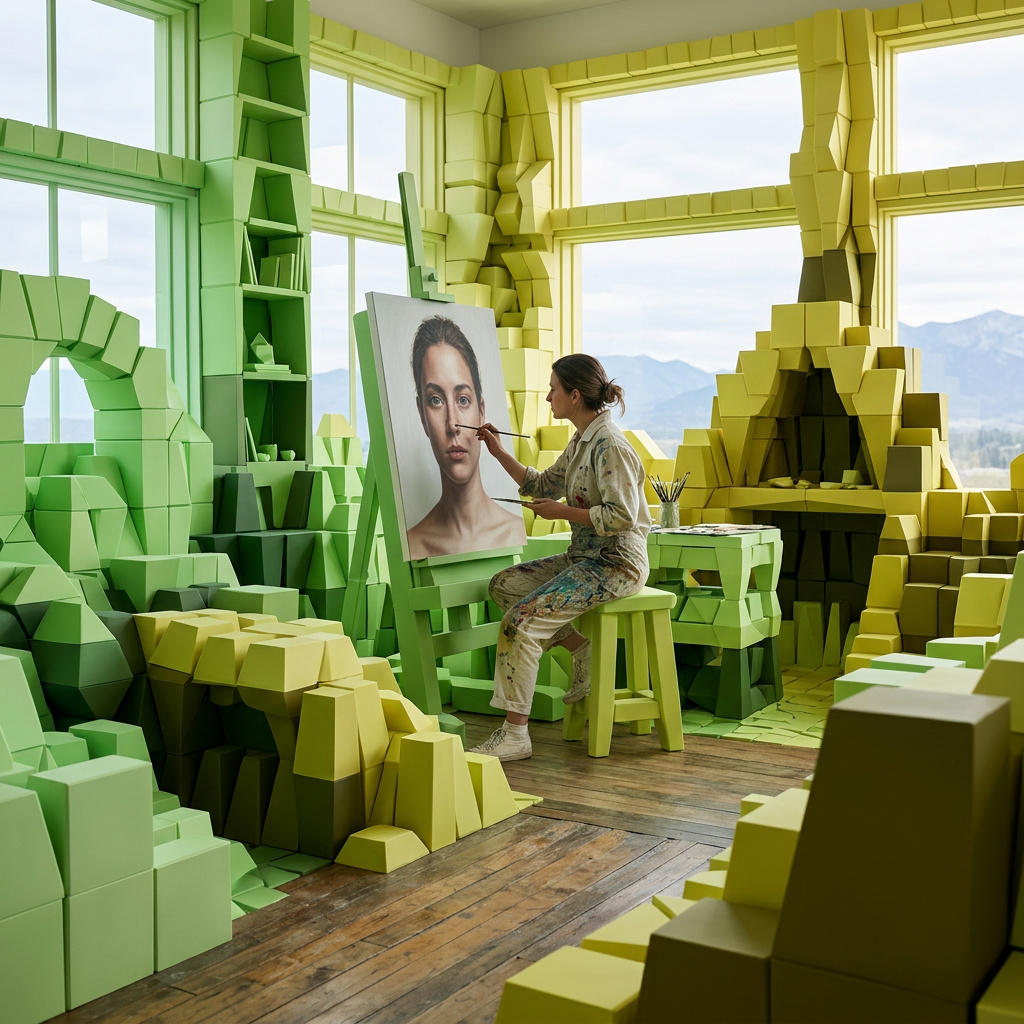
Stable Diffusion XL v1.0 VAE Fix is the SDXL 1.0 base checkpoint packaged with a corrected VAE for more stable inference. It keeps SDXL's strong prompt understanding, broad visual range, native 1024x1024 generation, and support for both text-to-image and image-to-image workflows, while reducing the artifact and decoding issues associated with the original embedded VAE.
API Options
Platform-level options for task execution and delivery.
taskType
stringrequiredvalue: imageInferenceIdentifier for the type of task being performed.
taskUUID
stringrequiredUUID v4UUID v4 identifier for tracking tasks and matching async responses. Must be unique per task.
outputType
stringdefault: URLImage output type.
Allowed values3 values
outputFormat
stringdefault: JPGSpecifies the file format of the generated output. The available values depend on the task type and the specific model's capabilities.
- `JPG`: Best for photorealistic images with smaller file sizes (no transparency).
- `PNG`: Lossless compression, supports high quality and transparency (alpha channel).
- `WEBP`: Modern format providing superior compression and transparency support.
**Transparency**: If you are using features like background removal or LayerDiffuse that require transparency, you must select a format that supports an alpha channel (e.g., `PNG`, `WEBP`, `TIFF`). `JPG` does not support transparency.Allowed values3 values
outputQuality
integermin: 20max: 99default: 95Compression quality of the output. Higher values preserve quality but increase file size.
webhookURL
stringuriWebhook URL that receives JSON responses via HTTP POST when generation tasks complete. For batch requests with multiple results, each completed item triggers a separate webhook call as it becomes available.
Learn more1 resource
- WebhooksPLATFORM
- Webhooks
deliveryMethod
stringdefault: syncDetermines how the API delivers task results.
Allowed values2 values
- Returns complete results directly in the API response.
- Returns an immediate acknowledgment with the task UUID. Poll for results using getResponse.
Learn more1 resource
- Task PollingPLATFORM
uploadEndpoint
stringuriSpecifies a URL where the generated content will be automatically uploaded using the HTTP PUT method. The raw binary data of the media file is sent directly as the request body. For secure uploads to cloud storage, use presigned URLs that include temporary authentication credentials.
Common use cases:
- Cloud storage: Upload directly to S3 buckets, Google Cloud Storage, or Azure Blob Storage using presigned URLs.
- CDN integration: Upload to content delivery networks for immediate distribution.
// S3 presigned URL for secure upload
https://your-bucket.s3.amazonaws.com/generated/content.mp4?X-Amz-Signature=abc123&X-Amz-Expires=3600

// Google Cloud Storage presigned URL
https://storage.googleapis.com/your-bucket/content.jpg?X-Goog-Signature=xyz789

// Custom storage endpoint
https://storage.example.com/uploads/generated-image.jpg
The content data will be sent as the request body to the specified URL when generation is complete.
safety
objectContent safety checking configuration for image generation.
Properties1 property
safety»checkContentcheckContent
booleanEnable or disable content safety checking. Increases total generation time.
ttl
integermin: 60Time-to-live (TTL) in seconds for generated content. Only applies when
outputTypeisURL.
includeCost
booleanInclude task cost in the response.
numberResults
integermin: 1max: 20default: 1Number of results to generate. Each result uses a different seed, producing variations of the same parameters.
acceleratorOptions
objectAdvanced caching mechanisms to speed up generation.
Properties10 properties
acceleratorOptions»cacheEndStepcacheEndStep
integermin: 1Absolute step number to end caching. Must be greater than
cacheStartStepand less than or equal tosteps.
acceleratorOptions»cacheEndStepPercentagecacheEndStepPercentage
integermin: 1max: 100Percentage of steps to end caching. Alternative to
cacheEndStep. Must be greater thancacheStartStepPercentage.
acceleratorOptions»cacheMaxConsecutiveStepscacheMaxConsecutiveSteps
integermin: 1max: 5default: 3Limits the maximum number of consecutive steps that can use cached computations before forcing a fresh computation.
acceleratorOptions»cacheStartStepcacheStartStep
integermin: 0Absolute step number to start caching. Must be less than
cacheEndStep.
acceleratorOptions»cacheStartStepPercentagecacheStartStepPercentage
integermin: 0max: 99Percentage of steps to start caching. Alternative to
cacheStartStep. Must be less thancacheEndStepPercentage.
acceleratorOptions»teaCacheteaCache
booleanTeaCache acceleration for transformer-based models. Estimates step differences to skip redundant computations.
acceleratorOptions»teaCacheDistanceteaCacheDistance
floatmin: 0max: 1step: 0.01default: 0.5Controls the aggressiveness of the TeaCache feature. Lower values prioritize quality, higher values prioritize speed.
acceleratorOptions»deepCachedeepCache
booleanDeepCache acceleration. Skips transformer computations in certain steps to speed up generation.
acceleratorOptions»deepCacheIntervaldeepCacheInterval
integermin: 1Interval for DeepCache acceleration. A value of 2 skips every other step, 3 skips two out of three, etc.
acceleratorOptions»deepCacheBranchIddeepCacheBranchId
integermin: 0Branch ID for DeepCache acceleration. Determines which U-Net layers are skipped.
routing
objectModel router options. Only read when
modelisauto, and never sent to the model.Properties3 properties
routing»preferencespreferences
objectRelative importance of each dimension when models are compared. Weights, not thresholds.
Properties3 properties
routing»preferences»qualityquality
integermin: 0max: 5Importance of one dimension.
0leaves it out of the decision.
routing»preferences»speedspeed
integermin: 0max: 5Importance of one dimension.
0leaves it out of the decision.
routing»preferences»costcost
integermin: 0max: 5Importance of one dimension.
0leaves it out of the decision.
routing»maxPricemaxPrice
floatmin: 0Upper bound on what this request may cost, in USD. A model whose cost cannot be bounded is not chosen.
routing»requirementsrequirements
stringmax: 3000Conditions the result has to meet, in plain words. A model that cannot meet them is not chosen.
Inputs
Input resources for the task (images, audio, etc). These must be nested inside the inputs object.
inputs object.inputs»seedImageseedImage
stringImage used as a starting point for the generation (UUID, URL, Data URI, or Base64).
Learn more3 resources
inputs»maskImagemaskImage
stringImage used to specify which areas of the input image should be edited (UUID, URL, Data URI, or Base64). White marks the area to edit, black is preserved.
Learn more1 resource
Core Parameters
Primary parameters that define the task output.
model
stringrequiredvalue: civitai:101055@128078Send
autoinstead of an AIR identifier to have the model router choose the model for this task. The rest of the request is unchanged, every value you send is kept, and only the parameters you leave out are filled in. See Model Router.Learn more3 resources
positivePrompt
stringrequiredmin: 2max: 3000Text prompt describing elements to include in the generated output.
Learn more1 resource
- PromptsLEARN
- Prompts
negativePrompt
stringmin: 2max: 3000Prompt to guide what to exclude from generation. Ignored when guidance is disabled (CFGScale ≤ 1).
Learn more1 resource
width
integerrequiredmin: 128max: 2048step: 8default: 1024Width of the generated media in pixels.
Learn more2 resources
height
integerrequiredmin: 128max: 2048step: 8default: 1024Height of the generated media in pixels.
Learn more2 resources
seed
integermin: 0max: 9223372036854776000Random seed for reproducible generation. When not provided, a random seed is generated in the unsigned 32-bit range.
Learn more1 resource
- SeedLEARN
- Seed
steps
integermin: 1max: 100default: 20Total number of denoising steps. Higher values generally produce more detailed results but take longer.
Learn more1 resource
- StepsLEARN
- Steps
scheduler
stringScheduler to use for the diffusion process.
Allowed values75 values
Learn more2 resources
CFGScale
floatmin: 0max: 50step: 0.01Guidance scale representing how closely the output will resemble the prompt. Higher values produce results more aligned with the prompt.
Learn more1 resource
- Cfg ScaleLEARN
- Cfg Scale
strength
floatmin: 0max: 1step: 0.01default: 0.8Strength of the transformation. Lower values result in more influence from the original input.
maskMargin
integermin: 32max: 128Extra context pixels around the masked region during inpainting. The model zooms into the masked area with these additional pixels for better integration.
Learn more1 resource
clipSkip
integermin: 0max: 4Number of layers to skip in the CLIP model.
Learn more2 resources
- Clip SkipLEARN
- Custom Stickers: Clip SkipLEARN
- Clip Skip
vae
stringVAE model identifier. Overrides the default VAE included with the base model.
Learn more1 resource
- VaeLEARN
- Vae
promptWeighting
stringDefines the syntax to be used for prompt weighting.
Prompt weighting allows you to adjust how strongly different parts of your prompt influence the generated image. Choose between
compelnotation with advanced weighting operations orsdEmbedsfor simple emphasis adjustments.View Compel syntax
Adds 0.2 seconds to image inference time and incurs additional costs.
When
compelsyntax is selected, you can use the following notation in prompts:Weighting
Syntax:
+-(word)0.9Increase or decrease the attention given to specific words or phrases.
Examples:
- Single words:
small+ dog, pixar style - Multiple words:
small dog, (pixar style)- - Multiple symbols for more effect:
small+++ dog, pixar style - Nested weighting:
(small+ dog)++, pixar style - Explicit weight percentage:
small dog, (pixar)1.2 style
Blend
Syntax:
.blend()Merge multiple conditioning prompts.
Example:
("small dog", "robot").blend(1, 0.8)Conjunction
Syntax:
.and()Break a prompt into multiple clauses and pass them separately.
Example:
("small dog", "pixar style").and()View sdEmbeds syntax
When
sdEmbedssyntax is selected, you can use the following notation in prompts:Weighting
Syntax:
(text)(text:number)[text]Use parentheses
()to increase attention, square brackets[]to decrease it. Add a number after the text to specify a custom multiplier.Examples:
- Single words:
(small) dog, pixar style - Multiple words:
small dog, [pixar style] - Higher emphasis:
(small:2.5) dog, pixar style - Combined emphasis:
(small dog:1.5), pixar style
Allowed values2 values
Learn more1 resource
- PromptsLEARN
- Single words:
outpaint
objectPixel extensions for each boundary direction of the source image. At least one direction is required.
Learn more1 resource
Properties5 properties
outpaint»toptop
integermin: 0step: 64Number of pixels to extend to the top.
outpaint»bottombottom
integermin: 0step: 64Number of pixels to extend to the bottom.
outpaint»leftleft
integermin: 0step: 64Number of pixels to extend to the left.
outpaint»rightright
integermin: 0step: 64Number of pixels to extend to the right.
outpaint»blurblur
integermin: 0max: 32Amount of blur to apply to the mask edge.
Learn more1 resource
lora
array of objectsmin items: 1With LoRA (Low-Rank Adaptation), you can adapt a model to specific styles or features by emphasizing particular aspects of the data. This technique enhances the quality and relevance of generated content and can be especially useful when the output needs to adhere to a specific artistic style or follow particular guidelines.
Multiple LoRA models can be used simultaneously to achieve different adaptation goals.
Examples1 example
"lora": [
  {
    "model": "<lora-model-air>",
    "weight": 0.8
  }
]
Learn more1 resource
- LorasLEARN
Properties2 properties
- Loras
controlNet
array of objectsmin items: 1With ControlNet, you can provide a guide image to help the model generate images that align with the desired structure. This guide image can be generated with our ControlNet preprocessing tool, extracting guidance information from an input image. The guide image can be in the form of an edge map, a pose, a depth estimation or any other type of control image that guides the generation process via the ControlNet model.
Multiple ControlNet models can be used at the same time to provide different types of guidance information to the model.
Examples1 example
"controlNet": [
  {
    "model": "<controlnet-model-air>",
    "guideImage": "c64351d5-4c59-42f7-95e1-eace013eddab",
    "weight": 0.7,
    "startStep": 0,
    "endStep": 20,
    "controlMode": "controlnet"
  }
]
Learn more2 resources
Properties8 properties
controlNet»modelmodel
stringrequiredControlNet model identifier.
Allowed values2 values
controlNet»weightweight
floatmin: -4max: 4step: 0.01default: 1Strength of the ControlNet influence. A value of 0 means no influence. Higher values increase the influence, and negative values can be used to steer away from the guide image.
controlNet»guideImageguideImage
stringrequiredReference image for ControlNet guidance (UUID, URL, Data URI, or Base64).
controlNet»controlModecontrolMode
stringdefault: balancedControlNet guidance mode.
Allowed values3 values
- Equal weight between ControlNet and prompt.
- Prioritize ControlNet guidance.
- Prioritize prompt guidance.
controlNet»endStependStep
integermin: 1Absolute step number to end ControlNet influence. Must be greater than
startStepand less than or equal tosteps.
controlNet»endStepPercentageendStepPercentage
integermin: 1max: 100Percentage of steps to end ControlNet influence. Must be greater than
startStepPercentage.
controlNet»startStepstartStep
integermin: 0Absolute step number to start ControlNet influence. Must be less than
endStep.
controlNet»startStepPercentagestartStepPercentage
integermin: 0max: 99Percentage of steps to start ControlNet influence. Must be less than
endStepPercentage.
ipAdapters
array of objectsmin items: 1IP-Adapters enable image-prompted generation, allowing you to use reference images to guide the style and content of your generations. Multiple IP Adapters can be used simultaneously.
Examples1 example
"ipAdapters": [
  {
    "model": "<ip-adapter-model-air>",
    "guideImages": ["c64351d5-4c59-42f7-95e1-eace013eddab"],
    "weight": 0.75
  },
  {
    "model": "<ip-adapter-model-air>",
    "guideImages": ["d7e8f9a0-2b5c-4e7f-a1d3-9c8b7a6e5d4f"],
    "weight": 0.5
  }
]
Learn more1 resource
- Ip AdaptersLEARN
Properties7 properties
ipAdapters»modelmodel
stringrequiredWe make use of the AIR system to identify IP-Adapter models. This identifier is a unique string that represents a specific model.
Supported models list
AIR ID Model Name runware:55@1 IP Adapter SDXL runware:55@2 IP Adapter SDXL Plus runware:55@3 IP Adapter SDXL Plus Face runware:55@4 IP Adapter SDXL Vit-H runware:55@5 IP Adapter SD 1.5 runware:55@6 IP Adapter SD 1.5 Plus runware:55@7 IP Adapter SD 1.5 Light runware:55@8 IP Adapter SD 1.5 Plus Face runware:55@10 IP Adapter SD 1.5 Vit-G Allowed values4 values
ipAdapters»weightweight
floatmin: -4max: 4step: 0.01default: 1Strength of the IP-Adapter influence. A value of 0 means no influence. Higher values increase the influence, and negative values can be used to steer away from the reference.
ipAdapters»guideImagesguideImages
array of stringsrequiredmin items: 1Images to guide the IP-Adapter (UUID, URL, Data URI, or Base64).
ipAdapters»weightTypeweightType
stringdefault: normalShapes how influence evolves during generation.
Allowed values13 values
ipAdapters»weightCompositionweightComposition
floatmin: 0max: 1step: 0.01Controls composition/layout influence specifically.
ipAdapters»embedScalingembedScaling
stringdefault: kvDetermines which embedding components are used and their strength.
Allowed values4 values
ipAdapters»combineMethodcombineMethod
stringdefault: concatControls how multiple reference images are combined.
Allowed values5 values
- Ip Adapters
refiner
objectRefiner models help create higher quality image outputs by incorporating specialized models designed to enhance image details and overall coherence. This can be particularly useful when you need results with superior quality, photorealism, or specific aesthetic refinements. Note that refiner models are only SDXL based.
Examples1 example
"refiner": {
  "model": "<refiner-model-air>",
  "startStep": 30
}
Learn more1 resource
- RefinerLEARN
Properties3 properties
refiner»modelmodel
stringrequiredRefiner model identifier.
Allowed values1 value
refiner»startStepstartStep
integermin: 1Absolute step number to switch from the base model to the refiner.
refiner»startStepPercentagestartStepPercentage
integermin: 1max: 99Percentage of total steps at which to switch from the base model to the refiner.
- Refiner
embeddings
array of objectsmin items: 1Embeddings (or Textual Inversion) can be used to add specific concepts or styles to your generations. Multiple embeddings can be used at the same time.
Examples1 example
"embeddings": [
  {
    "model": "<embedding-model-air>"
  }
]
Learn more1 resource
- EmbeddingsLEARN
- Embeddings
Features
Standalone addons and post-processing features.
ultralytics
objectConfiguration object for Ultralytics face enhancement during generation. This feature uses face detection and inpainting to improve facial details in the same generation step, without requiring post-processing.
Face enhancement is available for Stable Diffusion 1.X, SDXL, and FLUX models. The system automatically detects faces and applies targeted refinement to improve quality while maintaining consistency with the overall generation.
Properties9 properties
ultralytics»CFGScaleCFGScale
floatmin: 0max: 50step: 0.1default: 8Face refinement guidance scale.
ultralytics»confidenceconfidence
floatmin: 0max: 1step: 0.01default: 0.9Confidence threshold for detection.
ultralytics»inpaintSizeinpaintSize
integermin: 128max: 2048default: 1024Image size (in pixels) to use for each inpainting region. YOLO detects faces, crops the region, and scales it to this size before running diffusion. Set so most faces land in the 2–4× range of their original pixel size. Going beyond 8× may degrade identity resemblance.
ultralytics»maskBlurmaskBlur
integermin: 0max: 100default: 5Mask feathering amount. Higher values create softer transitions between the enhanced face region and surrounding areas.
ultralytics»maskPaddingmaskPadding
integermin: 0max: 20default: 5Padding around detected face in pixels. Expands the refinement area to include surrounding context like hair and neck.
ultralytics»negativePromptnegativePrompt
stringNegative prompt for detection.
ultralytics»positivePromptpositivePrompt
stringPositive prompt for detection.
ultralytics»stepssteps
integermin: 1max: 100default: 20Number of face refinement steps.
ultralytics»strengthstrength
floatmax: 1step: 0.01default: 0.3Refinement strength. Lower values preserve more of the original, higher values allow more aggressive reconstruction.
hiresFix
boolean | objectTwo-stage generation for improved resolution and detail. The model generates at a lower resolution first, then upscales and refines the result in a second pass. Can be enabled with
truefor default settings, or configured as an object for fine-grained control over the upscaling model, steps, and strength.When using the object form, the
modelparameter is required. Available upscaling models:Model Name Upscale Factor runware:504@1RealESRGAN_x4plus 4x runware:realesrgan@anime-6bRealESRGAN_x4plus_anime_6B 4x runware:esrgan@animesharp4x-AnimeSharp 4x runware:esrgan@ultrasharp4x-UltraSharp 4x "hiresFix": true"hiresFix": { "model": "runware:esrgan@ultrasharp", "steps": 15, "strength": 0.6 }Allowed values1 value
photoMaker
objectPhotoMaker enables personalized image generation while preserving the identity of a subject from reference images. Provide one or more photos of a person, and the model will generate new images that maintain their facial characteristics, expression tendencies, and overall identity across different styles and compositions.
Reference images must each contain a single, clear face. Up to 4 reference images can be provided for stronger identity preservation.
Examples1 example
"photoMaker": { "images": ["59a2edc2-45e6-429f-be5f-7ded59b92046"], "strength": 20, "style": "Cinematic" }Properties3 properties
photoMaker»imagesimages
array of stringsrequiredmin items: 1max items: 4Reference images for subject identity preservation. Each image must contain a single, clear face of the subject (UUID, URL, Data URI, or Base64).
photoMaker»strengthstrength
integermin: 15max: 50default: 15Controls the balance between preserving the subject's original features and the creative transformation specified in the prompt. Lower values provide stronger subject fidelity, higher values allow more creative freedom.
photoMaker»stylestyle
stringdefault: No styleArtistic style applied to the generated images.
Allowed values11 values
- Maximizes subject fidelity while allowing creative freedom in the composition.
- Applies a movie-like aesthetic.
- Transforms the subject into a Disney-inspired character.
- Creates a digital artwork style.
- Enhances photographic qualities.
- Applies fantasy-themed artistic elements.
- Creates a neon-colored cyberpunk aesthetic.
- Improves overall image quality.
- Transforms the subject into comic book style.
- Creates a low-polygon geometric style.
- Converts the image into line drawing style.
advancedFeatures»watermarkwatermark
objectConfiguration object for adding watermarks to generated videos. Watermarks can be applied using either text or image content with customizable positioning and appearance. You must provide either
textorimagecontent for the watermark, but not both."advancedFeatures": { "watermark": { "text": "© 2025 Company", "displayPosition": "bottom-right", "opacity": 0.6, "fontColor": "#ffffff", "bgColor": "#000000" } }"advancedFeatures": { "watermark": { "image": "c64351d5-4c59-42f7-95e1-eace013eddab", "displayPosition": "top-left", "opacity": 0.6 } }"advancedFeatures": { "watermark": { "text": "PREVIEW", "tiled": true, "opacity": 0.4, "fontColor": "#cccccc" } }Properties6 properties
advancedFeatures»watermark»texttext
stringmin: 2max: 32Watermark text.
advancedFeatures»watermark»imageimage
stringWatermark image (UUID, URL, Data URI, or Base64).
advancedFeatures»watermark»displayPositiondisplayPosition
stringWatermark position.
Allowed values10 values
advancedFeatures»watermark»opacityopacity
floatmin: 0.1max: 1step: 0.01Watermark opacity.
advancedFeatures»watermark»fontColorfontColor
stringText color in hex format.
advancedFeatures»watermark»bgColorbgColor
stringBackground color in hex format.