P-Image-Ideogram

P-Image-Ideogram is a Pruna AI text-to-image model built in collaboration with Ideogram for fast, high-quality visual generation across product, people, and brand-oriented creative work. It offers four generation modes, from Very Low to High, so teams can choose the right balance of speed, cost, and image quality for each workflow while retaining strong prompt following and unusually capable text rendering. The model supports both natural-language prompting and more structured JSON-style prompting for tighter control over layout, color palettes, bounding boxes, and typography-heavy compositions.
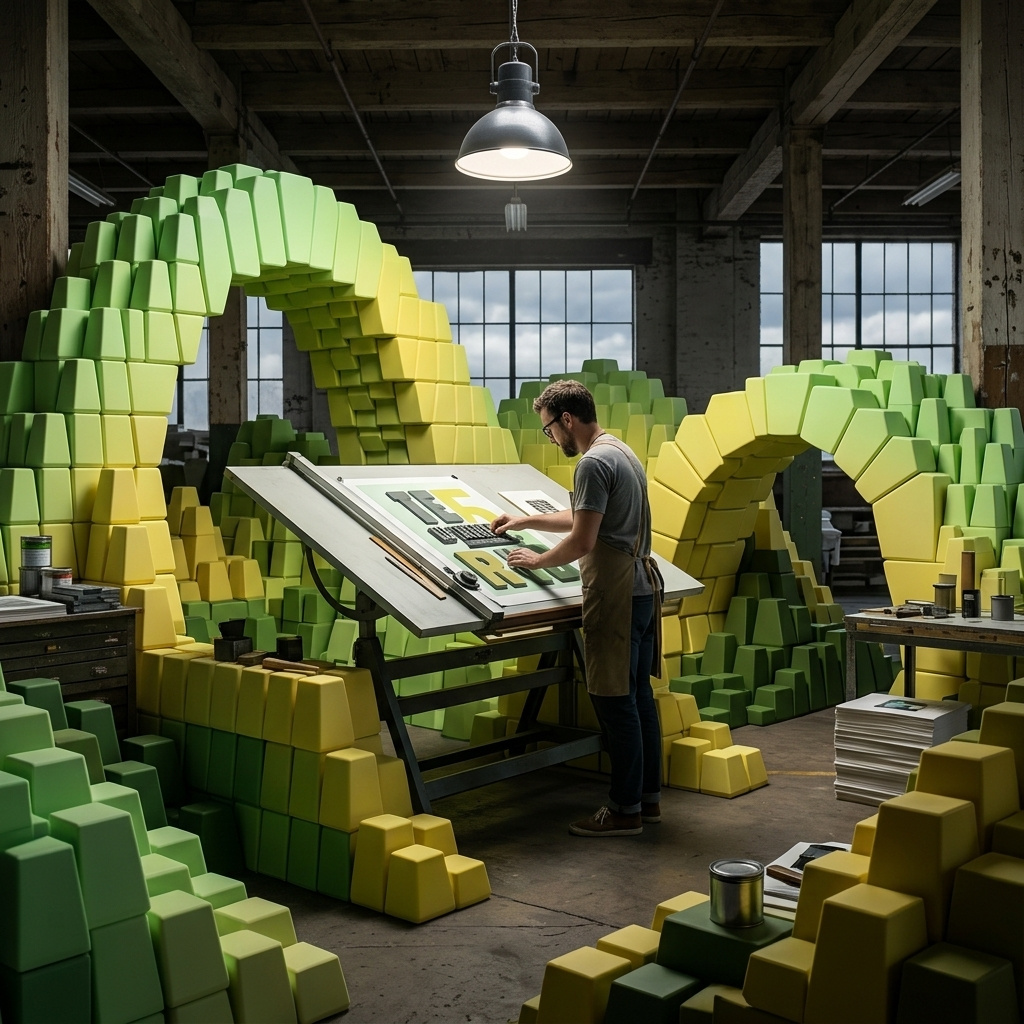
text-to-image
Sake Brewery Process Icon Set$0.0225~12s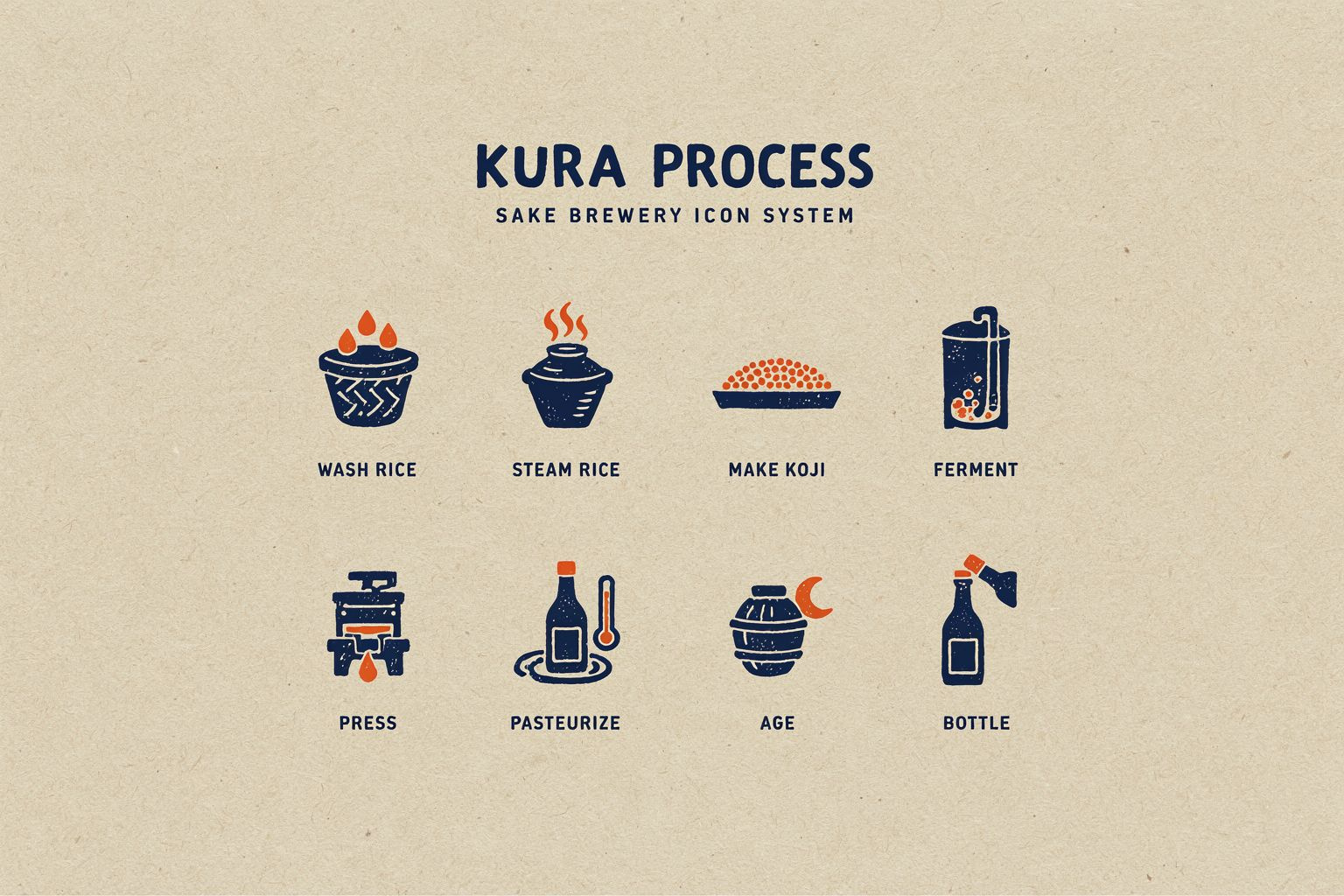
Create a finished landscape icon-system presentation for a craft sake brewery visitor center. This is the actual vector design deliverable, not a website, app interface, photographed mockup, or framed poster. Use a precise four-column by two-row grid containing eight equally sized icons. Each icon has one concise uppercase English label directly beneath it. Top row, left to right: 1. A woven rice basket beneath three water droplets — label exactly “WASH RICE” 2. A traditional cedar steaming vat with a fitted lid and three rising curls of steam — label exactly “STEAM RICE” 3. A shallow tray of rice with a dotted bloom suggesting koji culture — label exactly “MAKE KOJI” 4. A tall fermentation tank with a long mixing paddle and small bubbles — label exactly “FERMENT” Bottom row, left to right: 5. A compact traditional sake press releasing one clear drop — label exactly “PRESS” 6. A capped bottle standing in a shallow hot-water bath beside a thermometer — label exactly “PASTEURIZE” 7. A cedar storage cask paired with a small crescent moon indicating time — label exactly “AGE” 8. A filled sake bottle receiving a simple cap — label exactly “BOTTLE” At the top, add the centered title exactly “KURA PROCESS” with the smaller subtitle exactly “SAKE BREWERY ICON SYSTEM”. Render every word accurately and include no other text, numbers, pseudo-lettering, Japanese characters, signatures, or watermarks. Art direction: contemporary Japanese wayfinding graphics with the tactile character of hand-carved rubber stamps, balanced with rigorous Swiss grid discipline. Bold simplified silhouettes, thick consistent indigo outlines, gently imperfect carved edges, excellent negative space, and instantly understandable industrial-process symbols. Restrained three-color palette: deep fermented indigo, warm unbleached rice-paper cream, and small persimmon-orange accents. Cream background with an extremely subtle natural paper-fiber texture. Use orange only for functional highlights such as droplets, koji dots, bubbles, thermometer level, and bottle cap. Labels use a highly legible condensed sans-serif in deep indigo; the title uses sturdy custom display lettering with restrained craft character. Strong alignment, generous margins, consistent icon scale, clear visual hierarchy, and print-ready editorial polish. Flat front-facing composition, no perspective, no shadows, no gradients, no decorative border, no people, no extra objects. Every icon must feel like part of one professionally commissioned family.
import { createClient } from '@runware/sdk'

const client = await createClient({ apiKey: process.env.RUNWARE_API_KEY })
await client.connect()

const [result] = await client.run({
  model: 'prunaai:p-image@ideogram',
  positivePrompt: 'Create a finished landscape icon-system presentation for a craft sake brewery visitor center. This is the actual vector design deliverable, not a website, app interface, photographed mockup, or framed poster. Use a precise four-column by two-row grid containing eight equally sized icons. Each icon has one concise uppercase English label directly beneath it.\n\nTop row, left to right:\n1. A woven rice basket beneath three water droplets — label exactly “WASH RICE”\n2. A traditional cedar steaming vat with a fitted lid and three rising curls of steam — label exactly “STEAM RICE”\n3. A shallow tray of rice with a dotted bloom suggesting koji culture — label exactly “MAKE KOJI”\n4. A tall fermentation tank with a long mixing paddle and small bubbles — label exactly “FERMENT”\n\nBottom row, left to right:\n5. A compact traditional sake press releasing one clear drop — label exactly “PRESS”\n6. A capped bottle standing in a shallow hot-water bath beside a thermometer — label exactly “PASTEURIZE”\n7. A cedar storage cask paired with a small crescent moon indicating time — label exactly “AGE”\n8. A filled sake bottle receiving a simple cap — label exactly “BOTTLE”\n\nAt the top, add the centered title exactly “KURA PROCESS” with the smaller subtitle exactly “SAKE BREWERY ICON SYSTEM”. Render every word accurately and include no other text, numbers, pseudo-lettering, Japanese characters, signatures, or watermarks.\n\nArt direction: contemporary Japanese wayfinding graphics with the tactile character of hand-carved rubber stamps, balanced with rigorous Swiss grid discipline. Bold simplified silhouettes, thick consistent indigo outlines, gently imperfect carved edges, excellent negative space, and instantly understandable industrial-process symbols. Restrained three-color palette: deep fermented indigo, warm unbleached rice-paper cream, and small persimmon-orange accents. Cream background with an extremely subtle natural paper-fiber texture. Use orange only for functional highlights such as droplets, koji dots, bubbles, thermometer level, and bottle cap. Labels use a highly legible condensed sans-serif in deep indigo; the title uses sturdy custom display lettering with restrained craft character. Strong alignment, generous margins, consistent icon scale, clear visual hierarchy, and print-ready editorial polish. Flat front-facing composition, no perspective, no shadows, no gradients, no decorative border, no people, no extra objects. Every icon must feel like part of one professionally commissioned family.',
  width: 1536,
  height: 1024,
  settings: {
    enhancePrompt: true,
    thinkingLevel: 'high'
  }
})
import asyncio
import os
from runware import Runware
async def main():
async with Runware(api_key=os.environ["RUNWARE_API_KEY"]) as client:
results = await client.run({
"model": "prunaai:p-image@ideogram",
"positivePrompt": "Create a finished landscape icon-system presentation for a craft sake brewery visitor center. This is the actual vector design deliverable, not a website, app interface, photographed mockup, or framed poster. Use a precise four-column by two-row grid containing eight equally sized icons. Each icon has one concise uppercase English label directly beneath it.\n\nTop row, left to right:\n1. A woven rice basket beneath three water droplets — label exactly “WASH RICE”\n2. A traditional cedar steaming vat with a fitted lid and three rising curls of steam — label exactly “STEAM RICE”\n3. A shallow tray of rice with a dotted bloom suggesting koji culture — label exactly “MAKE KOJI”\n4. A tall fermentation tank with a long mixing paddle and small bubbles — label exactly “FERMENT”\n\nBottom row, left to right:\n5. A compact traditional sake press releasing one clear drop — label exactly “PRESS”\n6. A capped bottle standing in a shallow hot-water bath beside a thermometer — label exactly “PASTEURIZE”\n7. A cedar storage cask paired with a small crescent moon indicating time — label exactly “AGE”\n8. A filled sake bottle receiving a simple cap — label exactly “BOTTLE”\n\nAt the top, add the centered title exactly “KURA PROCESS” with the smaller subtitle exactly “SAKE BREWERY ICON SYSTEM”. Render every word accurately and include no other text, numbers, pseudo-lettering, Japanese characters, signatures, or watermarks.\n\nArt direction: contemporary Japanese wayfinding graphics with the tactile character of hand-carved rubber stamps, balanced with rigorous Swiss grid discipline. Bold simplified silhouettes, thick consistent indigo outlines, gently imperfect carved edges, excellent negative space, and instantly understandable industrial-process symbols. Restrained three-color palette: deep fermented indigo, warm unbleached rice-paper cream, and small persimmon-orange accents. Cream background with an extremely subtle natural paper-fiber texture. Use orange only for functional highlights such as droplets, koji dots, bubbles, thermometer level, and bottle cap. Labels use a highly legible condensed sans-serif in deep indigo; the title uses sturdy custom display lettering with restrained craft character. Strong alignment, generous margins, consistent icon scale, clear visual hierarchy, and print-ready editorial polish. Flat front-facing composition, no perspective, no shadows, no gradients, no decorative border, no people, no extra objects. Every icon must feel like part of one professionally commissioned family.",
"width": 1536,
"height": 1024,
"settings": {
"enhancePrompt": True,
"thinkingLevel": "high"
}
})
asyncio.run(main())curl https://api.runware.ai/v1 \
-H "Authorization: Bearer $RUNWARE_API_KEY" \
-H "Content-Type: application/json" \
-d '[
{
  "taskType": "imageInference",
  "taskUUID": "dde2f272-bf2a-4dad-9470-5b86de33380e",
  "model": "prunaai:p-image@ideogram",
  "positivePrompt": "Create a finished landscape icon-system presentation for a craft sake brewery visitor center. This is the actual vector design deliverable, not a website, app interface, photographed mockup, or framed poster. Use a precise four-column by two-row grid containing eight equally sized icons. Each icon has one concise uppercase English label directly beneath it.\n\nTop row, left to right:\n1. A woven rice basket beneath three water droplets — label exactly “WASH RICE”\n2. A traditional cedar steaming vat with a fitted lid and three rising curls of steam — label exactly “STEAM RICE”\n3. A shallow tray of rice with a dotted bloom suggesting koji culture — label exactly “MAKE KOJI”\n4. A tall fermentation tank with a long mixing paddle and small bubbles — label exactly “FERMENT”\n\nBottom row, left to right:\n5. A compact traditional sake press releasing one clear drop — label exactly “PRESS”\n6. A capped bottle standing in a shallow hot-water bath beside a thermometer — label exactly “PASTEURIZE”\n7. A cedar storage cask paired with a small crescent moon indicating time — label exactly “AGE”\n8. A filled sake bottle receiving a simple cap — label exactly “BOTTLE”\n\nAt the top, add the centered title exactly “KURA PROCESS” with the smaller subtitle exactly “SAKE BREWERY ICON SYSTEM”. Render every word accurately and include no other text, numbers, pseudo-lettering, Japanese characters, signatures, or watermarks.\n\nArt direction: contemporary Japanese wayfinding graphics with the tactile character of hand-carved rubber stamps, balanced with rigorous Swiss grid discipline. Bold simplified silhouettes, thick consistent indigo outlines, gently imperfect carved edges, excellent negative space, and instantly understandable industrial-process symbols. Restrained three-color palette: deep fermented indigo, warm unbleached rice-paper cream, and small persimmon-orange accents. Cream background with an extremely subtle natural paper-fiber texture. Use orange only for functional highlights such as droplets, koji dots, bubbles, thermometer level, and bottle cap. Labels use a highly legible condensed sans-serif in deep indigo; the title uses sturdy custom display lettering with restrained craft character. Strong alignment, generous margins, consistent icon scale, clear visual hierarchy, and print-ready editorial polish. Flat front-facing composition, no perspective, no shadows, no gradients, no decorative border, no people, no extra objects. Every icon must feel like part of one professionally commissioned family.",
  "width": 1536,
  "height": 1024,
  "settings": {
    "enhancePrompt": true,
    "thinkingLevel": "high"
  }
}
]'runware run prunaai:p-image@ideogram \
positivePrompt="Create a finished landscape icon-system presentation for a craft sake brewery visitor center. This is the actual vector design deliverable, not a website, app interface, photographed mockup, or framed poster. Use a precise four-column by two-row grid containing eight equally sized icons. Each icon has one concise uppercase English label directly beneath it.
Top row, left to right:
1. A woven rice basket beneath three water droplets — label exactly “WASH RICE”
2. A traditional cedar steaming vat with a fitted lid and three rising curls of steam — label exactly “STEAM RICE”
3. A shallow tray of rice with a dotted bloom suggesting koji culture — label exactly “MAKE KOJI”
4. A tall fermentation tank with a long mixing paddle and small bubbles — label exactly “FERMENT”
Bottom row, left to right:
5. A compact traditional sake press releasing one clear drop — label exactly “PRESS”
6. A capped bottle standing in a shallow hot-water bath beside a thermometer — label exactly “PASTEURIZE”
7. A cedar storage cask paired with a small crescent moon indicating time — label exactly “AGE”
8. A filled sake bottle receiving a simple cap — label exactly “BOTTLE”
At the top, add the centered title exactly “KURA PROCESS” with the smaller subtitle exactly “SAKE BREWERY ICON SYSTEM”. Render every word accurately and include no other text, numbers, pseudo-lettering, Japanese characters, signatures, or watermarks.
Art direction: contemporary Japanese wayfinding graphics with the tactile character of hand-carved rubber stamps, balanced with rigorous Swiss grid discipline. Bold simplified silhouettes, thick consistent indigo outlines, gently imperfect carved edges, excellent negative space, and instantly understandable industrial-process symbols. Restrained three-color palette: deep fermented indigo, warm unbleached rice-paper cream, and small persimmon-orange accents. Cream background with an extremely subtle natural paper-fiber texture. Use orange only for functional highlights such as droplets, koji dots, bubbles, thermometer level, and bottle cap. Labels use a highly legible condensed sans-serif in deep indigo; the title uses sturdy custom display lettering with restrained craft character. Strong alignment, generous margins, consistent icon scale, clear visual hierarchy, and print-ready editorial polish. Flat front-facing composition, no perspective, no shadows, no gradients, no decorative border, no people, no extra objects. Every icon must feel like part of one professionally commissioned family." \
width=1536 \
height=1024 \
settings.enhancePrompt=true \
settings.thinkingLevel=high{
"taskType": "imageInference",
"taskUUID": "dde2f272-bf2a-4dad-9470-5b86de33380e",
"model": "prunaai:p-image@ideogram",
"positivePrompt": "Create a finished landscape icon-system presentation for a craft sake brewery visitor center. This is the actual vector design deliverable, not a website, app interface, photographed mockup, or framed poster. Use a precise four-column by two-row grid containing eight equally sized icons. Each icon has one concise uppercase English label directly beneath it.\n\nTop row, left to right:\n1. A woven rice basket beneath three water droplets — label exactly “WASH RICE”\n2. A traditional cedar steaming vat with a fitted lid and three rising curls of steam — label exactly “STEAM RICE”\n3. A shallow tray of rice with a dotted bloom suggesting koji culture — label exactly “MAKE KOJI”\n4. A tall fermentation tank with a long mixing paddle and small bubbles — label exactly “FERMENT”\n\nBottom row, left to right:\n5. A compact traditional sake press releasing one clear drop — label exactly “PRESS”\n6. A capped bottle standing in a shallow hot-water bath beside a thermometer — label exactly “PASTEURIZE”\n7. A cedar storage cask paired with a small crescent moon indicating time — label exactly “AGE”\n8. A filled sake bottle receiving a simple cap — label exactly “BOTTLE”\n\nAt the top, add the centered title exactly “KURA PROCESS” with the smaller subtitle exactly “SAKE BREWERY ICON SYSTEM”. Render every word accurately and include no other text, numbers, pseudo-lettering, Japanese characters, signatures, or watermarks.\n\nArt direction: contemporary Japanese wayfinding graphics with the tactile character of hand-carved rubber stamps, balanced with rigorous Swiss grid discipline. Bold simplified silhouettes, thick consistent indigo outlines, gently imperfect carved edges, excellent negative space, and instantly understandable industrial-process symbols. Restrained three-color palette: deep fermented indigo, warm unbleached rice-paper cream, and small persimmon-orange accents. Cream background with an extremely subtle natural paper-fiber texture. Use orange only for functional highlights such as droplets, koji dots, bubbles, thermometer level, and bottle cap. Labels use a highly legible condensed sans-serif in deep indigo; the title uses sturdy custom display lettering with restrained craft character. Strong alignment, generous margins, consistent icon scale, clear visual hierarchy, and print-ready editorial polish. Flat front-facing composition, no perspective, no shadows, no gradients, no decorative border, no people, no extra objects. Every icon must feel like part of one professionally commissioned family.",
"width": 1536,
"height": 1024,
"settings": {
"enhancePrompt": true,
"thinkingLevel": "high"
}
}Response
{
  "taskType": "imageInference",
  "taskUUID": "dde2f272-bf2a-4dad-9470-5b86de33380e",
  "imageUUID": "8a4ae845-3391-4091-926a-28b24a5643b1",
  "imageURL": "https://im.runware.ai/image/os/a02d21/ws/3/ii/8a4ae845-3391-4091-926a-28b24a5643b1.jpg",
  "seed": 1750999867,
  "cost": 0.0225
}
text-to-image
Stage Backdrop Conservation Book Cover$0.0225~16s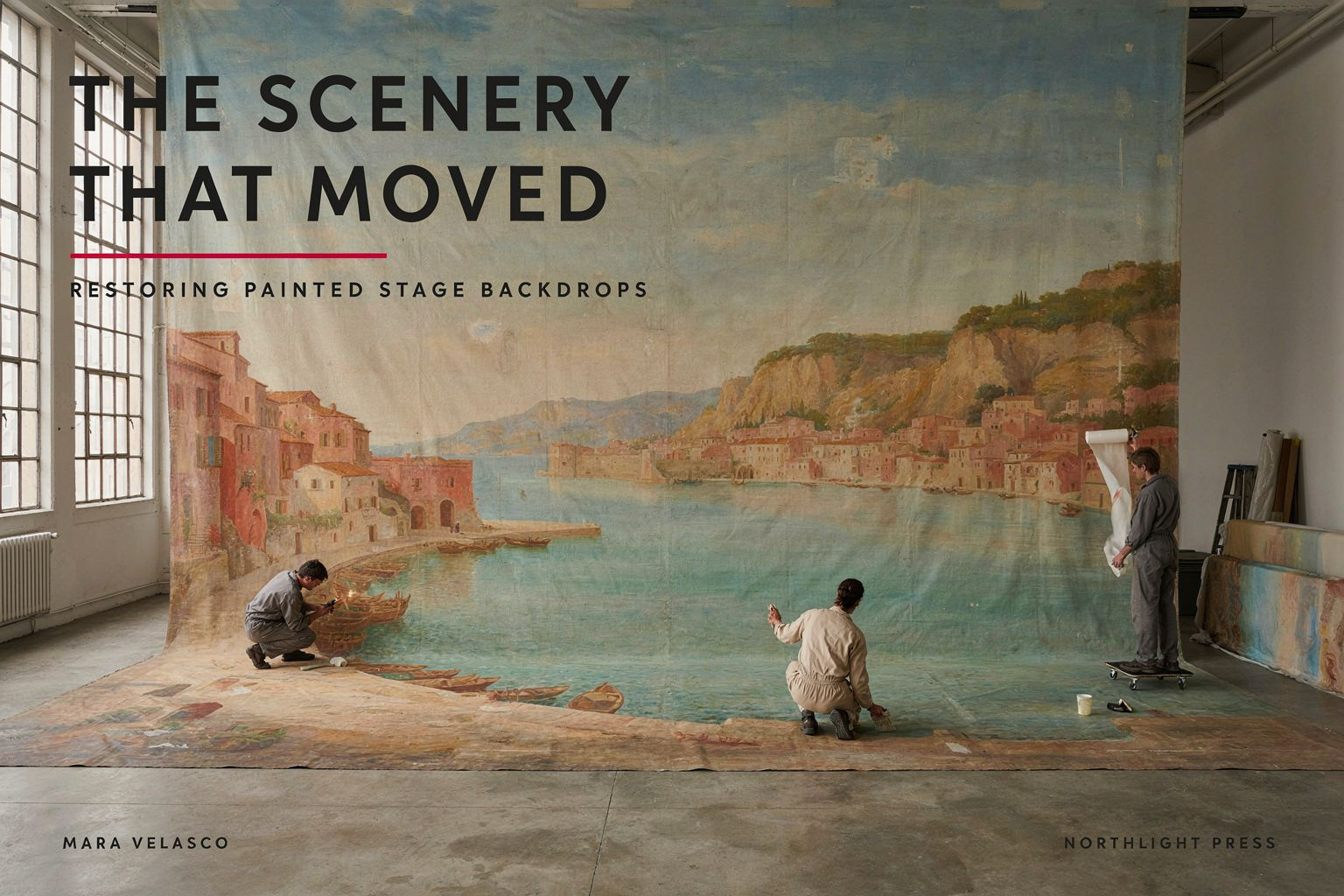
Create a finished, edge-to-edge landscape book cover for a prestigious museum conservation monograph. Show a vast, daylight-filled theatrical scenery conservation studio viewed from a slightly elevated position. A monumental nineteenth-century hand-painted stage backdrop is spread across the floor and rises partway up the rear wall, depicting a romantic Mediterranean harbor with faded coral architecture, pale turquoise water, ochre cliffs, and an ultramarine sky. Three small conservators in neutral work clothes carefully examine and clean the enormous canvas using soft brushes, low rolling platforms, archival tissue, and discreet task lights. Their scale should communicate the astonishing size of the artwork. Include convincing canvas texture, areas of cracked pigment, subtle repair patches, rolled scenery at the edge, and the calm precision of professional museum work. Soft northern window light, restrained shadows, sophisticated documentary photography combined with refined editorial color grading. Palette: dusty coral, faded sage, parchment, ultramarine, charcoal, and one vivid vermilion accent. Design this explicitly as a polished horizontal art-book front cover, not a photograph of a physical book and not a mockup. Use disciplined modernist museum typography with generous spacing and a strong grid. Place the title in the quieter upper-left sky area, clearly readable without obscuring the workers. Render this exact visible text, spelled precisely: THE SCENERY THAT MOVED Below it in smaller uppercase text: RESTORING PAINTED STAGE BACKDROPS At the lower left, set the author name: MARA VELASCO At the lower right, set the publisher imprint in small type: NORTHLIGHT PRESS The title should be large, elegant, condensed sans serif in deep charcoal, with THE SCENERY and THAT MOVED on separate lines. Use a thin vermilion rule as a subtle graphic accent. Maintain excellent hierarchy, clean alignment, generous margins, and high legibility. No additional words, no barcode, no price sticker, no logos, no spine, no border, no book mockup, no hands holding the cover. One complete standalone cover composition.
import { createClient } from '@runware/sdk'

const client = await createClient({ apiKey: process.env.RUNWARE_API_KEY })
await client.connect()

const [result] = await client.run({
  model: 'prunaai:p-image@ideogram',
  positivePrompt: 'Create a finished, edge-to-edge landscape book cover for a prestigious museum conservation monograph. Show a vast, daylight-filled theatrical scenery conservation studio viewed from a slightly elevated position. A monumental nineteenth-century hand-painted stage backdrop is spread across the floor and rises partway up the rear wall, depicting a romantic Mediterranean harbor with faded coral architecture, pale turquoise water, ochre cliffs, and an ultramarine sky. Three small conservators in neutral work clothes carefully examine and clean the enormous canvas using soft brushes, low rolling platforms, archival tissue, and discreet task lights. Their scale should communicate the astonishing size of the artwork. Include convincing canvas texture, areas of cracked pigment, subtle repair patches, rolled scenery at the edge, and the calm precision of professional museum work. Soft northern window light, restrained shadows, sophisticated documentary photography combined with refined editorial color grading. Palette: dusty coral, faded sage, parchment, ultramarine, charcoal, and one vivid vermilion accent.\n\nDesign this explicitly as a polished horizontal art-book front cover, not a photograph of a physical book and not a mockup. Use disciplined modernist museum typography with generous spacing and a strong grid. Place the title in the quieter upper-left sky area, clearly readable without obscuring the workers. Render this exact visible text, spelled precisely:\n\nTHE SCENERY\nTHAT MOVED\n\nBelow it in smaller uppercase text:\nRESTORING PAINTED STAGE BACKDROPS\n\nAt the lower left, set the author name:\nMARA VELASCO\n\nAt the lower right, set the publisher imprint in small type:\nNORTHLIGHT PRESS\n\nThe title should be large, elegant, condensed sans serif in deep charcoal, with THE SCENERY and THAT MOVED on separate lines. Use a thin vermilion rule as a subtle graphic accent. Maintain excellent hierarchy, clean alignment, generous margins, and high legibility. No additional words, no barcode, no price sticker, no logos, no spine, no border, no book mockup, no hands holding the cover. One complete standalone cover composition.',
  width: 1536,
  height: 1024,
  settings: {
    enhancePrompt: true,
    thinkingLevel: 'high'
  }
})
import asyncio
import os
from runware import Runware
async def main():
async with Runware(api_key=os.environ["RUNWARE_API_KEY"]) as client:
results = await client.run({
"model": "prunaai:p-image@ideogram",
"positivePrompt": "Create a finished, edge-to-edge landscape book cover for a prestigious museum conservation monograph. Show a vast, daylight-filled theatrical scenery conservation studio viewed from a slightly elevated position. A monumental nineteenth-century hand-painted stage backdrop is spread across the floor and rises partway up the rear wall, depicting a romantic Mediterranean harbor with faded coral architecture, pale turquoise water, ochre cliffs, and an ultramarine sky. Three small conservators in neutral work clothes carefully examine and clean the enormous canvas using soft brushes, low rolling platforms, archival tissue, and discreet task lights. Their scale should communicate the astonishing size of the artwork. Include convincing canvas texture, areas of cracked pigment, subtle repair patches, rolled scenery at the edge, and the calm precision of professional museum work. Soft northern window light, restrained shadows, sophisticated documentary photography combined with refined editorial color grading. Palette: dusty coral, faded sage, parchment, ultramarine, charcoal, and one vivid vermilion accent.\n\nDesign this explicitly as a polished horizontal art-book front cover, not a photograph of a physical book and not a mockup. Use disciplined modernist museum typography with generous spacing and a strong grid. Place the title in the quieter upper-left sky area, clearly readable without obscuring the workers. Render this exact visible text, spelled precisely:\n\nTHE SCENERY\nTHAT MOVED\n\nBelow it in smaller uppercase text:\nRESTORING PAINTED STAGE BACKDROPS\n\nAt the lower left, set the author name:\nMARA VELASCO\n\nAt the lower right, set the publisher imprint in small type:\nNORTHLIGHT PRESS\n\nThe title should be large, elegant, condensed sans serif in deep charcoal, with THE SCENERY and THAT MOVED on separate lines. Use a thin vermilion rule as a subtle graphic accent. Maintain excellent hierarchy, clean alignment, generous margins, and high legibility. No additional words, no barcode, no price sticker, no logos, no spine, no border, no book mockup, no hands holding the cover. One complete standalone cover composition.",
"width": 1536,
"height": 1024,
"settings": {
"enhancePrompt": True,
"thinkingLevel": "high"
}
})
asyncio.run(main())curl https://api.runware.ai/v1 \
-H "Authorization: Bearer $RUNWARE_API_KEY" \
-H "Content-Type: application/json" \
-d '[
{
  "taskType": "imageInference",
  "taskUUID": "5f2b7bdd-7673-4e32-812f-7e16b49e5356",
  "model": "prunaai:p-image@ideogram",
  "positivePrompt": "Create a finished, edge-to-edge landscape book cover for a prestigious museum conservation monograph. Show a vast, daylight-filled theatrical scenery conservation studio viewed from a slightly elevated position. A monumental nineteenth-century hand-painted stage backdrop is spread across the floor and rises partway up the rear wall, depicting a romantic Mediterranean harbor with faded coral architecture, pale turquoise water, ochre cliffs, and an ultramarine sky. Three small conservators in neutral work clothes carefully examine and clean the enormous canvas using soft brushes, low rolling platforms, archival tissue, and discreet task lights. Their scale should communicate the astonishing size of the artwork. Include convincing canvas texture, areas of cracked pigment, subtle repair patches, rolled scenery at the edge, and the calm precision of professional museum work. Soft northern window light, restrained shadows, sophisticated documentary photography combined with refined editorial color grading. Palette: dusty coral, faded sage, parchment, ultramarine, charcoal, and one vivid vermilion accent.\n\nDesign this explicitly as a polished horizontal art-book front cover, not a photograph of a physical book and not a mockup. Use disciplined modernist museum typography with generous spacing and a strong grid. Place the title in the quieter upper-left sky area, clearly readable without obscuring the workers. Render this exact visible text, spelled precisely:\n\nTHE SCENERY\nTHAT MOVED\n\nBelow it in smaller uppercase text:\nRESTORING PAINTED STAGE BACKDROPS\n\nAt the lower left, set the author name:\nMARA VELASCO\n\nAt the lower right, set the publisher imprint in small type:\nNORTHLIGHT PRESS\n\nThe title should be large, elegant, condensed sans serif in deep charcoal, with THE SCENERY and THAT MOVED on separate lines. Use a thin vermilion rule as a subtle graphic accent. Maintain excellent hierarchy, clean alignment, generous margins, and high legibility. No additional words, no barcode, no price sticker, no logos, no spine, no border, no book mockup, no hands holding the cover. One complete standalone cover composition.",
  "width": 1536,
  "height": 1024,
  "settings": {
    "enhancePrompt": true,
    "thinkingLevel": "high"
  }
}
]'runware run prunaai:p-image@ideogram \
positivePrompt="Create a finished, edge-to-edge landscape book cover for a prestigious museum conservation monograph. Show a vast, daylight-filled theatrical scenery conservation studio viewed from a slightly elevated position. A monumental nineteenth-century hand-painted stage backdrop is spread across the floor and rises partway up the rear wall, depicting a romantic Mediterranean harbor with faded coral architecture, pale turquoise water, ochre cliffs, and an ultramarine sky. Three small conservators in neutral work clothes carefully examine and clean the enormous canvas using soft brushes, low rolling platforms, archival tissue, and discreet task lights. Their scale should communicate the astonishing size of the artwork. Include convincing canvas texture, areas of cracked pigment, subtle repair patches, rolled scenery at the edge, and the calm precision of professional museum work. Soft northern window light, restrained shadows, sophisticated documentary photography combined with refined editorial color grading. Palette: dusty coral, faded sage, parchment, ultramarine, charcoal, and one vivid vermilion accent.
Design this explicitly as a polished horizontal art-book front cover, not a photograph of a physical book and not a mockup. Use disciplined modernist museum typography with generous spacing and a strong grid. Place the title in the quieter upper-left sky area, clearly readable without obscuring the workers. Render this exact visible text, spelled precisely:
THE SCENERY
THAT MOVED
Below it in smaller uppercase text:
RESTORING PAINTED STAGE BACKDROPS
At the lower left, set the author name:
MARA VELASCO
At the lower right, set the publisher imprint in small type:
NORTHLIGHT PRESS
The title should be large, elegant, condensed sans serif in deep charcoal, with THE SCENERY and THAT MOVED on separate lines. Use a thin vermilion rule as a subtle graphic accent. Maintain excellent hierarchy, clean alignment, generous margins, and high legibility. No additional words, no barcode, no price sticker, no logos, no spine, no border, no book mockup, no hands holding the cover. One complete standalone cover composition." \
width=1536 \
height=1024 \
settings.enhancePrompt=true \
settings.thinkingLevel=high{
"taskType": "imageInference",
"taskUUID": "5f2b7bdd-7673-4e32-812f-7e16b49e5356",
"model": "prunaai:p-image@ideogram",
"positivePrompt": "Create a finished, edge-to-edge landscape book cover for a prestigious museum conservation monograph. Show a vast, daylight-filled theatrical scenery conservation studio viewed from a slightly elevated position. A monumental nineteenth-century hand-painted stage backdrop is spread across the floor and rises partway up the rear wall, depicting a romantic Mediterranean harbor with faded coral architecture, pale turquoise water, ochre cliffs, and an ultramarine sky. Three small conservators in neutral work clothes carefully examine and clean the enormous canvas using soft brushes, low rolling platforms, archival tissue, and discreet task lights. Their scale should communicate the astonishing size of the artwork. Include convincing canvas texture, areas of cracked pigment, subtle repair patches, rolled scenery at the edge, and the calm precision of professional museum work. Soft northern window light, restrained shadows, sophisticated documentary photography combined with refined editorial color grading. Palette: dusty coral, faded sage, parchment, ultramarine, charcoal, and one vivid vermilion accent.\n\nDesign this explicitly as a polished horizontal art-book front cover, not a photograph of a physical book and not a mockup. Use disciplined modernist museum typography with generous spacing and a strong grid. Place the title in the quieter upper-left sky area, clearly readable without obscuring the workers. Render this exact visible text, spelled precisely:\n\nTHE SCENERY\nTHAT MOVED\n\nBelow it in smaller uppercase text:\nRESTORING PAINTED STAGE BACKDROPS\n\nAt the lower left, set the author name:\nMARA VELASCO\n\nAt the lower right, set the publisher imprint in small type:\nNORTHLIGHT PRESS\n\nThe title should be large, elegant, condensed sans serif in deep charcoal, with THE SCENERY and THAT MOVED on separate lines. Use a thin vermilion rule as a subtle graphic accent. Maintain excellent hierarchy, clean alignment, generous margins, and high legibility. No additional words, no barcode, no price sticker, no logos, no spine, no border, no book mockup, no hands holding the cover. One complete standalone cover composition.",
"width": 1536,
"height": 1024,
"settings": {
"enhancePrompt": true,
"thinkingLevel": "high"
}
}Response
{
  "taskType": "imageInference",
  "taskUUID": "5f2b7bdd-7673-4e32-812f-7e16b49e5356",
  "imageUUID": "cc4bc958-0ef1-4767-a4f6-e2e3e0285706",
  "imageURL": "https://im.runware.ai/image/os/a09dlim3/ws/3/ii/cc4bc958-0ef1-4767-a4f6-e2e3e0285706.jpg",
  "seed": 783030576,
  "cost": 0.0225
}
text-to-image
Children’s Water Infrastructure Book Cover$0.0225~14s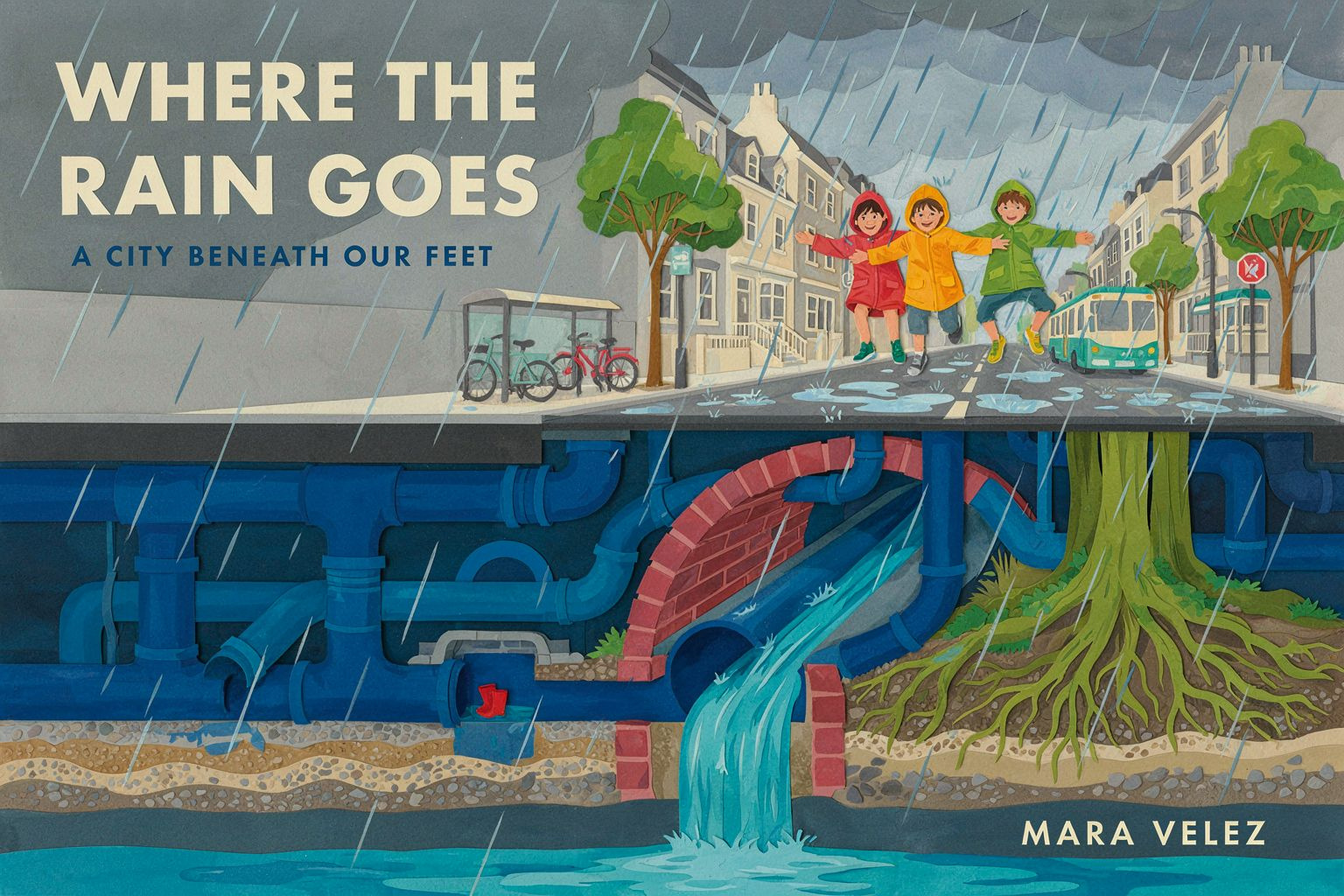
Create a finished, edge-to-edge landscape cover for a premium children’s nonfiction picture book about urban stormwater infrastructure. Show a playful cross-section of a city during a rainstorm: above ground, children in bright raincoats jump over puddles beside row houses, street trees, bicycles, and a city bus; below ground, reveal an interconnected world of curb inlets, pipes, brick culverts, gravel filtration beds, tree roots, rushing water, and a small daylighted stream. Make the underground engineering visually accurate, easy to follow, and full of discovery without becoming a textbook diagram. A tiny lost red rubber boot travels through the water system as a subtle visual story. Art direction: sophisticated hand-cut paper collage combined with screen-printed gouache textures, crisp layered shapes, tactile paper grain, simplified geometry, editorial quality, charming but not babyish. Palette of deep cobalt blue, rain-cloud gray, warm cream, coral red, marigold yellow, moss green, and touches of turquoise. Clear visual hierarchy with the rainy city occupying the upper third and the luminous underground cutaway filling the lower two-thirds. Place large, perfectly legible cream-colored hand-cut display lettering in the open stormy sky at upper left, exactly: “WHERE THE RAIN GOES”. Directly beneath it, in smaller uppercase cobalt lettering, exactly: “A CITY BENEATH OUR FEET”. Place the author credit along the lower-right edge in clean cream uppercase lettering, exactly: “MARA VELEZ”. Integrate thin illustrated rain streaks around and behind the title without obscuring any letters. Balanced professional publishing design, inviting sense of curiosity, polished print-ready cover artwork. Show only the specified title, subtitle, and author credit; no other words, labels, logos, stickers, barcode, spine, border, book mockup, or 3D presentation.
import { createClient } from '@runware/sdk'

const client = await createClient({ apiKey: process.env.RUNWARE_API_KEY })
await client.connect()

const [result] = await client.run({
  model: 'prunaai:p-image@ideogram',
  positivePrompt: 'Create a finished, edge-to-edge landscape cover for a premium children’s nonfiction picture book about urban stormwater infrastructure. Show a playful cross-section of a city during a rainstorm: above ground, children in bright raincoats jump over puddles beside row houses, street trees, bicycles, and a city bus; below ground, reveal an interconnected world of curb inlets, pipes, brick culverts, gravel filtration beds, tree roots, rushing water, and a small daylighted stream. Make the underground engineering visually accurate, easy to follow, and full of discovery without becoming a textbook diagram. A tiny lost red rubber boot travels through the water system as a subtle visual story. Art direction: sophisticated hand-cut paper collage combined with screen-printed gouache textures, crisp layered shapes, tactile paper grain, simplified geometry, editorial quality, charming but not babyish. Palette of deep cobalt blue, rain-cloud gray, warm cream, coral red, marigold yellow, moss green, and touches of turquoise. Clear visual hierarchy with the rainy city occupying the upper third and the luminous underground cutaway filling the lower two-thirds. Place large, perfectly legible cream-colored hand-cut display lettering in the open stormy sky at upper left, exactly: “WHERE THE RAIN GOES”. Directly beneath it, in smaller uppercase cobalt lettering, exactly: “A CITY BENEATH OUR FEET”. Place the author credit along the lower-right edge in clean cream uppercase lettering, exactly: “MARA VELEZ”. Integrate thin illustrated rain streaks around and behind the title without obscuring any letters. Balanced professional publishing design, inviting sense of curiosity, polished print-ready cover artwork. Show only the specified title, subtitle, and author credit; no other words, labels, logos, stickers, barcode, spine, border, book mockup, or 3D presentation.',
  width: 1536,
  height: 1024,
  settings: {
    enhancePrompt: true,
    thinkingLevel: 'high'
  }
})
import asyncio
import os
from runware import Runware
async def main():
async with Runware(api_key=os.environ["RUNWARE_API_KEY"]) as client:
results = await client.run({
"model": "prunaai:p-image@ideogram",
"positivePrompt": "Create a finished, edge-to-edge landscape cover for a premium children’s nonfiction picture book about urban stormwater infrastructure. Show a playful cross-section of a city during a rainstorm: above ground, children in bright raincoats jump over puddles beside row houses, street trees, bicycles, and a city bus; below ground, reveal an interconnected world of curb inlets, pipes, brick culverts, gravel filtration beds, tree roots, rushing water, and a small daylighted stream. Make the underground engineering visually accurate, easy to follow, and full of discovery without becoming a textbook diagram. A tiny lost red rubber boot travels through the water system as a subtle visual story. Art direction: sophisticated hand-cut paper collage combined with screen-printed gouache textures, crisp layered shapes, tactile paper grain, simplified geometry, editorial quality, charming but not babyish. Palette of deep cobalt blue, rain-cloud gray, warm cream, coral red, marigold yellow, moss green, and touches of turquoise. Clear visual hierarchy with the rainy city occupying the upper third and the luminous underground cutaway filling the lower two-thirds. Place large, perfectly legible cream-colored hand-cut display lettering in the open stormy sky at upper left, exactly: “WHERE THE RAIN GOES”. Directly beneath it, in smaller uppercase cobalt lettering, exactly: “A CITY BENEATH OUR FEET”. Place the author credit along the lower-right edge in clean cream uppercase lettering, exactly: “MARA VELEZ”. Integrate thin illustrated rain streaks around and behind the title without obscuring any letters. Balanced professional publishing design, inviting sense of curiosity, polished print-ready cover artwork. Show only the specified title, subtitle, and author credit; no other words, labels, logos, stickers, barcode, spine, border, book mockup, or 3D presentation.",
"width": 1536,
"height": 1024,
"settings": {
"enhancePrompt": True,
"thinkingLevel": "high"
}
})
asyncio.run(main())curl https://api.runware.ai/v1 \
-H "Authorization: Bearer $RUNWARE_API_KEY" \
-H "Content-Type: application/json" \
-d '[
{
  "taskType": "imageInference",
  "taskUUID": "1bebc943-8428-4561-8ff7-7d98fe5c8ac5",
  "model": "prunaai:p-image@ideogram",
  "positivePrompt": "Create a finished, edge-to-edge landscape cover for a premium children’s nonfiction picture book about urban stormwater infrastructure. Show a playful cross-section of a city during a rainstorm: above ground, children in bright raincoats jump over puddles beside row houses, street trees, bicycles, and a city bus; below ground, reveal an interconnected world of curb inlets, pipes, brick culverts, gravel filtration beds, tree roots, rushing water, and a small daylighted stream. Make the underground engineering visually accurate, easy to follow, and full of discovery without becoming a textbook diagram. A tiny lost red rubber boot travels through the water system as a subtle visual story. Art direction: sophisticated hand-cut paper collage combined with screen-printed gouache textures, crisp layered shapes, tactile paper grain, simplified geometry, editorial quality, charming but not babyish. Palette of deep cobalt blue, rain-cloud gray, warm cream, coral red, marigold yellow, moss green, and touches of turquoise. Clear visual hierarchy with the rainy city occupying the upper third and the luminous underground cutaway filling the lower two-thirds. Place large, perfectly legible cream-colored hand-cut display lettering in the open stormy sky at upper left, exactly: “WHERE THE RAIN GOES”. Directly beneath it, in smaller uppercase cobalt lettering, exactly: “A CITY BENEATH OUR FEET”. Place the author credit along the lower-right edge in clean cream uppercase lettering, exactly: “MARA VELEZ”. Integrate thin illustrated rain streaks around and behind the title without obscuring any letters. Balanced professional publishing design, inviting sense of curiosity, polished print-ready cover artwork. Show only the specified title, subtitle, and author credit; no other words, labels, logos, stickers, barcode, spine, border, book mockup, or 3D presentation.",
  "width": 1536,
  "height": 1024,
  "settings": {
    "enhancePrompt": true,
    "thinkingLevel": "high"
  }
}
]'runware run prunaai:p-image@ideogram \
positivePrompt="Create a finished, edge-to-edge landscape cover for a premium children’s nonfiction picture book about urban stormwater infrastructure. Show a playful cross-section of a city during a rainstorm: above ground, children in bright raincoats jump over puddles beside row houses, street trees, bicycles, and a city bus; below ground, reveal an interconnected world of curb inlets, pipes, brick culverts, gravel filtration beds, tree roots, rushing water, and a small daylighted stream. Make the underground engineering visually accurate, easy to follow, and full of discovery without becoming a textbook diagram. A tiny lost red rubber boot travels through the water system as a subtle visual story. Art direction: sophisticated hand-cut paper collage combined with screen-printed gouache textures, crisp layered shapes, tactile paper grain, simplified geometry, editorial quality, charming but not babyish. Palette of deep cobalt blue, rain-cloud gray, warm cream, coral red, marigold yellow, moss green, and touches of turquoise. Clear visual hierarchy with the rainy city occupying the upper third and the luminous underground cutaway filling the lower two-thirds. Place large, perfectly legible cream-colored hand-cut display lettering in the open stormy sky at upper left, exactly: “WHERE THE RAIN GOES”. Directly beneath it, in smaller uppercase cobalt lettering, exactly: “A CITY BENEATH OUR FEET”. Place the author credit along the lower-right edge in clean cream uppercase lettering, exactly: “MARA VELEZ”. Integrate thin illustrated rain streaks around and behind the title without obscuring any letters. Balanced professional publishing design, inviting sense of curiosity, polished print-ready cover artwork. Show only the specified title, subtitle, and author credit; no other words, labels, logos, stickers, barcode, spine, border, book mockup, or 3D presentation." \
width=1536 \
height=1024 \
settings.enhancePrompt=true \
settings.thinkingLevel=high{
"taskType": "imageInference",
"taskUUID": "1bebc943-8428-4561-8ff7-7d98fe5c8ac5",
"model": "prunaai:p-image@ideogram",
"positivePrompt": "Create a finished, edge-to-edge landscape cover for a premium children’s nonfiction picture book about urban stormwater infrastructure. Show a playful cross-section of a city during a rainstorm: above ground, children in bright raincoats jump over puddles beside row houses, street trees, bicycles, and a city bus; below ground, reveal an interconnected world of curb inlets, pipes, brick culverts, gravel filtration beds, tree roots, rushing water, and a small daylighted stream. Make the underground engineering visually accurate, easy to follow, and full of discovery without becoming a textbook diagram. A tiny lost red rubber boot travels through the water system as a subtle visual story. Art direction: sophisticated hand-cut paper collage combined with screen-printed gouache textures, crisp layered shapes, tactile paper grain, simplified geometry, editorial quality, charming but not babyish. Palette of deep cobalt blue, rain-cloud gray, warm cream, coral red, marigold yellow, moss green, and touches of turquoise. Clear visual hierarchy with the rainy city occupying the upper third and the luminous underground cutaway filling the lower two-thirds. Place large, perfectly legible cream-colored hand-cut display lettering in the open stormy sky at upper left, exactly: “WHERE THE RAIN GOES”. Directly beneath it, in smaller uppercase cobalt lettering, exactly: “A CITY BENEATH OUR FEET”. Place the author credit along the lower-right edge in clean cream uppercase lettering, exactly: “MARA VELEZ”. Integrate thin illustrated rain streaks around and behind the title without obscuring any letters. Balanced professional publishing design, inviting sense of curiosity, polished print-ready cover artwork. Show only the specified title, subtitle, and author credit; no other words, labels, logos, stickers, barcode, spine, border, book mockup, or 3D presentation.",
"width": 1536,
"height": 1024,
"settings": {
"enhancePrompt": true,
"thinkingLevel": "high"
}
}Response
{
  "taskType": "imageInference",
  "taskUUID": "1bebc943-8428-4561-8ff7-7d98fe5c8ac5",
  "imageUUID": "40efc98b-3ea2-453b-93da-9357d453a194",
  "imageURL": "https://im.runware.ai/image/os/a03d21/ws/3/ii/40efc98b-3ea2-453b-93da-9357d453a194.jpg",
  "seed": 1134627221,
  "cost": 0.0225
}
text-to-image
Ceramics Studio Air Monitor Lifestyle$0.0225~12s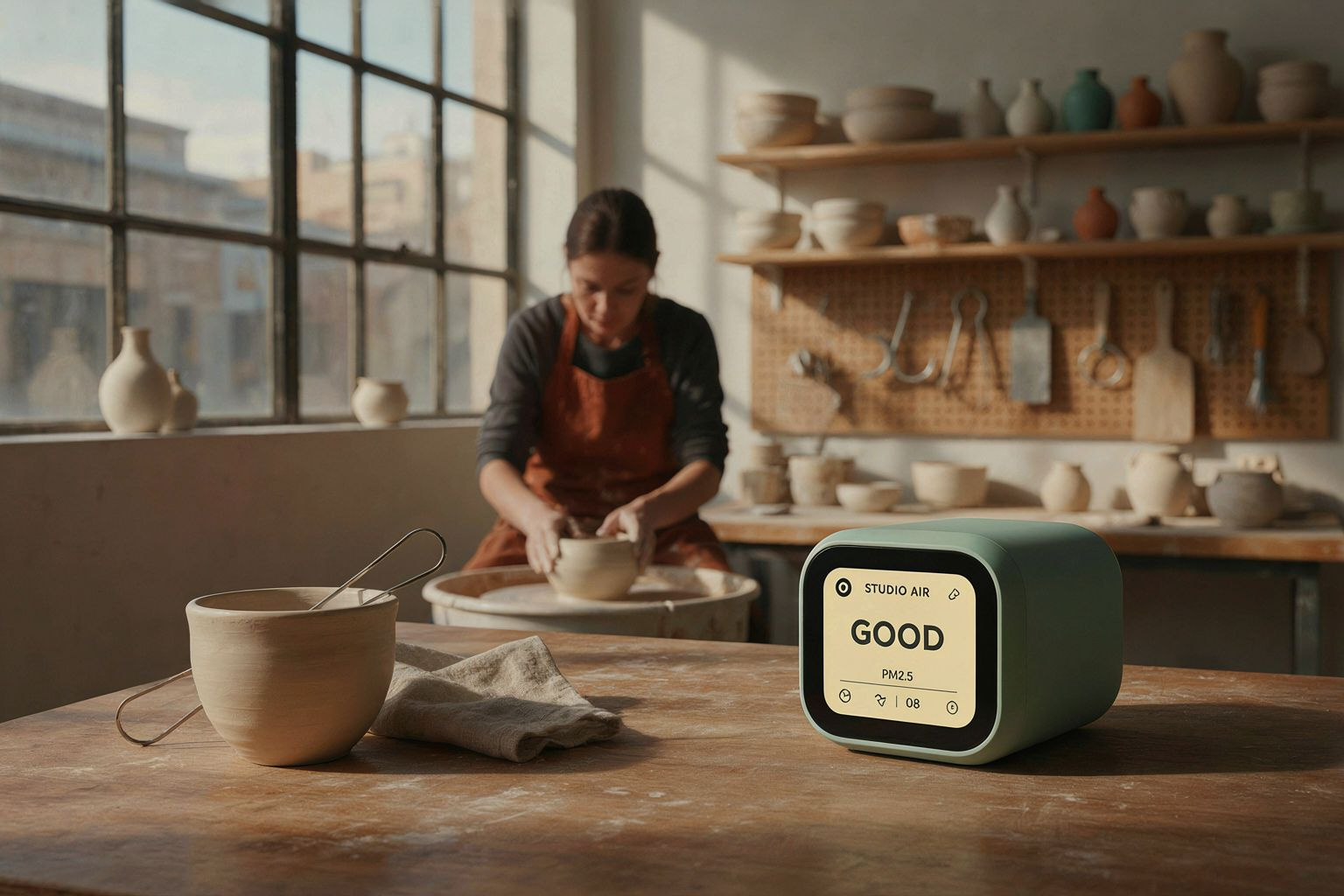
Polished commercial lifestyle photograph for a professional indoor air-quality monitor designed for craft studios. Inside a contemporary working ceramics studio, place a compact matte sage-green air monitor prominently on a dusty oak workbench in the right foreground, shown at a natural three-quarter angle. Its softly illuminated cream display must render this exact text clearly and accurately: “STUDIO AIR” on the first line, “GOOD” large on the second line, and “PM2.5 08” on the third line. No logo or other writing on the device. Beside it: a half-finished stoneware cup, a trimming tool, a folded natural-linen cloth, and a very light trace of realistic clay dust. In the middle distance, an adult ceramicist wearing a rust-colored canvas apron works at a pottery wheel, hands shaping a pale clay vessel; the person is recognizable but secondary and softly out of focus. Shelves of restrained earth-tone bisque pottery, glaze jars without labels, pegboard tools, and a large industrial window establish an authentic production studio. Clean breathable atmosphere, subtle sense of occupational wellness, no visible dust cloud. Late-afternoon daylight enters from the left, creating long soft shadows and a warm terracotta, chalk, oak, sage, and muted teal palette. Premium editorial product photography, realistic materials, precise industrial design, tactile details, controlled shallow depth of field, 50mm lens perspective, crisp focus on the monitor and its screen, believable reflections, natural contrast, generous negative space on the left, landscape composition. The image should feel practical, calm, trustworthy, and design-conscious rather than clinical. One finished photograph only; no border, poster layout, graphic overlay, caption, watermark, packaging, floating text, or additional legible words.
import { createClient } from '@runware/sdk'

const client = await createClient({ apiKey: process.env.RUNWARE_API_KEY })
await client.connect()

const [result] = await client.run({
  model: 'prunaai:p-image@ideogram',
  positivePrompt: 'Polished commercial lifestyle photograph for a professional indoor air-quality monitor designed for craft studios. Inside a contemporary working ceramics studio, place a compact matte sage-green air monitor prominently on a dusty oak workbench in the right foreground, shown at a natural three-quarter angle. Its softly illuminated cream display must render this exact text clearly and accurately: “STUDIO AIR” on the first line, “GOOD” large on the second line, and “PM2.5  08” on the third line. No logo or other writing on the device. Beside it: a half-finished stoneware cup, a trimming tool, a folded natural-linen cloth, and a very light trace of realistic clay dust. In the middle distance, an adult ceramicist wearing a rust-colored canvas apron works at a pottery wheel, hands shaping a pale clay vessel; the person is recognizable but secondary and softly out of focus. Shelves of restrained earth-tone bisque pottery, glaze jars without labels, pegboard tools, and a large industrial window establish an authentic production studio. Clean breathable atmosphere, subtle sense of occupational wellness, no visible dust cloud. Late-afternoon daylight enters from the left, creating long soft shadows and a warm terracotta, chalk, oak, sage, and muted teal palette. Premium editorial product photography, realistic materials, precise industrial design, tactile details, controlled shallow depth of field, 50mm lens perspective, crisp focus on the monitor and its screen, believable reflections, natural contrast, generous negative space on the left, landscape composition. The image should feel practical, calm, trustworthy, and design-conscious rather than clinical. One finished photograph only; no border, poster layout, graphic overlay, caption, watermark, packaging, floating text, or additional legible words.',
  width: 1536,
  height: 1024,
  settings: {
    enhancePrompt: true,
    thinkingLevel: 'high'
  }
})
import asyncio
import os
from runware import Runware
async def main():
async with Runware(api_key=os.environ["RUNWARE_API_KEY"]) as client:
results = await client.run({
"model": "prunaai:p-image@ideogram",
"positivePrompt": "Polished commercial lifestyle photograph for a professional indoor air-quality monitor designed for craft studios. Inside a contemporary working ceramics studio, place a compact matte sage-green air monitor prominently on a dusty oak workbench in the right foreground, shown at a natural three-quarter angle. Its softly illuminated cream display must render this exact text clearly and accurately: “STUDIO AIR” on the first line, “GOOD” large on the second line, and “PM2.5 08” on the third line. No logo or other writing on the device. Beside it: a half-finished stoneware cup, a trimming tool, a folded natural-linen cloth, and a very light trace of realistic clay dust. In the middle distance, an adult ceramicist wearing a rust-colored canvas apron works at a pottery wheel, hands shaping a pale clay vessel; the person is recognizable but secondary and softly out of focus. Shelves of restrained earth-tone bisque pottery, glaze jars without labels, pegboard tools, and a large industrial window establish an authentic production studio. Clean breathable atmosphere, subtle sense of occupational wellness, no visible dust cloud. Late-afternoon daylight enters from the left, creating long soft shadows and a warm terracotta, chalk, oak, sage, and muted teal palette. Premium editorial product photography, realistic materials, precise industrial design, tactile details, controlled shallow depth of field, 50mm lens perspective, crisp focus on the monitor and its screen, believable reflections, natural contrast, generous negative space on the left, landscape composition. The image should feel practical, calm, trustworthy, and design-conscious rather than clinical. One finished photograph only; no border, poster layout, graphic overlay, caption, watermark, packaging, floating text, or additional legible words.",
"width": 1536,
"height": 1024,
"settings": {
"enhancePrompt": True,
"thinkingLevel": "high"
}
})
asyncio.run(main())curl https://api.runware.ai/v1 \
-H "Authorization: Bearer $RUNWARE_API_KEY" \
-H "Content-Type: application/json" \
-d '[
{
  "taskType": "imageInference",
  "taskUUID": "735a73dc-33f6-45af-85ba-58bda5900699",
  "model": "prunaai:p-image@ideogram",
  "positivePrompt": "Polished commercial lifestyle photograph for a professional indoor air-quality monitor designed for craft studios. Inside a contemporary working ceramics studio, place a compact matte sage-green air monitor prominently on a dusty oak workbench in the right foreground, shown at a natural three-quarter angle. Its softly illuminated cream display must render this exact text clearly and accurately: “STUDIO AIR” on the first line, “GOOD” large on the second line, and “PM2.5  08” on the third line. No logo or other writing on the device. Beside it: a half-finished stoneware cup, a trimming tool, a folded natural-linen cloth, and a very light trace of realistic clay dust. In the middle distance, an adult ceramicist wearing a rust-colored canvas apron works at a pottery wheel, hands shaping a pale clay vessel; the person is recognizable but secondary and softly out of focus. Shelves of restrained earth-tone bisque pottery, glaze jars without labels, pegboard tools, and a large industrial window establish an authentic production studio. Clean breathable atmosphere, subtle sense of occupational wellness, no visible dust cloud. Late-afternoon daylight enters from the left, creating long soft shadows and a warm terracotta, chalk, oak, sage, and muted teal palette. Premium editorial product photography, realistic materials, precise industrial design, tactile details, controlled shallow depth of field, 50mm lens perspective, crisp focus on the monitor and its screen, believable reflections, natural contrast, generous negative space on the left, landscape composition. The image should feel practical, calm, trustworthy, and design-conscious rather than clinical. One finished photograph only; no border, poster layout, graphic overlay, caption, watermark, packaging, floating text, or additional legible words.",
  "width": 1536,
  "height": 1024,
  "settings": {
    "enhancePrompt": true,
    "thinkingLevel": "high"
  }
}
]'runware run prunaai:p-image@ideogram \
positivePrompt="Polished commercial lifestyle photograph for a professional indoor air-quality monitor designed for craft studios. Inside a contemporary working ceramics studio, place a compact matte sage-green air monitor prominently on a dusty oak workbench in the right foreground, shown at a natural three-quarter angle. Its softly illuminated cream display must render this exact text clearly and accurately: “STUDIO AIR” on the first line, “GOOD” large on the second line, and “PM2.5 08” on the third line. No logo or other writing on the device. Beside it: a half-finished stoneware cup, a trimming tool, a folded natural-linen cloth, and a very light trace of realistic clay dust. In the middle distance, an adult ceramicist wearing a rust-colored canvas apron works at a pottery wheel, hands shaping a pale clay vessel; the person is recognizable but secondary and softly out of focus. Shelves of restrained earth-tone bisque pottery, glaze jars without labels, pegboard tools, and a large industrial window establish an authentic production studio. Clean breathable atmosphere, subtle sense of occupational wellness, no visible dust cloud. Late-afternoon daylight enters from the left, creating long soft shadows and a warm terracotta, chalk, oak, sage, and muted teal palette. Premium editorial product photography, realistic materials, precise industrial design, tactile details, controlled shallow depth of field, 50mm lens perspective, crisp focus on the monitor and its screen, believable reflections, natural contrast, generous negative space on the left, landscape composition. The image should feel practical, calm, trustworthy, and design-conscious rather than clinical. One finished photograph only; no border, poster layout, graphic overlay, caption, watermark, packaging, floating text, or additional legible words." \
width=1536 \
height=1024 \
settings.enhancePrompt=true \
settings.thinkingLevel=high{
"taskType": "imageInference",
"taskUUID": "735a73dc-33f6-45af-85ba-58bda5900699",
"model": "prunaai:p-image@ideogram",
"positivePrompt": "Polished commercial lifestyle photograph for a professional indoor air-quality monitor designed for craft studios. Inside a contemporary working ceramics studio, place a compact matte sage-green air monitor prominently on a dusty oak workbench in the right foreground, shown at a natural three-quarter angle. Its softly illuminated cream display must render this exact text clearly and accurately: “STUDIO AIR” on the first line, “GOOD” large on the second line, and “PM2.5 08” on the third line. No logo or other writing on the device. Beside it: a half-finished stoneware cup, a trimming tool, a folded natural-linen cloth, and a very light trace of realistic clay dust. In the middle distance, an adult ceramicist wearing a rust-colored canvas apron works at a pottery wheel, hands shaping a pale clay vessel; the person is recognizable but secondary and softly out of focus. Shelves of restrained earth-tone bisque pottery, glaze jars without labels, pegboard tools, and a large industrial window establish an authentic production studio. Clean breathable atmosphere, subtle sense of occupational wellness, no visible dust cloud. Late-afternoon daylight enters from the left, creating long soft shadows and a warm terracotta, chalk, oak, sage, and muted teal palette. Premium editorial product photography, realistic materials, precise industrial design, tactile details, controlled shallow depth of field, 50mm lens perspective, crisp focus on the monitor and its screen, believable reflections, natural contrast, generous negative space on the left, landscape composition. The image should feel practical, calm, trustworthy, and design-conscious rather than clinical. One finished photograph only; no border, poster layout, graphic overlay, caption, watermark, packaging, floating text, or additional legible words.",
"width": 1536,
"height": 1024,
"settings": {
"enhancePrompt": true,
"thinkingLevel": "high"
}
}Response
{
  "taskType": "imageInference",
  "taskUUID": "735a73dc-33f6-45af-85ba-58bda5900699",
  "imageUUID": "55405a88-9b24-4f5e-af80-c9d827b5c91b",
  "imageURL": "https://im.runware.ai/image/os/a05d22/ws/3/ii/55405a88-9b24-4f5e-af80-c9d827b5c91b.jpg",
  "seed": 1803193145,
  "cost": 0.0225
}