Krea 2 Turbo

Krea 2 Turbo is the open-source Krea image endpoint exposed on Runware for fast, low-cost text-to-image generation. It focuses on prompt-driven generation rather than the richer Krea 2 reference workflow, making it a better fit for simple production pipelines, accelerated runtimes, and workflows that benefit from open-model compatibility such as LoRA-based customization.
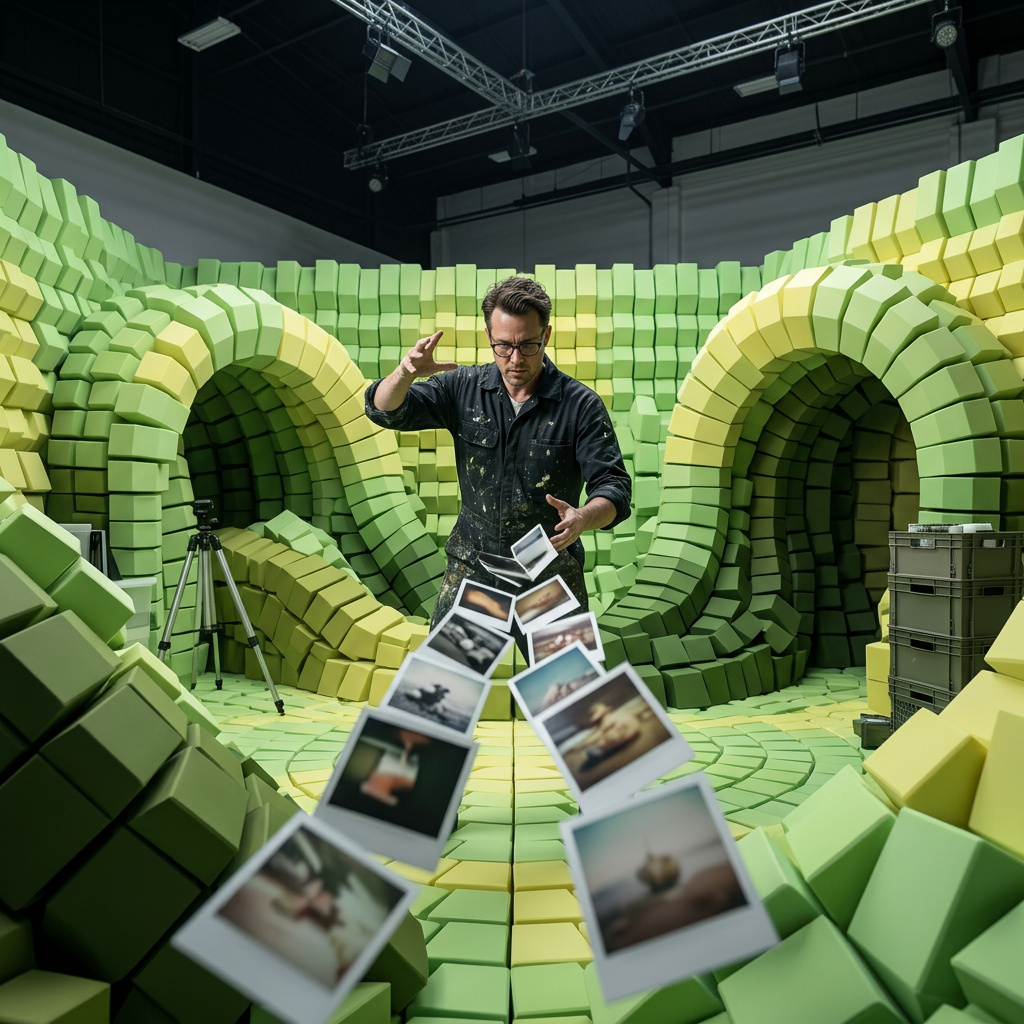
text-to-image
Converted Water Tower Living Room$0.015~4s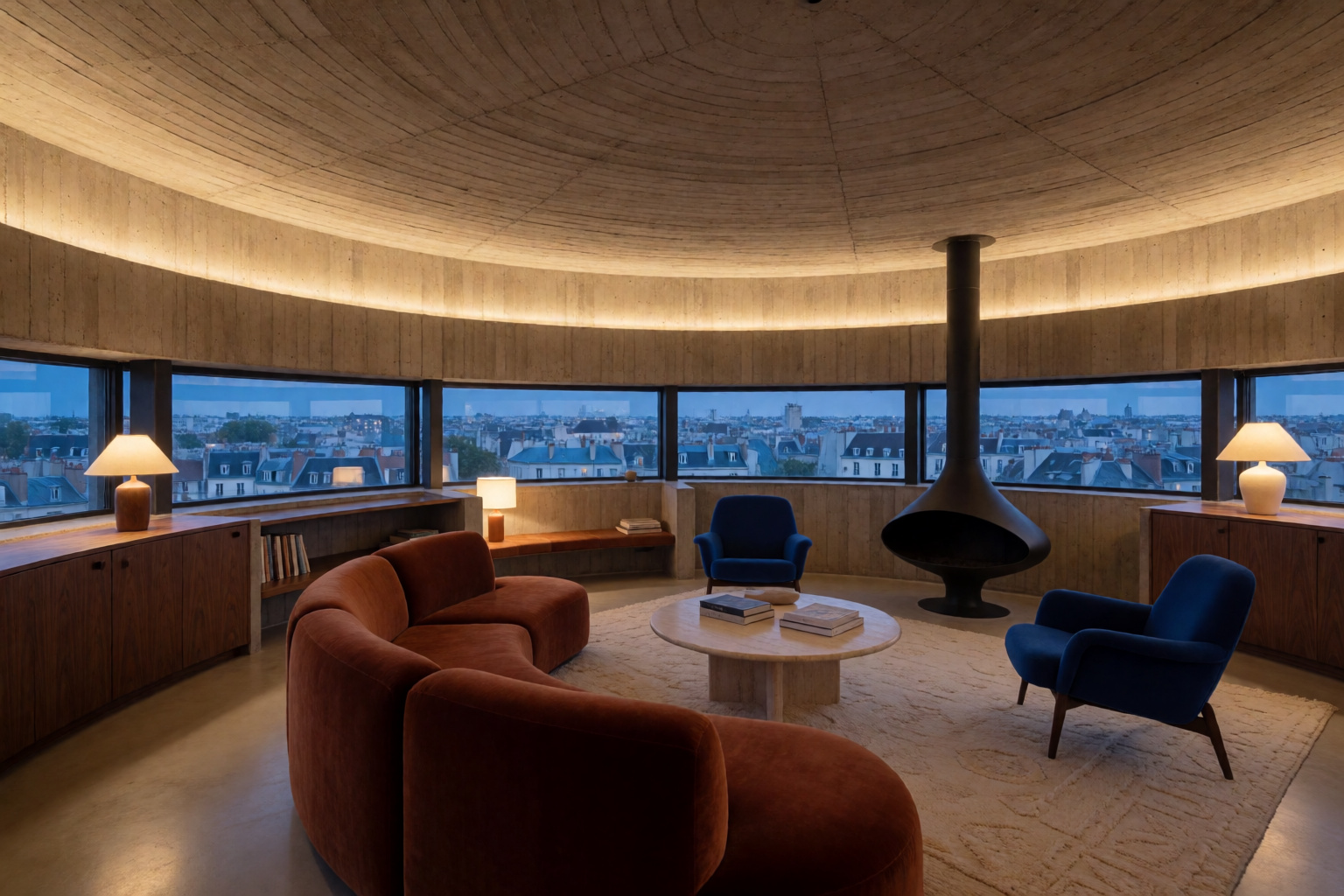
High-end real-estate interior photography of a decommissioned 1960s concrete water tower converted into an extraordinary circular residence. Show the main living room occupying the full round tank: honest curved board-formed concrete walls, a shallow ribbed concrete ceiling, and a continuous band of slim panoramic windows overlooking a dense European city at blue hour. Compose from the edge of the room with a wide but natural architectural perspective, emphasizing the sweeping curve of the space while keeping vertical lines straight. A low crescent-shaped rust velvet sofa faces a sculptural blackened-steel fireplace; cobalt lounge chairs, a round travertine coffee table, a large hand-knotted cream rug, walnut cabinetry, and restrained contemporary art create a sophisticated warm interior. Include a compact reading nook integrated beneath the windows and subtle evidence of the original industrial structure, including restored steel braces and one sealed pipe connection used as a display niche. Soft amber concealed lighting grazes the textured concrete, balanced with cool indigo dusk through the glazing; practical lamps are gently illuminated, with realistic reflections and nuanced shadow detail. Immaculately staged but believable, quiet and inviting, tactile materials, editorial architectural photography, photorealistic, crisp natural detail, broad dynamic range, no people, no signs, no lettering, no fisheye distortion, no duplicated furniture. Finished standalone property-marketing image in 3:2 landscape composition.
import { createClient } from '@runware/sdk'

const client = await createClient({ apiKey: process.env.RUNWARE_API_KEY })
await client.connect()

const [result] = await client.run({
  model: 'krea:krea@2-turbo',
  positivePrompt: 'High-end real-estate interior photography of a decommissioned 1960s concrete water tower converted into an extraordinary circular residence. Show the main living room occupying the full round tank: honest curved board-formed concrete walls, a shallow ribbed concrete ceiling, and a continuous band of slim panoramic windows overlooking a dense European city at blue hour. Compose from the edge of the room with a wide but natural architectural perspective, emphasizing the sweeping curve of the space while keeping vertical lines straight. A low crescent-shaped rust velvet sofa faces a sculptural blackened-steel fireplace; cobalt lounge chairs, a round travertine coffee table, a large hand-knotted cream rug, walnut cabinetry, and restrained contemporary art create a sophisticated warm interior. Include a compact reading nook integrated beneath the windows and subtle evidence of the original industrial structure, including restored steel braces and one sealed pipe connection used as a display niche. Soft amber concealed lighting grazes the textured concrete, balanced with cool indigo dusk through the glazing; practical lamps are gently illuminated, with realistic reflections and nuanced shadow detail. Immaculately staged but believable, quiet and inviting, tactile materials, editorial architectural photography, photorealistic, crisp natural detail, broad dynamic range, no people, no signs, no lettering, no fisheye distortion, no duplicated furniture. Finished standalone property-marketing image in 3:2 landscape composition.',
  width: 1536,
  height: 1024
})
import asyncio
import os
from runware import Runware
async def main():
async with Runware(api_key=os.environ["RUNWARE_API_KEY"]) as client:
results = await client.run({
"model": "krea:krea@2-turbo",
"positivePrompt": "High-end real-estate interior photography of a decommissioned 1960s concrete water tower converted into an extraordinary circular residence. Show the main living room occupying the full round tank: honest curved board-formed concrete walls, a shallow ribbed concrete ceiling, and a continuous band of slim panoramic windows overlooking a dense European city at blue hour. Compose from the edge of the room with a wide but natural architectural perspective, emphasizing the sweeping curve of the space while keeping vertical lines straight. A low crescent-shaped rust velvet sofa faces a sculptural blackened-steel fireplace; cobalt lounge chairs, a round travertine coffee table, a large hand-knotted cream rug, walnut cabinetry, and restrained contemporary art create a sophisticated warm interior. Include a compact reading nook integrated beneath the windows and subtle evidence of the original industrial structure, including restored steel braces and one sealed pipe connection used as a display niche. Soft amber concealed lighting grazes the textured concrete, balanced with cool indigo dusk through the glazing; practical lamps are gently illuminated, with realistic reflections and nuanced shadow detail. Immaculately staged but believable, quiet and inviting, tactile materials, editorial architectural photography, photorealistic, crisp natural detail, broad dynamic range, no people, no signs, no lettering, no fisheye distortion, no duplicated furniture. Finished standalone property-marketing image in 3:2 landscape composition.",
"width": 1536,
"height": 1024
})
asyncio.run(main())curl https://api.runware.ai/v1 \
-H "Authorization: Bearer $RUNWARE_API_KEY" \
-H "Content-Type: application/json" \
-d '[
{
  "taskType": "imageInference",
  "taskUUID": "253e21f0-1bef-4410-b54f-6ae4f2d47e45",
  "model": "krea:krea@2-turbo",
  "positivePrompt": "High-end real-estate interior photography of a decommissioned 1960s concrete water tower converted into an extraordinary circular residence. Show the main living room occupying the full round tank: honest curved board-formed concrete walls, a shallow ribbed concrete ceiling, and a continuous band of slim panoramic windows overlooking a dense European city at blue hour. Compose from the edge of the room with a wide but natural architectural perspective, emphasizing the sweeping curve of the space while keeping vertical lines straight. A low crescent-shaped rust velvet sofa faces a sculptural blackened-steel fireplace; cobalt lounge chairs, a round travertine coffee table, a large hand-knotted cream rug, walnut cabinetry, and restrained contemporary art create a sophisticated warm interior. Include a compact reading nook integrated beneath the windows and subtle evidence of the original industrial structure, including restored steel braces and one sealed pipe connection used as a display niche. Soft amber concealed lighting grazes the textured concrete, balanced with cool indigo dusk through the glazing; practical lamps are gently illuminated, with realistic reflections and nuanced shadow detail. Immaculately staged but believable, quiet and inviting, tactile materials, editorial architectural photography, photorealistic, crisp natural detail, broad dynamic range, no people, no signs, no lettering, no fisheye distortion, no duplicated furniture. Finished standalone property-marketing image in 3:2 landscape composition.",
  "width": 1536,
  "height": 1024
}
]'runware run krea:krea@2-turbo \
positivePrompt="High-end real-estate interior photography of a decommissioned 1960s concrete water tower converted into an extraordinary circular residence. Show the main living room occupying the full round tank: honest curved board-formed concrete walls, a shallow ribbed concrete ceiling, and a continuous band of slim panoramic windows overlooking a dense European city at blue hour. Compose from the edge of the room with a wide but natural architectural perspective, emphasizing the sweeping curve of the space while keeping vertical lines straight. A low crescent-shaped rust velvet sofa faces a sculptural blackened-steel fireplace; cobalt lounge chairs, a round travertine coffee table, a large hand-knotted cream rug, walnut cabinetry, and restrained contemporary art create a sophisticated warm interior. Include a compact reading nook integrated beneath the windows and subtle evidence of the original industrial structure, including restored steel braces and one sealed pipe connection used as a display niche. Soft amber concealed lighting grazes the textured concrete, balanced with cool indigo dusk through the glazing; practical lamps are gently illuminated, with realistic reflections and nuanced shadow detail. Immaculately staged but believable, quiet and inviting, tactile materials, editorial architectural photography, photorealistic, crisp natural detail, broad dynamic range, no people, no signs, no lettering, no fisheye distortion, no duplicated furniture. Finished standalone property-marketing image in 3:2 landscape composition." \
width=1536 \
height=1024{
"taskType": "imageInference",
"taskUUID": "253e21f0-1bef-4410-b54f-6ae4f2d47e45",
"model": "krea:krea@2-turbo",
"positivePrompt": "High-end real-estate interior photography of a decommissioned 1960s concrete water tower converted into an extraordinary circular residence. Show the main living room occupying the full round tank: honest curved board-formed concrete walls, a shallow ribbed concrete ceiling, and a continuous band of slim panoramic windows overlooking a dense European city at blue hour. Compose from the edge of the room with a wide but natural architectural perspective, emphasizing the sweeping curve of the space while keeping vertical lines straight. A low crescent-shaped rust velvet sofa faces a sculptural blackened-steel fireplace; cobalt lounge chairs, a round travertine coffee table, a large hand-knotted cream rug, walnut cabinetry, and restrained contemporary art create a sophisticated warm interior. Include a compact reading nook integrated beneath the windows and subtle evidence of the original industrial structure, including restored steel braces and one sealed pipe connection used as a display niche. Soft amber concealed lighting grazes the textured concrete, balanced with cool indigo dusk through the glazing; practical lamps are gently illuminated, with realistic reflections and nuanced shadow detail. Immaculately staged but believable, quiet and inviting, tactile materials, editorial architectural photography, photorealistic, crisp natural detail, broad dynamic range, no people, no signs, no lettering, no fisheye distortion, no duplicated furniture. Finished standalone property-marketing image in 3:2 landscape composition.",
"width": 1536,
"height": 1024
}Response
{
  "taskType": "imageInference",
  "taskUUID": "253e21f0-1bef-4410-b54f-6ae4f2d47e45",
  "imageUUID": "cb61347d-43ca-4953-b661-51f7706ca285",
  "imageURL": "https://im.runware.ai/image/os/a06dlim3/ws/3/ii/cb61347d-43ca-4953-b661-51f7706ca285.jpg",
  "seed": 194837097,
  "cost": 0.015
}
text-to-image
Coastal Engineering Book Cover$0.015~4s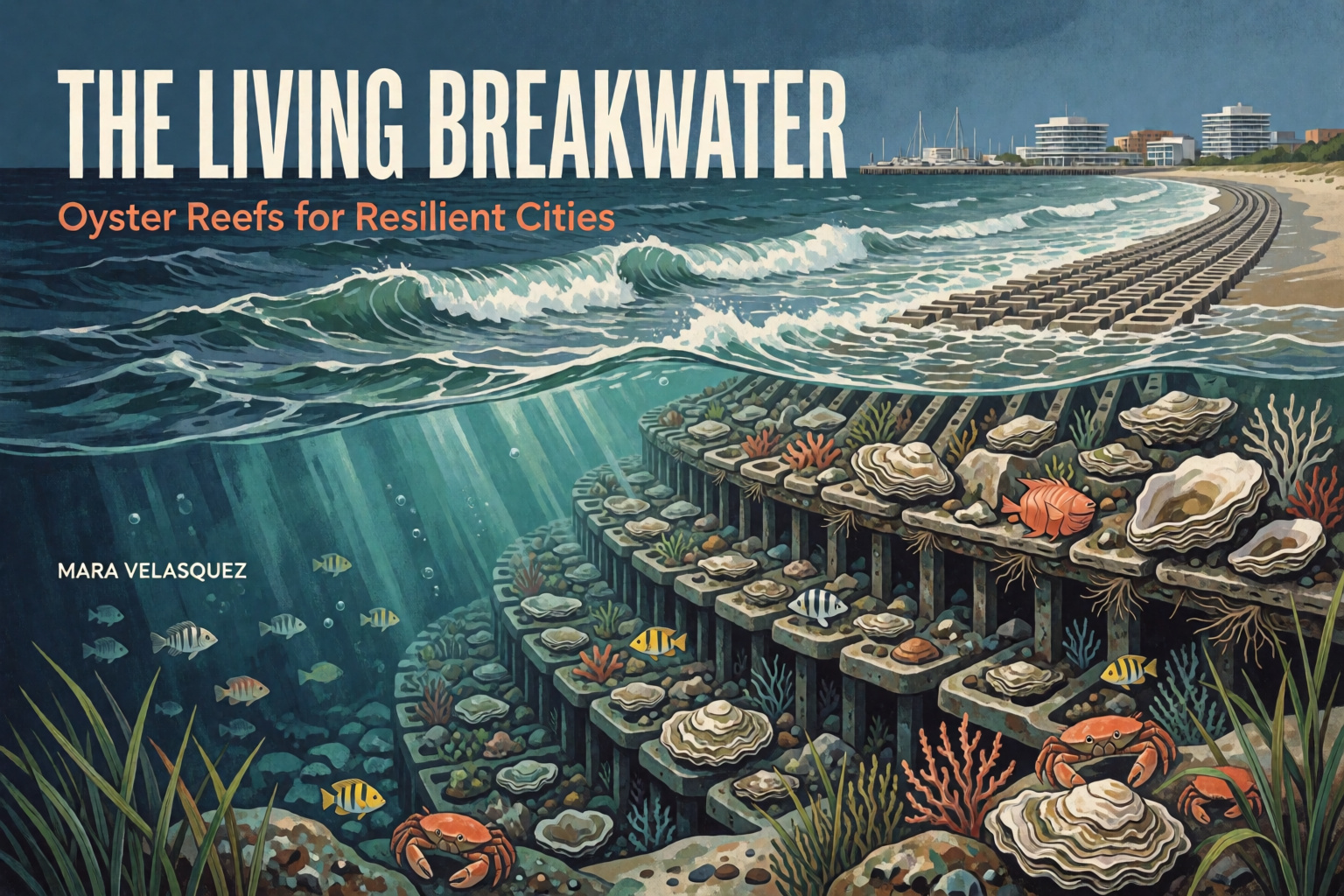
Create a finished landscape-format front cover for a premium coastal engineering and landscape architecture book titled “THE LIVING BREAKWATER,” with the subtitle “Oyster Reefs for Resilient Cities.” Show a visually rich cutaway panorama where sea and shoreline meet: above the waterline, low wind-driven waves approach a distant contemporary harbor city; below the waterline, a thriving constructed oyster reef forms a protective barrier, with layered oyster shells, juvenile fish, eelgrass roots, crabs, sediment, and concrete reef modules clearly visible. Make the reef the central hero, stretching diagonally across the composition and visibly dissipating wave energy before it reaches shore. Art direction: sophisticated editorial scientific illustration combining crisp screen-printed shapes, fine engraved natural-history detail, subtle paper grain, and restrained technical-diagram precision. Palette of deep Atlantic navy, oxidized turquoise, warm shell ivory, muted coral orange, and small accents of acid yellow. Dramatic side lighting filters through the water in broad rays; the underwater habitat feels alive, intricate, and optimistic rather than fantastical. Strong depth, coherent ecology, accurate oyster anatomy, elegant negative space for typography. Place the exact title “THE LIVING BREAKWATER” in large condensed uppercase ivory lettering across the upper left, clean and highly legible. Place the exact subtitle “Oyster Reefs for Resilient Cities” beneath it in smaller coral-orange sans serif. Add the author line “MARA VELASQUEZ” at lower left in small uppercase letters. Preserve generous margins and professional publishing hierarchy. Flat standalone cover artwork only, edge-to-edge composition, no physical book mockup, no spine, no dust-jacket folds, no hands, no table, no extra logos, no badges, no additional text.
import { createClient } from '@runware/sdk'

const client = await createClient({ apiKey: process.env.RUNWARE_API_KEY })
await client.connect()

const [result] = await client.run({
  model: 'krea:krea@2-turbo',
  positivePrompt: 'Create a finished landscape-format front cover for a premium coastal engineering and landscape architecture book titled “THE LIVING BREAKWATER,” with the subtitle “Oyster Reefs for Resilient Cities.” Show a visually rich cutaway panorama where sea and shoreline meet: above the waterline, low wind-driven waves approach a distant contemporary harbor city; below the waterline, a thriving constructed oyster reef forms a protective barrier, with layered oyster shells, juvenile fish, eelgrass roots, crabs, sediment, and concrete reef modules clearly visible. Make the reef the central hero, stretching diagonally across the composition and visibly dissipating wave energy before it reaches shore. Art direction: sophisticated editorial scientific illustration combining crisp screen-printed shapes, fine engraved natural-history detail, subtle paper grain, and restrained technical-diagram precision. Palette of deep Atlantic navy, oxidized turquoise, warm shell ivory, muted coral orange, and small accents of acid yellow. Dramatic side lighting filters through the water in broad rays; the underwater habitat feels alive, intricate, and optimistic rather than fantastical. Strong depth, coherent ecology, accurate oyster anatomy, elegant negative space for typography. Place the exact title “THE LIVING BREAKWATER” in large condensed uppercase ivory lettering across the upper left, clean and highly legible. Place the exact subtitle “Oyster Reefs for Resilient Cities” beneath it in smaller coral-orange sans serif. Add the author line “MARA VELASQUEZ” at lower left in small uppercase letters. Preserve generous margins and professional publishing hierarchy. Flat standalone cover artwork only, edge-to-edge composition, no physical book mockup, no spine, no dust-jacket folds, no hands, no table, no extra logos, no badges, no additional text.',
  width: 1536,
  height: 1024
})
import asyncio
import os
from runware import Runware
async def main():
async with Runware(api_key=os.environ["RUNWARE_API_KEY"]) as client:
results = await client.run({
"model": "krea:krea@2-turbo",
"positivePrompt": "Create a finished landscape-format front cover for a premium coastal engineering and landscape architecture book titled “THE LIVING BREAKWATER,” with the subtitle “Oyster Reefs for Resilient Cities.” Show a visually rich cutaway panorama where sea and shoreline meet: above the waterline, low wind-driven waves approach a distant contemporary harbor city; below the waterline, a thriving constructed oyster reef forms a protective barrier, with layered oyster shells, juvenile fish, eelgrass roots, crabs, sediment, and concrete reef modules clearly visible. Make the reef the central hero, stretching diagonally across the composition and visibly dissipating wave energy before it reaches shore. Art direction: sophisticated editorial scientific illustration combining crisp screen-printed shapes, fine engraved natural-history detail, subtle paper grain, and restrained technical-diagram precision. Palette of deep Atlantic navy, oxidized turquoise, warm shell ivory, muted coral orange, and small accents of acid yellow. Dramatic side lighting filters through the water in broad rays; the underwater habitat feels alive, intricate, and optimistic rather than fantastical. Strong depth, coherent ecology, accurate oyster anatomy, elegant negative space for typography. Place the exact title “THE LIVING BREAKWATER” in large condensed uppercase ivory lettering across the upper left, clean and highly legible. Place the exact subtitle “Oyster Reefs for Resilient Cities” beneath it in smaller coral-orange sans serif. Add the author line “MARA VELASQUEZ” at lower left in small uppercase letters. Preserve generous margins and professional publishing hierarchy. Flat standalone cover artwork only, edge-to-edge composition, no physical book mockup, no spine, no dust-jacket folds, no hands, no table, no extra logos, no badges, no additional text.",
"width": 1536,
"height": 1024
})
asyncio.run(main())curl https://api.runware.ai/v1 \
-H "Authorization: Bearer $RUNWARE_API_KEY" \
-H "Content-Type: application/json" \
-d '[
{
  "taskType": "imageInference",
  "taskUUID": "e15dd9e3-9658-4d10-8577-4f310113f048",
  "model": "krea:krea@2-turbo",
  "positivePrompt": "Create a finished landscape-format front cover for a premium coastal engineering and landscape architecture book titled “THE LIVING BREAKWATER,” with the subtitle “Oyster Reefs for Resilient Cities.” Show a visually rich cutaway panorama where sea and shoreline meet: above the waterline, low wind-driven waves approach a distant contemporary harbor city; below the waterline, a thriving constructed oyster reef forms a protective barrier, with layered oyster shells, juvenile fish, eelgrass roots, crabs, sediment, and concrete reef modules clearly visible. Make the reef the central hero, stretching diagonally across the composition and visibly dissipating wave energy before it reaches shore. Art direction: sophisticated editorial scientific illustration combining crisp screen-printed shapes, fine engraved natural-history detail, subtle paper grain, and restrained technical-diagram precision. Palette of deep Atlantic navy, oxidized turquoise, warm shell ivory, muted coral orange, and small accents of acid yellow. Dramatic side lighting filters through the water in broad rays; the underwater habitat feels alive, intricate, and optimistic rather than fantastical. Strong depth, coherent ecology, accurate oyster anatomy, elegant negative space for typography. Place the exact title “THE LIVING BREAKWATER” in large condensed uppercase ivory lettering across the upper left, clean and highly legible. Place the exact subtitle “Oyster Reefs for Resilient Cities” beneath it in smaller coral-orange sans serif. Add the author line “MARA VELASQUEZ” at lower left in small uppercase letters. Preserve generous margins and professional publishing hierarchy. Flat standalone cover artwork only, edge-to-edge composition, no physical book mockup, no spine, no dust-jacket folds, no hands, no table, no extra logos, no badges, no additional text.",
  "width": 1536,
  "height": 1024
}
]'runware run krea:krea@2-turbo \
positivePrompt="Create a finished landscape-format front cover for a premium coastal engineering and landscape architecture book titled “THE LIVING BREAKWATER,” with the subtitle “Oyster Reefs for Resilient Cities.” Show a visually rich cutaway panorama where sea and shoreline meet: above the waterline, low wind-driven waves approach a distant contemporary harbor city; below the waterline, a thriving constructed oyster reef forms a protective barrier, with layered oyster shells, juvenile fish, eelgrass roots, crabs, sediment, and concrete reef modules clearly visible. Make the reef the central hero, stretching diagonally across the composition and visibly dissipating wave energy before it reaches shore. Art direction: sophisticated editorial scientific illustration combining crisp screen-printed shapes, fine engraved natural-history detail, subtle paper grain, and restrained technical-diagram precision. Palette of deep Atlantic navy, oxidized turquoise, warm shell ivory, muted coral orange, and small accents of acid yellow. Dramatic side lighting filters through the water in broad rays; the underwater habitat feels alive, intricate, and optimistic rather than fantastical. Strong depth, coherent ecology, accurate oyster anatomy, elegant negative space for typography. Place the exact title “THE LIVING BREAKWATER” in large condensed uppercase ivory lettering across the upper left, clean and highly legible. Place the exact subtitle “Oyster Reefs for Resilient Cities” beneath it in smaller coral-orange sans serif. Add the author line “MARA VELASQUEZ” at lower left in small uppercase letters. Preserve generous margins and professional publishing hierarchy. Flat standalone cover artwork only, edge-to-edge composition, no physical book mockup, no spine, no dust-jacket folds, no hands, no table, no extra logos, no badges, no additional text." \
width=1536 \
height=1024{
"taskType": "imageInference",
"taskUUID": "e15dd9e3-9658-4d10-8577-4f310113f048",
"model": "krea:krea@2-turbo",
"positivePrompt": "Create a finished landscape-format front cover for a premium coastal engineering and landscape architecture book titled “THE LIVING BREAKWATER,” with the subtitle “Oyster Reefs for Resilient Cities.” Show a visually rich cutaway panorama where sea and shoreline meet: above the waterline, low wind-driven waves approach a distant contemporary harbor city; below the waterline, a thriving constructed oyster reef forms a protective barrier, with layered oyster shells, juvenile fish, eelgrass roots, crabs, sediment, and concrete reef modules clearly visible. Make the reef the central hero, stretching diagonally across the composition and visibly dissipating wave energy before it reaches shore. Art direction: sophisticated editorial scientific illustration combining crisp screen-printed shapes, fine engraved natural-history detail, subtle paper grain, and restrained technical-diagram precision. Palette of deep Atlantic navy, oxidized turquoise, warm shell ivory, muted coral orange, and small accents of acid yellow. Dramatic side lighting filters through the water in broad rays; the underwater habitat feels alive, intricate, and optimistic rather than fantastical. Strong depth, coherent ecology, accurate oyster anatomy, elegant negative space for typography. Place the exact title “THE LIVING BREAKWATER” in large condensed uppercase ivory lettering across the upper left, clean and highly legible. Place the exact subtitle “Oyster Reefs for Resilient Cities” beneath it in smaller coral-orange sans serif. Add the author line “MARA VELASQUEZ” at lower left in small uppercase letters. Preserve generous margins and professional publishing hierarchy. Flat standalone cover artwork only, edge-to-edge composition, no physical book mockup, no spine, no dust-jacket folds, no hands, no table, no extra logos, no badges, no additional text.",
"width": 1536,
"height": 1024
}Response
{
  "taskType": "imageInference",
  "taskUUID": "e15dd9e3-9658-4d10-8577-4f310113f048",
  "imageUUID": "b43dd518-c560-4494-a434-4758af91073e",
  "imageURL": "https://im.runware.ai/image/os/a03d21/ws/3/ii/b43dd518-c560-4494-a434-4758af91073e.jpg",
  "seed": 106764069,
  "cost": 0.015
}
text-to-image
Mine Water Heating Explainer$0.015~4s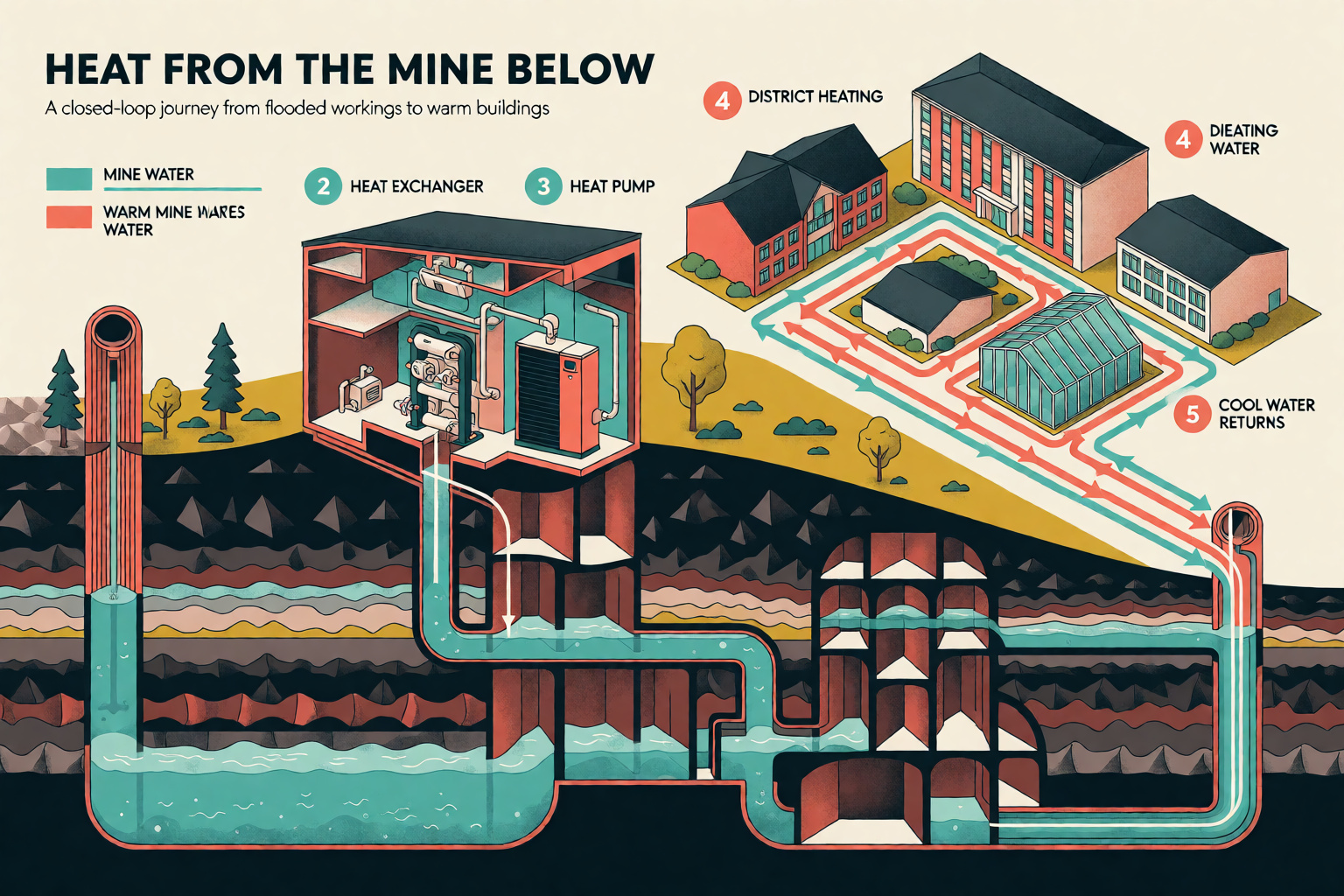
Create a finished landscape educational infographic for a municipal energy visitor center explaining how warm water in an abandoned coal mine becomes useful district heating. Use a visually rich axonometric cutaway illustration with a coherent left-to-right process. Across the lower half, reveal underground geology in cross-section: layered rock, old mine shafts and galleries filled with turquoise water. On the left, show a production borehole lifting naturally warmed mine water to the surface. In the center, show a compact energy center in cutaway with a plate heat exchanger and large electric heat pump. On the right, show an insulated district heating loop serving a library, apartment block, school, and greenhouse, followed by a separate reinjection borehole returning cooled mine water underground. Make the two water circuits unmistakably separate: turquoise arrows for the mine-water loop and coral-orange arrows for the clean heating loop. Add large numbered stages 1 through 5 and concise, clearly legible labels: “1 WARM MINE WATER”, “2 HEAT EXCHANGER”, “3 HEAT PUMP”, “4 DISTRICT HEATING”, “5 COOL WATER RETURNS”. Include the main heading at top left: “HEAT FROM THE MINE BELOW”. Add a small subheading: “A closed-loop journey from flooded workings to warm buildings”. Include a compact legend reading “MINE WATER” beside a turquoise line and “HEATING WATER” beside an orange line. Art direction: premium mid-century scientific diagram blended with contemporary editorial infographics, crisp geometric vector forms, subtle screen-printed grain, precise technical details, confident flat shapes, warm cream background, deep charcoal outlines, turquoise, coral orange, mustard yellow, and muted brick red. Strong information hierarchy, generous margins, balanced negative space, readable typography, clean arrows, no logos, no interface elements, no mockup, no photorealism. The image should feel authoritative, accessible, optimistic, and suitable for a professionally commissioned public exhibition panel.
import { createClient } from '@runware/sdk'

const client = await createClient({ apiKey: process.env.RUNWARE_API_KEY })
await client.connect()

const [result] = await client.run({
  model: 'krea:krea@2-turbo',
  positivePrompt: 'Create a finished landscape educational infographic for a municipal energy visitor center explaining how warm water in an abandoned coal mine becomes useful district heating. Use a visually rich axonometric cutaway illustration with a coherent left-to-right process. Across the lower half, reveal underground geology in cross-section: layered rock, old mine shafts and galleries filled with turquoise water. On the left, show a production borehole lifting naturally warmed mine water to the surface. In the center, show a compact energy center in cutaway with a plate heat exchanger and large electric heat pump. On the right, show an insulated district heating loop serving a library, apartment block, school, and greenhouse, followed by a separate reinjection borehole returning cooled mine water underground. Make the two water circuits unmistakably separate: turquoise arrows for the mine-water loop and coral-orange arrows for the clean heating loop. Add large numbered stages 1 through 5 and concise, clearly legible labels: “1 WARM MINE WATER”, “2 HEAT EXCHANGER”, “3 HEAT PUMP”, “4 DISTRICT HEATING”, “5 COOL WATER RETURNS”. Include the main heading at top left: “HEAT FROM THE MINE BELOW”. Add a small subheading: “A closed-loop journey from flooded workings to warm buildings”. Include a compact legend reading “MINE WATER” beside a turquoise line and “HEATING WATER” beside an orange line. Art direction: premium mid-century scientific diagram blended with contemporary editorial infographics, crisp geometric vector forms, subtle screen-printed grain, precise technical details, confident flat shapes, warm cream background, deep charcoal outlines, turquoise, coral orange, mustard yellow, and muted brick red. Strong information hierarchy, generous margins, balanced negative space, readable typography, clean arrows, no logos, no interface elements, no mockup, no photorealism. The image should feel authoritative, accessible, optimistic, and suitable for a professionally commissioned public exhibition panel.',
  width: 1536,
  height: 1024
})
import asyncio
import os
from runware import Runware
async def main():
async with Runware(api_key=os.environ["RUNWARE_API_KEY"]) as client:
results = await client.run({
"model": "krea:krea@2-turbo",
"positivePrompt": "Create a finished landscape educational infographic for a municipal energy visitor center explaining how warm water in an abandoned coal mine becomes useful district heating. Use a visually rich axonometric cutaway illustration with a coherent left-to-right process. Across the lower half, reveal underground geology in cross-section: layered rock, old mine shafts and galleries filled with turquoise water. On the left, show a production borehole lifting naturally warmed mine water to the surface. In the center, show a compact energy center in cutaway with a plate heat exchanger and large electric heat pump. On the right, show an insulated district heating loop serving a library, apartment block, school, and greenhouse, followed by a separate reinjection borehole returning cooled mine water underground. Make the two water circuits unmistakably separate: turquoise arrows for the mine-water loop and coral-orange arrows for the clean heating loop. Add large numbered stages 1 through 5 and concise, clearly legible labels: “1 WARM MINE WATER”, “2 HEAT EXCHANGER”, “3 HEAT PUMP”, “4 DISTRICT HEATING”, “5 COOL WATER RETURNS”. Include the main heading at top left: “HEAT FROM THE MINE BELOW”. Add a small subheading: “A closed-loop journey from flooded workings to warm buildings”. Include a compact legend reading “MINE WATER” beside a turquoise line and “HEATING WATER” beside an orange line. Art direction: premium mid-century scientific diagram blended with contemporary editorial infographics, crisp geometric vector forms, subtle screen-printed grain, precise technical details, confident flat shapes, warm cream background, deep charcoal outlines, turquoise, coral orange, mustard yellow, and muted brick red. Strong information hierarchy, generous margins, balanced negative space, readable typography, clean arrows, no logos, no interface elements, no mockup, no photorealism. The image should feel authoritative, accessible, optimistic, and suitable for a professionally commissioned public exhibition panel.",
"width": 1536,
"height": 1024
})
asyncio.run(main())curl https://api.runware.ai/v1 \
-H "Authorization: Bearer $RUNWARE_API_KEY" \
-H "Content-Type: application/json" \
-d '[
{
  "taskType": "imageInference",
  "taskUUID": "00c2aa6b-ef62-4cde-a190-c75b44a886e5",
  "model": "krea:krea@2-turbo",
  "positivePrompt": "Create a finished landscape educational infographic for a municipal energy visitor center explaining how warm water in an abandoned coal mine becomes useful district heating. Use a visually rich axonometric cutaway illustration with a coherent left-to-right process. Across the lower half, reveal underground geology in cross-section: layered rock, old mine shafts and galleries filled with turquoise water. On the left, show a production borehole lifting naturally warmed mine water to the surface. In the center, show a compact energy center in cutaway with a plate heat exchanger and large electric heat pump. On the right, show an insulated district heating loop serving a library, apartment block, school, and greenhouse, followed by a separate reinjection borehole returning cooled mine water underground. Make the two water circuits unmistakably separate: turquoise arrows for the mine-water loop and coral-orange arrows for the clean heating loop. Add large numbered stages 1 through 5 and concise, clearly legible labels: “1 WARM MINE WATER”, “2 HEAT EXCHANGER”, “3 HEAT PUMP”, “4 DISTRICT HEATING”, “5 COOL WATER RETURNS”. Include the main heading at top left: “HEAT FROM THE MINE BELOW”. Add a small subheading: “A closed-loop journey from flooded workings to warm buildings”. Include a compact legend reading “MINE WATER” beside a turquoise line and “HEATING WATER” beside an orange line. Art direction: premium mid-century scientific diagram blended with contemporary editorial infographics, crisp geometric vector forms, subtle screen-printed grain, precise technical details, confident flat shapes, warm cream background, deep charcoal outlines, turquoise, coral orange, mustard yellow, and muted brick red. Strong information hierarchy, generous margins, balanced negative space, readable typography, clean arrows, no logos, no interface elements, no mockup, no photorealism. The image should feel authoritative, accessible, optimistic, and suitable for a professionally commissioned public exhibition panel.",
  "width": 1536,
  "height": 1024
}
]'runware run krea:krea@2-turbo \
positivePrompt="Create a finished landscape educational infographic for a municipal energy visitor center explaining how warm water in an abandoned coal mine becomes useful district heating. Use a visually rich axonometric cutaway illustration with a coherent left-to-right process. Across the lower half, reveal underground geology in cross-section: layered rock, old mine shafts and galleries filled with turquoise water. On the left, show a production borehole lifting naturally warmed mine water to the surface. In the center, show a compact energy center in cutaway with a plate heat exchanger and large electric heat pump. On the right, show an insulated district heating loop serving a library, apartment block, school, and greenhouse, followed by a separate reinjection borehole returning cooled mine water underground. Make the two water circuits unmistakably separate: turquoise arrows for the mine-water loop and coral-orange arrows for the clean heating loop. Add large numbered stages 1 through 5 and concise, clearly legible labels: “1 WARM MINE WATER”, “2 HEAT EXCHANGER”, “3 HEAT PUMP”, “4 DISTRICT HEATING”, “5 COOL WATER RETURNS”. Include the main heading at top left: “HEAT FROM THE MINE BELOW”. Add a small subheading: “A closed-loop journey from flooded workings to warm buildings”. Include a compact legend reading “MINE WATER” beside a turquoise line and “HEATING WATER” beside an orange line. Art direction: premium mid-century scientific diagram blended with contemporary editorial infographics, crisp geometric vector forms, subtle screen-printed grain, precise technical details, confident flat shapes, warm cream background, deep charcoal outlines, turquoise, coral orange, mustard yellow, and muted brick red. Strong information hierarchy, generous margins, balanced negative space, readable typography, clean arrows, no logos, no interface elements, no mockup, no photorealism. The image should feel authoritative, accessible, optimistic, and suitable for a professionally commissioned public exhibition panel." \
width=1536 \
height=1024{
"taskType": "imageInference",
"taskUUID": "00c2aa6b-ef62-4cde-a190-c75b44a886e5",
"model": "krea:krea@2-turbo",
"positivePrompt": "Create a finished landscape educational infographic for a municipal energy visitor center explaining how warm water in an abandoned coal mine becomes useful district heating. Use a visually rich axonometric cutaway illustration with a coherent left-to-right process. Across the lower half, reveal underground geology in cross-section: layered rock, old mine shafts and galleries filled with turquoise water. On the left, show a production borehole lifting naturally warmed mine water to the surface. In the center, show a compact energy center in cutaway with a plate heat exchanger and large electric heat pump. On the right, show an insulated district heating loop serving a library, apartment block, school, and greenhouse, followed by a separate reinjection borehole returning cooled mine water underground. Make the two water circuits unmistakably separate: turquoise arrows for the mine-water loop and coral-orange arrows for the clean heating loop. Add large numbered stages 1 through 5 and concise, clearly legible labels: “1 WARM MINE WATER”, “2 HEAT EXCHANGER”, “3 HEAT PUMP”, “4 DISTRICT HEATING”, “5 COOL WATER RETURNS”. Include the main heading at top left: “HEAT FROM THE MINE BELOW”. Add a small subheading: “A closed-loop journey from flooded workings to warm buildings”. Include a compact legend reading “MINE WATER” beside a turquoise line and “HEATING WATER” beside an orange line. Art direction: premium mid-century scientific diagram blended with contemporary editorial infographics, crisp geometric vector forms, subtle screen-printed grain, precise technical details, confident flat shapes, warm cream background, deep charcoal outlines, turquoise, coral orange, mustard yellow, and muted brick red. Strong information hierarchy, generous margins, balanced negative space, readable typography, clean arrows, no logos, no interface elements, no mockup, no photorealism. The image should feel authoritative, accessible, optimistic, and suitable for a professionally commissioned public exhibition panel.",
"width": 1536,
"height": 1024
}Response
{
  "taskType": "imageInference",
  "taskUUID": "00c2aa6b-ef62-4cde-a190-c75b44a886e5",
  "imageUUID": "0bbef5b2-b32d-4056-a4ca-1fa9763a4464",
  "imageURL": "https://im.runware.ai/image/os/a01d21/ws/3/ii/0bbef5b2-b32d-4056-a4ca-1fa9763a4464.jpg",
  "seed": 1305652021,
  "cost": 0.015
}
text-to-image
Nitrate Film Preservation Blog Hero$0.015~5s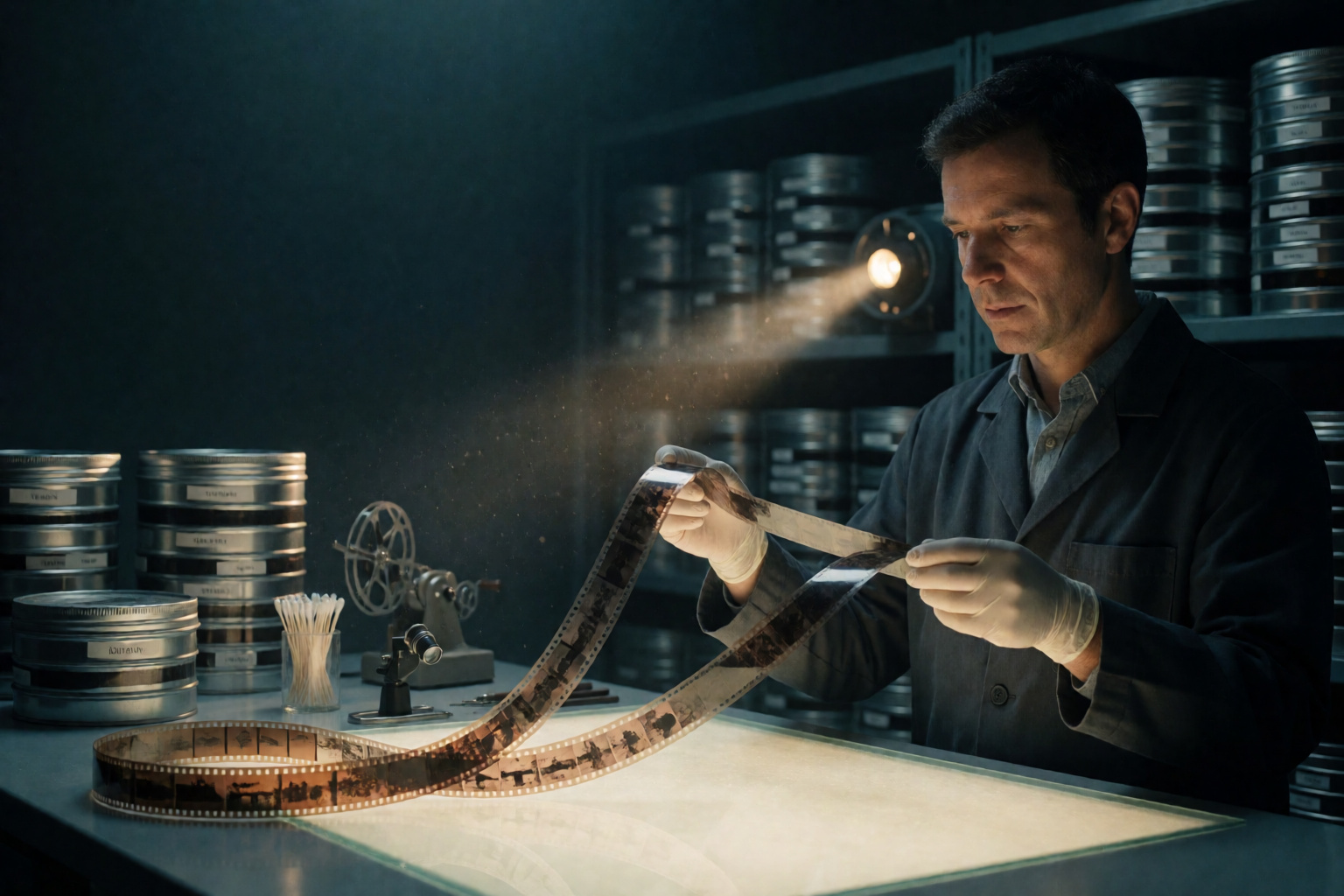
Cinematic editorial photograph for a long-form magazine article about nitrate film preservation. Inside a dark, climate-controlled film archive, a professional conservator wearing a charcoal lab coat and pale nitrile gloves carefully examines a curling strip of damaged 35mm motion-picture film above a softly illuminated inspection bench. Frame the conservator on the right third in three-quarter profile, with an intent expression and sharply rendered hands; the translucent film arcs through the foreground as the visual focal point, revealing tiny monochrome frames, amber edges, scratches, buckling, and delicate decay. Behind them, orderly shelves of unbranded metal film canisters recede into cool shadow. A narrow projector beam passes through faint suspended dust, creating a dramatic diagonal of warm honey light against deep petrol-blue and graphite surroundings. Authentic conservation tools sit subtly on the bench: loupe, cotton swabs, archival leader, small hand-cranked film viewer. Rich tactile detail, restrained teal-and-amber palette, gentle analog grain, realistic skin and materials, atmospheric documentary photography, sophisticated museum-publication art direction. Wide landscape composition with uncluttered dark negative space across the upper left for an editorial headline overlay. Strong subject separation and immediate thumbnail readability. No flames, no fantasy elements, no logos, no captions, no visible brand names, no interface, no border, no embedded typography.
import { createClient } from '@runware/sdk'

const client = await createClient({ apiKey: process.env.RUNWARE_API_KEY })
await client.connect()

const [result] = await client.run({
  model: 'krea:krea@2-turbo',
  positivePrompt: 'Cinematic editorial photograph for a long-form magazine article about nitrate film preservation. Inside a dark, climate-controlled film archive, a professional conservator wearing a charcoal lab coat and pale nitrile gloves carefully examines a curling strip of damaged 35mm motion-picture film above a softly illuminated inspection bench. Frame the conservator on the right third in three-quarter profile, with an intent expression and sharply rendered hands; the translucent film arcs through the foreground as the visual focal point, revealing tiny monochrome frames, amber edges, scratches, buckling, and delicate decay. Behind them, orderly shelves of unbranded metal film canisters recede into cool shadow. A narrow projector beam passes through faint suspended dust, creating a dramatic diagonal of warm honey light against deep petrol-blue and graphite surroundings. Authentic conservation tools sit subtly on the bench: loupe, cotton swabs, archival leader, small hand-cranked film viewer. Rich tactile detail, restrained teal-and-amber palette, gentle analog grain, realistic skin and materials, atmospheric documentary photography, sophisticated museum-publication art direction. Wide landscape composition with uncluttered dark negative space across the upper left for an editorial headline overlay. Strong subject separation and immediate thumbnail readability. No flames, no fantasy elements, no logos, no captions, no visible brand names, no interface, no border, no embedded typography.',
  width: 1536,
  height: 1024
})
import asyncio
import os
from runware import Runware
async def main():
async with Runware(api_key=os.environ["RUNWARE_API_KEY"]) as client:
results = await client.run({
"model": "krea:krea@2-turbo",
"positivePrompt": "Cinematic editorial photograph for a long-form magazine article about nitrate film preservation. Inside a dark, climate-controlled film archive, a professional conservator wearing a charcoal lab coat and pale nitrile gloves carefully examines a curling strip of damaged 35mm motion-picture film above a softly illuminated inspection bench. Frame the conservator on the right third in three-quarter profile, with an intent expression and sharply rendered hands; the translucent film arcs through the foreground as the visual focal point, revealing tiny monochrome frames, amber edges, scratches, buckling, and delicate decay. Behind them, orderly shelves of unbranded metal film canisters recede into cool shadow. A narrow projector beam passes through faint suspended dust, creating a dramatic diagonal of warm honey light against deep petrol-blue and graphite surroundings. Authentic conservation tools sit subtly on the bench: loupe, cotton swabs, archival leader, small hand-cranked film viewer. Rich tactile detail, restrained teal-and-amber palette, gentle analog grain, realistic skin and materials, atmospheric documentary photography, sophisticated museum-publication art direction. Wide landscape composition with uncluttered dark negative space across the upper left for an editorial headline overlay. Strong subject separation and immediate thumbnail readability. No flames, no fantasy elements, no logos, no captions, no visible brand names, no interface, no border, no embedded typography.",
"width": 1536,
"height": 1024
})
asyncio.run(main())curl https://api.runware.ai/v1 \
-H "Authorization: Bearer $RUNWARE_API_KEY" \
-H "Content-Type: application/json" \
-d '[
{
  "taskType": "imageInference",
  "taskUUID": "d9a858c7-6d2c-45af-a0e5-fa6a3ec1a7f6",
  "model": "krea:krea@2-turbo",
  "positivePrompt": "Cinematic editorial photograph for a long-form magazine article about nitrate film preservation. Inside a dark, climate-controlled film archive, a professional conservator wearing a charcoal lab coat and pale nitrile gloves carefully examines a curling strip of damaged 35mm motion-picture film above a softly illuminated inspection bench. Frame the conservator on the right third in three-quarter profile, with an intent expression and sharply rendered hands; the translucent film arcs through the foreground as the visual focal point, revealing tiny monochrome frames, amber edges, scratches, buckling, and delicate decay. Behind them, orderly shelves of unbranded metal film canisters recede into cool shadow. A narrow projector beam passes through faint suspended dust, creating a dramatic diagonal of warm honey light against deep petrol-blue and graphite surroundings. Authentic conservation tools sit subtly on the bench: loupe, cotton swabs, archival leader, small hand-cranked film viewer. Rich tactile detail, restrained teal-and-amber palette, gentle analog grain, realistic skin and materials, atmospheric documentary photography, sophisticated museum-publication art direction. Wide landscape composition with uncluttered dark negative space across the upper left for an editorial headline overlay. Strong subject separation and immediate thumbnail readability. No flames, no fantasy elements, no logos, no captions, no visible brand names, no interface, no border, no embedded typography.",
  "width": 1536,
  "height": 1024
}
]'runware run krea:krea@2-turbo \
positivePrompt="Cinematic editorial photograph for a long-form magazine article about nitrate film preservation. Inside a dark, climate-controlled film archive, a professional conservator wearing a charcoal lab coat and pale nitrile gloves carefully examines a curling strip of damaged 35mm motion-picture film above a softly illuminated inspection bench. Frame the conservator on the right third in three-quarter profile, with an intent expression and sharply rendered hands; the translucent film arcs through the foreground as the visual focal point, revealing tiny monochrome frames, amber edges, scratches, buckling, and delicate decay. Behind them, orderly shelves of unbranded metal film canisters recede into cool shadow. A narrow projector beam passes through faint suspended dust, creating a dramatic diagonal of warm honey light against deep petrol-blue and graphite surroundings. Authentic conservation tools sit subtly on the bench: loupe, cotton swabs, archival leader, small hand-cranked film viewer. Rich tactile detail, restrained teal-and-amber palette, gentle analog grain, realistic skin and materials, atmospheric documentary photography, sophisticated museum-publication art direction. Wide landscape composition with uncluttered dark negative space across the upper left for an editorial headline overlay. Strong subject separation and immediate thumbnail readability. No flames, no fantasy elements, no logos, no captions, no visible brand names, no interface, no border, no embedded typography." \
width=1536 \
height=1024{
"taskType": "imageInference",
"taskUUID": "d9a858c7-6d2c-45af-a0e5-fa6a3ec1a7f6",
"model": "krea:krea@2-turbo",
"positivePrompt": "Cinematic editorial photograph for a long-form magazine article about nitrate film preservation. Inside a dark, climate-controlled film archive, a professional conservator wearing a charcoal lab coat and pale nitrile gloves carefully examines a curling strip of damaged 35mm motion-picture film above a softly illuminated inspection bench. Frame the conservator on the right third in three-quarter profile, with an intent expression and sharply rendered hands; the translucent film arcs through the foreground as the visual focal point, revealing tiny monochrome frames, amber edges, scratches, buckling, and delicate decay. Behind them, orderly shelves of unbranded metal film canisters recede into cool shadow. A narrow projector beam passes through faint suspended dust, creating a dramatic diagonal of warm honey light against deep petrol-blue and graphite surroundings. Authentic conservation tools sit subtly on the bench: loupe, cotton swabs, archival leader, small hand-cranked film viewer. Rich tactile detail, restrained teal-and-amber palette, gentle analog grain, realistic skin and materials, atmospheric documentary photography, sophisticated museum-publication art direction. Wide landscape composition with uncluttered dark negative space across the upper left for an editorial headline overlay. Strong subject separation and immediate thumbnail readability. No flames, no fantasy elements, no logos, no captions, no visible brand names, no interface, no border, no embedded typography.",
"width": 1536,
"height": 1024
}Response
{
  "taskType": "imageInference",
  "taskUUID": "d9a858c7-6d2c-45af-a0e5-fa6a3ec1a7f6",
  "imageUUID": "e82265a7-7cfb-4ff9-b6c1-8329c9c97cca",
  "imageURL": "https://im.runware.ai/image/os/a04d20/ws/3/ii/e82265a7-7cfb-4ff9-b6c1-8329c9c97cca.jpg",
  "seed": 1890973593,
  "cost": 0.015
}