Seedream 5.0 Pro

Seedream 5.0 Pro is ByteDance's flagship image generation and editing model for teams that need stronger control than prompt-only workflows provide. It supports text-to-image and reference-guided image editing with up to 10 input images, and is designed for precise local changes using coordinates, masks, bounding boxes, sketches, and material or color instructions. The model also supports multi-image fusion, advanced layer separation, and strong multilingual rendering, making it well suited to design, marketing, e-commerce, and storyboard-driven content production.
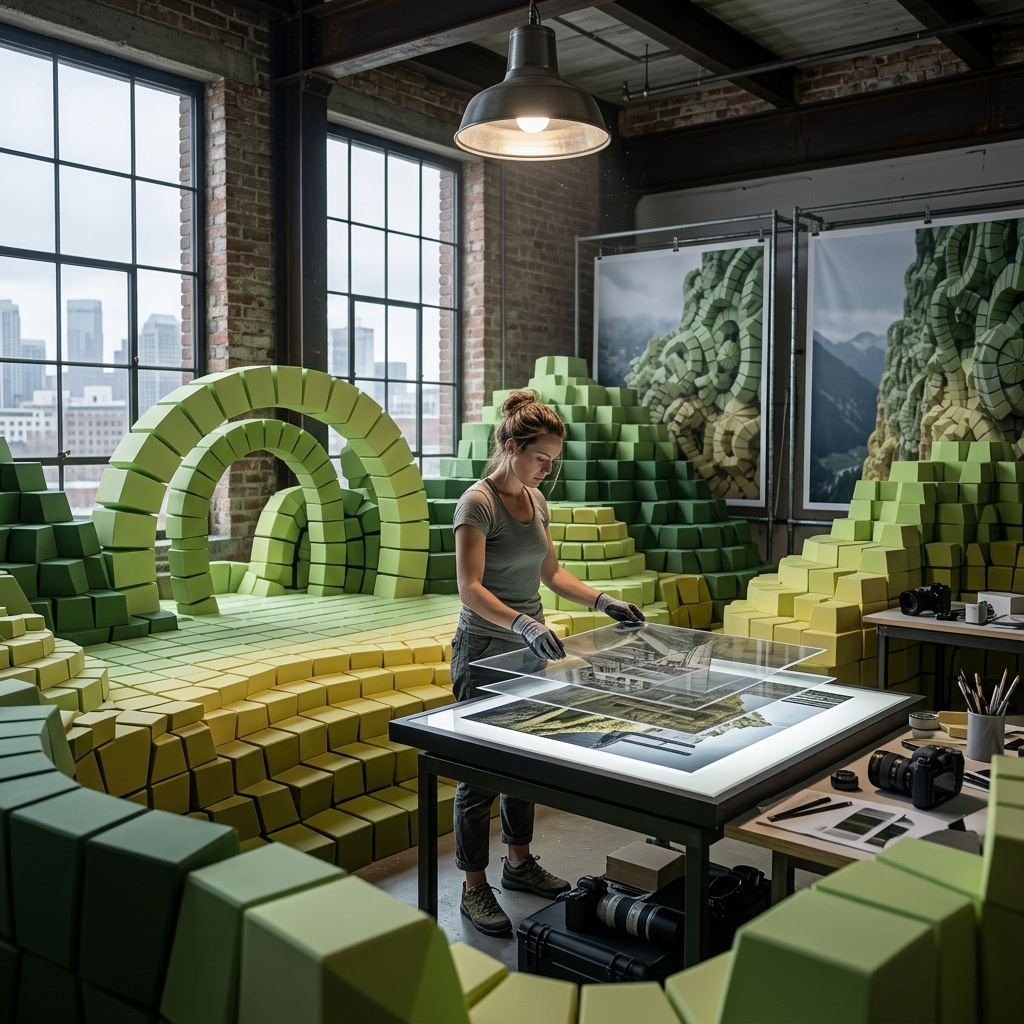
text-to-image
Bioluminescent Algae Culture Kit Packaging$0.0481~1m 20s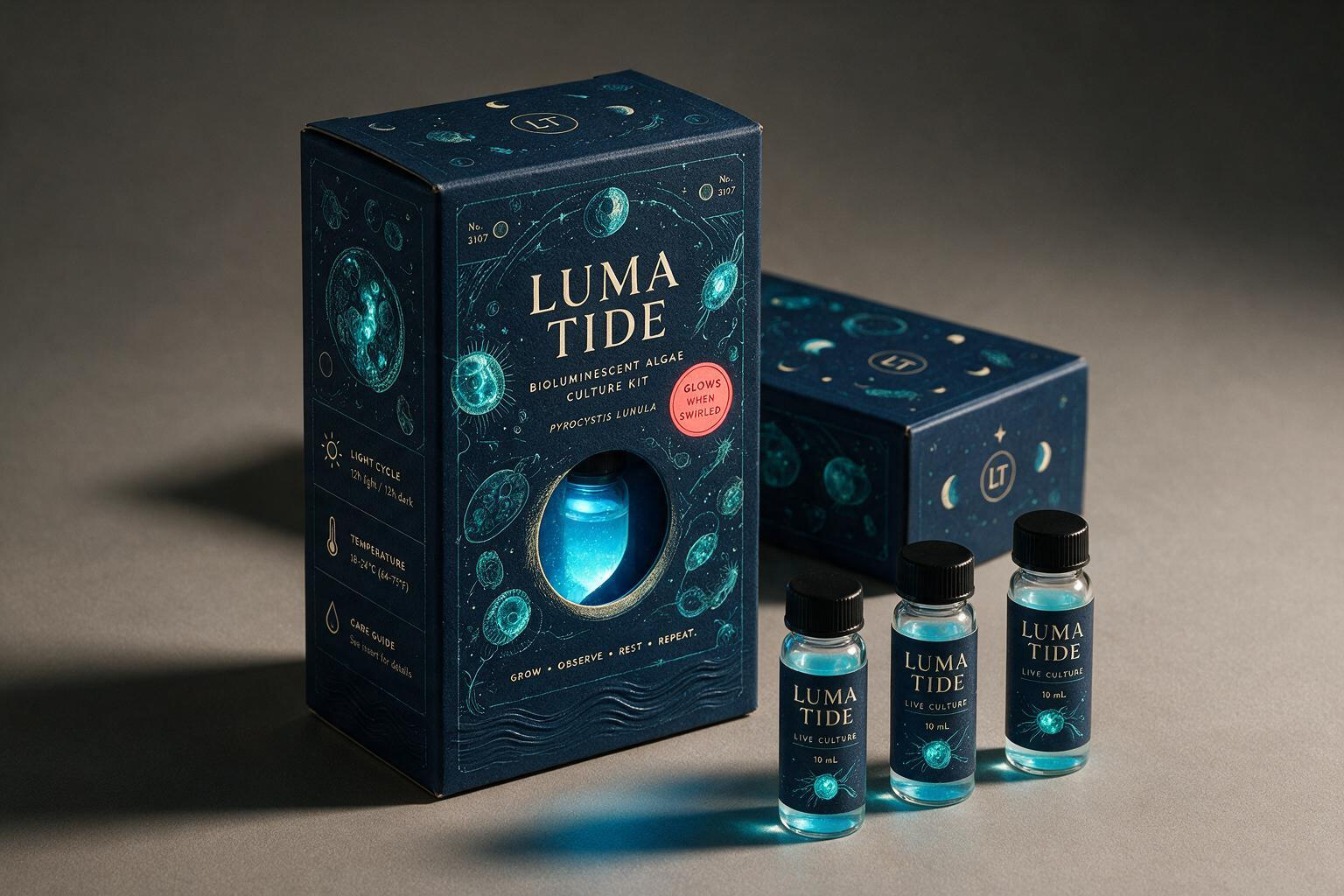
Create a polished landscape packaging-design presentation for a real educational marine-biology product: a home bioluminescent algae culture kit branded “LUMA TIDE.” Show one premium folding carton standing upright in three-quarter view, one carton lying flat behind it, and three small glass culture vials with coordinated labels arranged beside the box. The packaging must be the clear subject, not an advertisement or lifestyle scene. Art direction: contemporary scientific packaging fused with antique oceanographic illustration. Deep midnight-navy uncoated paperboard, luminous cyan and sea-glass turquoise inks, restrained warm ivory typography, and a single fluorescent coral-red accent. Wrap the carton in an intricate engraved illustration of dinoflagellates, microscopic cell structures, rippling currents, lunar phases, and tiny plankton forms. Use precise hairline diagrams, small registration marks, specimen numbers, and a clean modular grid. Add selective glossy varnish to the cyan organisms so they catch the light, subtle embossed wave lines, crisp folded edges, realistic paper texture, and a crescent-shaped die-cut window revealing one glowing blue vial inside. Front-panel hierarchy with clear, correctly spelled lettering: large “LUMA TIDE”; beneath it “BIOLUMINESCENT ALGAE CULTURE KIT”; small line “PYROCYSTIS LUNULA”; coral-red circular badge “GLOWS WHEN SWIRLED”; lower line “GROW • OBSERVE • REST • REPEAT.” Side panel includes the headings “LIGHT CYCLE,” “TEMPERATURE,” and “CARE GUIDE” with simple scientific icons. Vial labels read “LUMA TIDE,” “LIVE CULTURE,” and “10 mL.” Keep all other copy minimal and unobtrusive; do not add slogans or unrelated text. Compose as a high-end packaging portfolio image on a matte warm-gray studio surface, 3:2 landscape. Upright carton slightly left of center, vials forming a measured diagonal toward the lower right, flat carton adding layered depth in the background. Soft directional light from upper left, cool blue glow emanating through the die-cut window and vials, gentle long shadows, controlled highlights on glass, excellent edge definition, realistic print production details, premium product visualization, front and side panels legible, no hands, no people, no website interface, no advertising headline, no extra props.
import { createClient } from '@runware/sdk'

const client = await createClient({ apiKey: process.env.RUNWARE_API_KEY })
await client.connect()

const [result] = await client.run({
  model: 'bytedance:seedream@5.0-pro',
  positivePrompt: 'Create a polished landscape packaging-design presentation for a real educational marine-biology product: a home bioluminescent algae culture kit branded “LUMA TIDE.” Show one premium folding carton standing upright in three-quarter view, one carton lying flat behind it, and three small glass culture vials with coordinated labels arranged beside the box. The packaging must be the clear subject, not an advertisement or lifestyle scene.\n\nArt direction: contemporary scientific packaging fused with antique oceanographic illustration. Deep midnight-navy uncoated paperboard, luminous cyan and sea-glass turquoise inks, restrained warm ivory typography, and a single fluorescent coral-red accent. Wrap the carton in an intricate engraved illustration of dinoflagellates, microscopic cell structures, rippling currents, lunar phases, and tiny plankton forms. Use precise hairline diagrams, small registration marks, specimen numbers, and a clean modular grid. Add selective glossy varnish to the cyan organisms so they catch the light, subtle embossed wave lines, crisp folded edges, realistic paper texture, and a crescent-shaped die-cut window revealing one glowing blue vial inside.\n\nFront-panel hierarchy with clear, correctly spelled lettering: large “LUMA TIDE”; beneath it “BIOLUMINESCENT ALGAE CULTURE KIT”; small line “PYROCYSTIS LUNULA”; coral-red circular badge “GLOWS WHEN SWIRLED”; lower line “GROW • OBSERVE • REST • REPEAT.” Side panel includes the headings “LIGHT CYCLE,” “TEMPERATURE,” and “CARE GUIDE” with simple scientific icons. Vial labels read “LUMA TIDE,” “LIVE CULTURE,” and “10 mL.” Keep all other copy minimal and unobtrusive; do not add slogans or unrelated text.\n\nCompose as a high-end packaging portfolio image on a matte warm-gray studio surface, 3:2 landscape. Upright carton slightly left of center, vials forming a measured diagonal toward the lower right, flat carton adding layered depth in the background. Soft directional light from upper left, cool blue glow emanating through the die-cut window and vials, gentle long shadows, controlled highlights on glass, excellent edge definition, realistic print production details, premium product visualization, front and side panels legible, no hands, no people, no website interface, no advertising headline, no extra props.',
  width: 1536,
  height: 1024,
  settings: {
    thinking: true
  }
})
import asyncio
import os
from runware import Runware
async def main():
async with Runware(api_key=os.environ["RUNWARE_API_KEY"]) as client:
results = await client.run({
"model": "bytedance:seedream@5.0-pro",
"positivePrompt": "Create a polished landscape packaging-design presentation for a real educational marine-biology product: a home bioluminescent algae culture kit branded “LUMA TIDE.” Show one premium folding carton standing upright in three-quarter view, one carton lying flat behind it, and three small glass culture vials with coordinated labels arranged beside the box. The packaging must be the clear subject, not an advertisement or lifestyle scene.\n\nArt direction: contemporary scientific packaging fused with antique oceanographic illustration. Deep midnight-navy uncoated paperboard, luminous cyan and sea-glass turquoise inks, restrained warm ivory typography, and a single fluorescent coral-red accent. Wrap the carton in an intricate engraved illustration of dinoflagellates, microscopic cell structures, rippling currents, lunar phases, and tiny plankton forms. Use precise hairline diagrams, small registration marks, specimen numbers, and a clean modular grid. Add selective glossy varnish to the cyan organisms so they catch the light, subtle embossed wave lines, crisp folded edges, realistic paper texture, and a crescent-shaped die-cut window revealing one glowing blue vial inside.\n\nFront-panel hierarchy with clear, correctly spelled lettering: large “LUMA TIDE”; beneath it “BIOLUMINESCENT ALGAE CULTURE KIT”; small line “PYROCYSTIS LUNULA”; coral-red circular badge “GLOWS WHEN SWIRLED”; lower line “GROW • OBSERVE • REST • REPEAT.” Side panel includes the headings “LIGHT CYCLE,” “TEMPERATURE,” and “CARE GUIDE” with simple scientific icons. Vial labels read “LUMA TIDE,” “LIVE CULTURE,” and “10 mL.” Keep all other copy minimal and unobtrusive; do not add slogans or unrelated text.\n\nCompose as a high-end packaging portfolio image on a matte warm-gray studio surface, 3:2 landscape. Upright carton slightly left of center, vials forming a measured diagonal toward the lower right, flat carton adding layered depth in the background. Soft directional light from upper left, cool blue glow emanating through the die-cut window and vials, gentle long shadows, controlled highlights on glass, excellent edge definition, realistic print production details, premium product visualization, front and side panels legible, no hands, no people, no website interface, no advertising headline, no extra props.",
"width": 1536,
"height": 1024,
"settings": {
"thinking": True
}
})
asyncio.run(main())curl https://api.runware.ai/v1 \
-H "Authorization: Bearer $RUNWARE_API_KEY" \
-H "Content-Type: application/json" \
-d '[
{
  "taskType": "imageInference",
  "taskUUID": "77d8d06e-380a-46ed-90c3-ade08edacc11",
  "model": "bytedance:seedream@5.0-pro",
  "positivePrompt": "Create a polished landscape packaging-design presentation for a real educational marine-biology product: a home bioluminescent algae culture kit branded “LUMA TIDE.” Show one premium folding carton standing upright in three-quarter view, one carton lying flat behind it, and three small glass culture vials with coordinated labels arranged beside the box. The packaging must be the clear subject, not an advertisement or lifestyle scene.\n\nArt direction: contemporary scientific packaging fused with antique oceanographic illustration. Deep midnight-navy uncoated paperboard, luminous cyan and sea-glass turquoise inks, restrained warm ivory typography, and a single fluorescent coral-red accent. Wrap the carton in an intricate engraved illustration of dinoflagellates, microscopic cell structures, rippling currents, lunar phases, and tiny plankton forms. Use precise hairline diagrams, small registration marks, specimen numbers, and a clean modular grid. Add selective glossy varnish to the cyan organisms so they catch the light, subtle embossed wave lines, crisp folded edges, realistic paper texture, and a crescent-shaped die-cut window revealing one glowing blue vial inside.\n\nFront-panel hierarchy with clear, correctly spelled lettering: large “LUMA TIDE”; beneath it “BIOLUMINESCENT ALGAE CULTURE KIT”; small line “PYROCYSTIS LUNULA”; coral-red circular badge “GLOWS WHEN SWIRLED”; lower line “GROW • OBSERVE • REST • REPEAT.” Side panel includes the headings “LIGHT CYCLE,” “TEMPERATURE,” and “CARE GUIDE” with simple scientific icons. Vial labels read “LUMA TIDE,” “LIVE CULTURE,” and “10 mL.” Keep all other copy minimal and unobtrusive; do not add slogans or unrelated text.\n\nCompose as a high-end packaging portfolio image on a matte warm-gray studio surface, 3:2 landscape. Upright carton slightly left of center, vials forming a measured diagonal toward the lower right, flat carton adding layered depth in the background. Soft directional light from upper left, cool blue glow emanating through the die-cut window and vials, gentle long shadows, controlled highlights on glass, excellent edge definition, realistic print production details, premium product visualization, front and side panels legible, no hands, no people, no website interface, no advertising headline, no extra props.",
  "width": 1536,
  "height": 1024,
  "settings": {
    "thinking": true
  }
}
]'runware run bytedance:seedream@5.0-pro \
positivePrompt="Create a polished landscape packaging-design presentation for a real educational marine-biology product: a home bioluminescent algae culture kit branded “LUMA TIDE.” Show one premium folding carton standing upright in three-quarter view, one carton lying flat behind it, and three small glass culture vials with coordinated labels arranged beside the box. The packaging must be the clear subject, not an advertisement or lifestyle scene.
Art direction: contemporary scientific packaging fused with antique oceanographic illustration. Deep midnight-navy uncoated paperboard, luminous cyan and sea-glass turquoise inks, restrained warm ivory typography, and a single fluorescent coral-red accent. Wrap the carton in an intricate engraved illustration of dinoflagellates, microscopic cell structures, rippling currents, lunar phases, and tiny plankton forms. Use precise hairline diagrams, small registration marks, specimen numbers, and a clean modular grid. Add selective glossy varnish to the cyan organisms so they catch the light, subtle embossed wave lines, crisp folded edges, realistic paper texture, and a crescent-shaped die-cut window revealing one glowing blue vial inside.
Front-panel hierarchy with clear, correctly spelled lettering: large “LUMA TIDE”; beneath it “BIOLUMINESCENT ALGAE CULTURE KIT”; small line “PYROCYSTIS LUNULA”; coral-red circular badge “GLOWS WHEN SWIRLED”; lower line “GROW • OBSERVE • REST • REPEAT.” Side panel includes the headings “LIGHT CYCLE,” “TEMPERATURE,” and “CARE GUIDE” with simple scientific icons. Vial labels read “LUMA TIDE,” “LIVE CULTURE,” and “10 mL.” Keep all other copy minimal and unobtrusive; do not add slogans or unrelated text.
Compose as a high-end packaging portfolio image on a matte warm-gray studio surface, 3:2 landscape. Upright carton slightly left of center, vials forming a measured diagonal toward the lower right, flat carton adding layered depth in the background. Soft directional light from upper left, cool blue glow emanating through the die-cut window and vials, gentle long shadows, controlled highlights on glass, excellent edge definition, realistic print production details, premium product visualization, front and side panels legible, no hands, no people, no website interface, no advertising headline, no extra props." \
width=1536 \
height=1024 \
settings.thinking=true{
"taskType": "imageInference",
"taskUUID": "77d8d06e-380a-46ed-90c3-ade08edacc11",
"model": "bytedance:seedream@5.0-pro",
"positivePrompt": "Create a polished landscape packaging-design presentation for a real educational marine-biology product: a home bioluminescent algae culture kit branded “LUMA TIDE.” Show one premium folding carton standing upright in three-quarter view, one carton lying flat behind it, and three small glass culture vials with coordinated labels arranged beside the box. The packaging must be the clear subject, not an advertisement or lifestyle scene.\n\nArt direction: contemporary scientific packaging fused with antique oceanographic illustration. Deep midnight-navy uncoated paperboard, luminous cyan and sea-glass turquoise inks, restrained warm ivory typography, and a single fluorescent coral-red accent. Wrap the carton in an intricate engraved illustration of dinoflagellates, microscopic cell structures, rippling currents, lunar phases, and tiny plankton forms. Use precise hairline diagrams, small registration marks, specimen numbers, and a clean modular grid. Add selective glossy varnish to the cyan organisms so they catch the light, subtle embossed wave lines, crisp folded edges, realistic paper texture, and a crescent-shaped die-cut window revealing one glowing blue vial inside.\n\nFront-panel hierarchy with clear, correctly spelled lettering: large “LUMA TIDE”; beneath it “BIOLUMINESCENT ALGAE CULTURE KIT”; small line “PYROCYSTIS LUNULA”; coral-red circular badge “GLOWS WHEN SWIRLED”; lower line “GROW • OBSERVE • REST • REPEAT.” Side panel includes the headings “LIGHT CYCLE,” “TEMPERATURE,” and “CARE GUIDE” with simple scientific icons. Vial labels read “LUMA TIDE,” “LIVE CULTURE,” and “10 mL.” Keep all other copy minimal and unobtrusive; do not add slogans or unrelated text.\n\nCompose as a high-end packaging portfolio image on a matte warm-gray studio surface, 3:2 landscape. Upright carton slightly left of center, vials forming a measured diagonal toward the lower right, flat carton adding layered depth in the background. Soft directional light from upper left, cool blue glow emanating through the die-cut window and vials, gentle long shadows, controlled highlights on glass, excellent edge definition, realistic print production details, premium product visualization, front and side panels legible, no hands, no people, no website interface, no advertising headline, no extra props.",
"width": 1536,
"height": 1024,
"settings": {
"thinking": true
}
}Response
{
  "taskType": "imageInference",
  "taskUUID": "77d8d06e-380a-46ed-90c3-ade08edacc11",
  "imageUUID": "6cb9298e-069e-4ecf-8702-34d739816cc2",
  "imageURL": "https://im.runware.ai/image/os/a09dlim3/ws/3/ii/6cb9298e-069e-4ecf-8702-34d739816cc2.jpg",
  "seed": 1967259719,
  "cost": 0.04815
}
text-to-image
Edwardian Station VFX Clean Plate$0.0481~1m 20s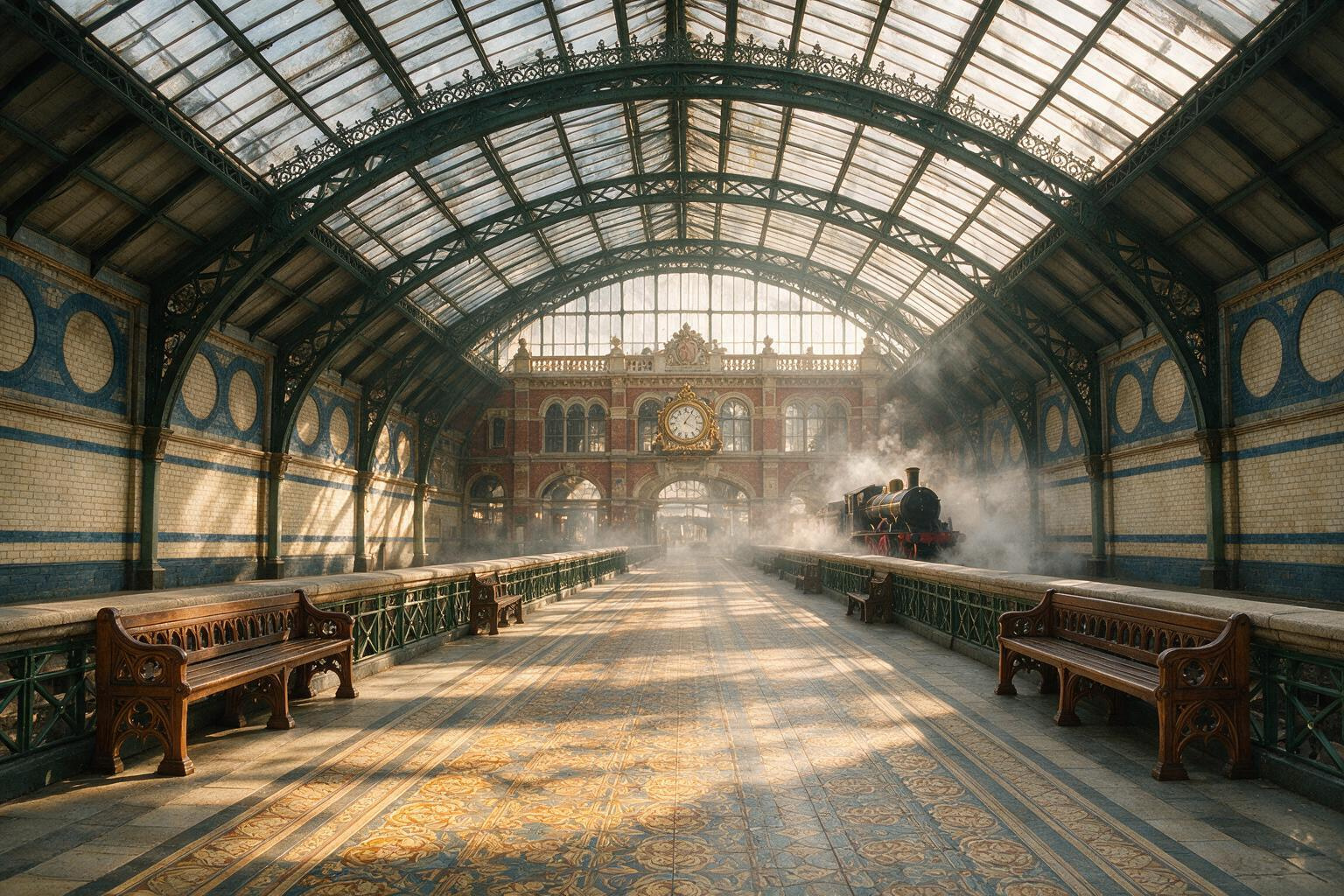
Finished photorealistic VFX clean plate for an Edwardian period drama: the grand concourse of a British railway terminus circa 1908, completely empty after the digital removal of cast, crew, cameras, cables, markers, barriers, litter, and modern fixtures. Seamlessly reconstructed encaustic-tile floor, uninterrupted platform edges, complete carved oak benches, intact glazed brick walls, and naturally continued architectural details wherever objects would have obscured them. Vast iron-and-glass arched roof, ornate station clock, brass lamps, dark green painted ironwork, distant steam locomotive beneath a soft veil of white vapor. Low winter sunlight passes through smoky glass and creates long geometric shadows and warm amber highlights across the cool blue-gray interior. Wide eye-level establishing shot with strong central perspective, layered depth, restrained period-authentic palette, crisp masonry and metal detail, subtle filmic grain, realistic lens behavior and exposure. Hushed, atmospheric, historically credible, production-ready environment plate with generous unobstructed foreground and no people, modern signage, vehicles, equipment, or text overlays.
import { createClient } from '@runware/sdk'

const client = await createClient({ apiKey: process.env.RUNWARE_API_KEY })
await client.connect()

const [result] = await client.run({
  model: 'bytedance:seedream@5.0-pro',
  positivePrompt: 'Finished photorealistic VFX clean plate for an Edwardian period drama: the grand concourse of a British railway terminus circa 1908, completely empty after the digital removal of cast, crew, cameras, cables, markers, barriers, litter, and modern fixtures. Seamlessly reconstructed encaustic-tile floor, uninterrupted platform edges, complete carved oak benches, intact glazed brick walls, and naturally continued architectural details wherever objects would have obscured them. Vast iron-and-glass arched roof, ornate station clock, brass lamps, dark green painted ironwork, distant steam locomotive beneath a soft veil of white vapor. Low winter sunlight passes through smoky glass and creates long geometric shadows and warm amber highlights across the cool blue-gray interior. Wide eye-level establishing shot with strong central perspective, layered depth, restrained period-authentic palette, crisp masonry and metal detail, subtle filmic grain, realistic lens behavior and exposure. Hushed, atmospheric, historically credible, production-ready environment plate with generous unobstructed foreground and no people, modern signage, vehicles, equipment, or text overlays.',
  width: 1536,
  height: 1024,
  settings: {
    thinking: true
  }
})
import asyncio
import os
from runware import Runware
async def main():
async with Runware(api_key=os.environ["RUNWARE_API_KEY"]) as client:
results = await client.run({
"model": "bytedance:seedream@5.0-pro",
"positivePrompt": "Finished photorealistic VFX clean plate for an Edwardian period drama: the grand concourse of a British railway terminus circa 1908, completely empty after the digital removal of cast, crew, cameras, cables, markers, barriers, litter, and modern fixtures. Seamlessly reconstructed encaustic-tile floor, uninterrupted platform edges, complete carved oak benches, intact glazed brick walls, and naturally continued architectural details wherever objects would have obscured them. Vast iron-and-glass arched roof, ornate station clock, brass lamps, dark green painted ironwork, distant steam locomotive beneath a soft veil of white vapor. Low winter sunlight passes through smoky glass and creates long geometric shadows and warm amber highlights across the cool blue-gray interior. Wide eye-level establishing shot with strong central perspective, layered depth, restrained period-authentic palette, crisp masonry and metal detail, subtle filmic grain, realistic lens behavior and exposure. Hushed, atmospheric, historically credible, production-ready environment plate with generous unobstructed foreground and no people, modern signage, vehicles, equipment, or text overlays.",
"width": 1536,
"height": 1024,
"settings": {
"thinking": True
}
})
asyncio.run(main())curl https://api.runware.ai/v1 \
-H "Authorization: Bearer $RUNWARE_API_KEY" \
-H "Content-Type: application/json" \
-d '[
{
  "taskType": "imageInference",
  "taskUUID": "d64ef638-3093-46ce-8156-0676d56b3f35",
  "model": "bytedance:seedream@5.0-pro",
  "positivePrompt": "Finished photorealistic VFX clean plate for an Edwardian period drama: the grand concourse of a British railway terminus circa 1908, completely empty after the digital removal of cast, crew, cameras, cables, markers, barriers, litter, and modern fixtures. Seamlessly reconstructed encaustic-tile floor, uninterrupted platform edges, complete carved oak benches, intact glazed brick walls, and naturally continued architectural details wherever objects would have obscured them. Vast iron-and-glass arched roof, ornate station clock, brass lamps, dark green painted ironwork, distant steam locomotive beneath a soft veil of white vapor. Low winter sunlight passes through smoky glass and creates long geometric shadows and warm amber highlights across the cool blue-gray interior. Wide eye-level establishing shot with strong central perspective, layered depth, restrained period-authentic palette, crisp masonry and metal detail, subtle filmic grain, realistic lens behavior and exposure. Hushed, atmospheric, historically credible, production-ready environment plate with generous unobstructed foreground and no people, modern signage, vehicles, equipment, or text overlays.",
  "width": 1536,
  "height": 1024,
  "settings": {
    "thinking": true
  }
}
]'runware run bytedance:seedream@5.0-pro \
positivePrompt="Finished photorealistic VFX clean plate for an Edwardian period drama: the grand concourse of a British railway terminus circa 1908, completely empty after the digital removal of cast, crew, cameras, cables, markers, barriers, litter, and modern fixtures. Seamlessly reconstructed encaustic-tile floor, uninterrupted platform edges, complete carved oak benches, intact glazed brick walls, and naturally continued architectural details wherever objects would have obscured them. Vast iron-and-glass arched roof, ornate station clock, brass lamps, dark green painted ironwork, distant steam locomotive beneath a soft veil of white vapor. Low winter sunlight passes through smoky glass and creates long geometric shadows and warm amber highlights across the cool blue-gray interior. Wide eye-level establishing shot with strong central perspective, layered depth, restrained period-authentic palette, crisp masonry and metal detail, subtle filmic grain, realistic lens behavior and exposure. Hushed, atmospheric, historically credible, production-ready environment plate with generous unobstructed foreground and no people, modern signage, vehicles, equipment, or text overlays." \
width=1536 \
height=1024 \
settings.thinking=true{
"taskType": "imageInference",
"taskUUID": "d64ef638-3093-46ce-8156-0676d56b3f35",
"model": "bytedance:seedream@5.0-pro",
"positivePrompt": "Finished photorealistic VFX clean plate for an Edwardian period drama: the grand concourse of a British railway terminus circa 1908, completely empty after the digital removal of cast, crew, cameras, cables, markers, barriers, litter, and modern fixtures. Seamlessly reconstructed encaustic-tile floor, uninterrupted platform edges, complete carved oak benches, intact glazed brick walls, and naturally continued architectural details wherever objects would have obscured them. Vast iron-and-glass arched roof, ornate station clock, brass lamps, dark green painted ironwork, distant steam locomotive beneath a soft veil of white vapor. Low winter sunlight passes through smoky glass and creates long geometric shadows and warm amber highlights across the cool blue-gray interior. Wide eye-level establishing shot with strong central perspective, layered depth, restrained period-authentic palette, crisp masonry and metal detail, subtle filmic grain, realistic lens behavior and exposure. Hushed, atmospheric, historically credible, production-ready environment plate with generous unobstructed foreground and no people, modern signage, vehicles, equipment, or text overlays.",
"width": 1536,
"height": 1024,
"settings": {
"thinking": true
}
}Response
{
  "taskType": "imageInference",
  "taskUUID": "d64ef638-3093-46ce-8156-0676d56b3f35",
  "imageUUID": "2ec8cf1f-d805-4320-add9-755f08ba6352",
  "imageURL": "https://im.runware.ai/image/os/a08dlim3/ws/3/ii/2ec8cf1f-d805-4320-add9-755f08ba6352.jpg",
  "seed": 2074330012,
  "cost": 0.04815
}
reference-to-image
Museum Astrolabe Catalog Cleanup$0.0514~2m 11s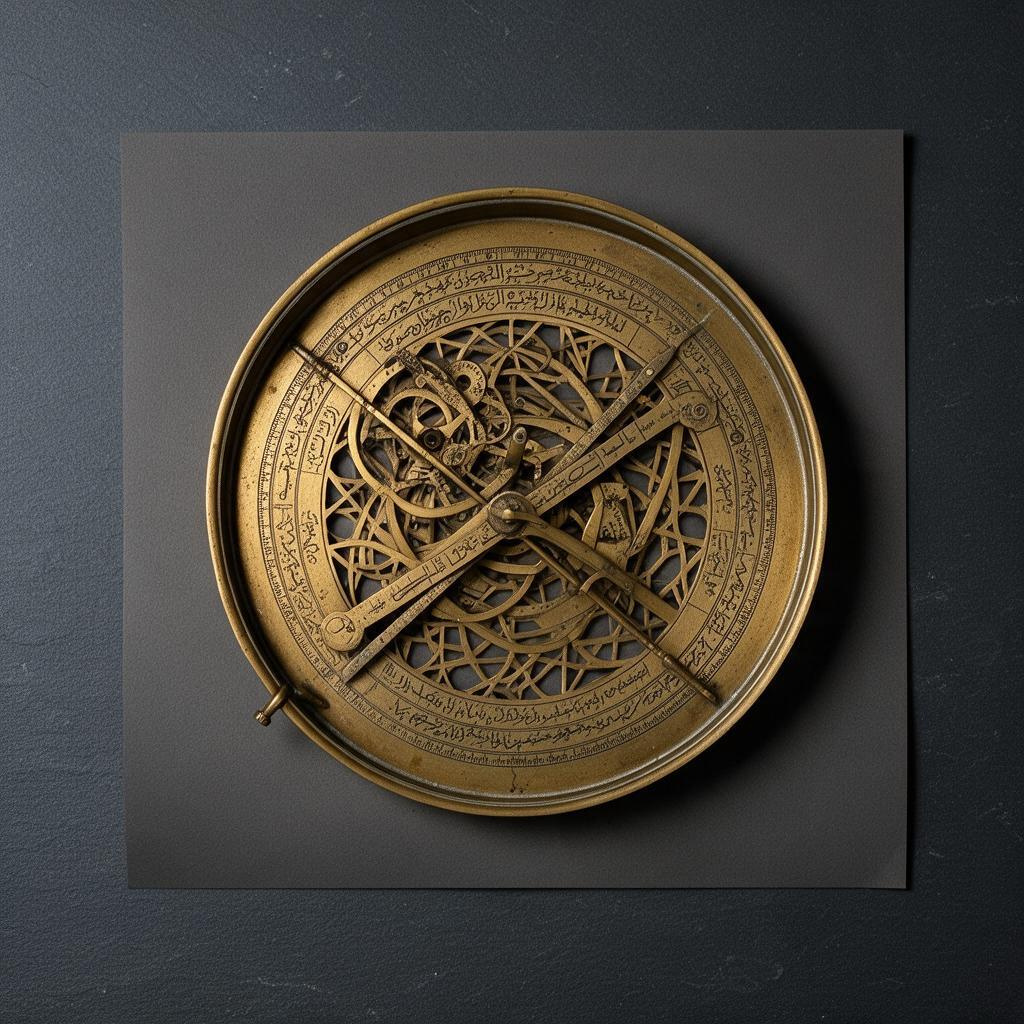
Create one finished museum collection-catalog photograph by editing and combining the two references. Use reference image 1 as the authoritative source for the astrolabe: preserve its exact shape, proportions, orientation, pierced geometry, rotating components, engraved Arabic inscriptions, scratches, oxidation, brass color, and authentic age patina. Remove the blue-gloved hand, accession card, color chart, both archival-foam wedges, and the original beige work surface. Where the foam wedges overlap the plain outer rim, generatively reconstruct only the small hidden rim sections through physically consistent continuation, symmetry, metal thickness, patina, and edge wear; do not invent new inscriptions or ornament. Place the isolated astrolabe naturally onto the charcoal-gray conservation paper and slate setting from reference image 2. Match the second reference's restrained overhead studio lighting and subtle background gradient while retaining believable metallic highlights and adding a delicate contact shadow beneath the instrument. Keep the artifact centered with generous even catalog margins in the landscape frame. The result should look like meticulous high-end cultural-heritage documentation: neutral color management, crisp fine engraving, realistic aged metal, clean edges, no retouching halos, no leftover tools or supports, no extra objects, no captions, no added text, no logo, and no display case reflections.
import { createClient } from '@runware/sdk'

const client = await createClient({ apiKey: process.env.RUNWARE_API_KEY })
await client.connect()

const [result] = await client.run({
  model: 'bytedance:seedream@5.0-pro',
  positivePrompt: 'Create one finished museum collection-catalog photograph by editing and combining the two references. Use reference image 1 as the authoritative source for the astrolabe: preserve its exact shape, proportions, orientation, pierced geometry, rotating components, engraved Arabic inscriptions, scratches, oxidation, brass color, and authentic age patina. Remove the blue-gloved hand, accession card, color chart, both archival-foam wedges, and the original beige work surface. Where the foam wedges overlap the plain outer rim, generatively reconstruct only the small hidden rim sections through physically consistent continuation, symmetry, metal thickness, patina, and edge wear; do not invent new inscriptions or ornament. Place the isolated astrolabe naturally onto the charcoal-gray conservation paper and slate setting from reference image 2. Match the second reference\'s restrained overhead studio lighting and subtle background gradient while retaining believable metallic highlights and adding a delicate contact shadow beneath the instrument. Keep the artifact centered with generous even catalog margins in the landscape frame. The result should look like meticulous high-end cultural-heritage documentation: neutral color management, crisp fine engraving, realistic aged metal, clean edges, no retouching halos, no leftover tools or supports, no extra objects, no captions, no added text, no logo, and no display case reflections.',
  settings: {
    thinking: true
  },
  inputs: {
    referenceImages: [
      'https://assets.runware.ai/assets/inputs/e30ff7de-3cdf-45e7-80e3-d633f5910528.jpg',
      'https://assets.runware.ai/assets/inputs/045af872-30fd-454d-beae-6f54a1e25612.jpg'
    ]
  }
})
import asyncio
import os
from runware import Runware
async def main():
async with Runware(api_key=os.environ["RUNWARE_API_KEY"]) as client:
results = await client.run({
"model": "bytedance:seedream@5.0-pro",
"positivePrompt": "Create one finished museum collection-catalog photograph by editing and combining the two references. Use reference image 1 as the authoritative source for the astrolabe: preserve its exact shape, proportions, orientation, pierced geometry, rotating components, engraved Arabic inscriptions, scratches, oxidation, brass color, and authentic age patina. Remove the blue-gloved hand, accession card, color chart, both archival-foam wedges, and the original beige work surface. Where the foam wedges overlap the plain outer rim, generatively reconstruct only the small hidden rim sections through physically consistent continuation, symmetry, metal thickness, patina, and edge wear; do not invent new inscriptions or ornament. Place the isolated astrolabe naturally onto the charcoal-gray conservation paper and slate setting from reference image 2. Match the second reference's restrained overhead studio lighting and subtle background gradient while retaining believable metallic highlights and adding a delicate contact shadow beneath the instrument. Keep the artifact centered with generous even catalog margins in the landscape frame. The result should look like meticulous high-end cultural-heritage documentation: neutral color management, crisp fine engraving, realistic aged metal, clean edges, no retouching halos, no leftover tools or supports, no extra objects, no captions, no added text, no logo, and no display case reflections.",
"settings": {
"thinking": True
},
"inputs": {
"referenceImages": [
"https://assets.runware.ai/assets/inputs/e30ff7de-3cdf-45e7-80e3-d633f5910528.jpg",
"https://assets.runware.ai/assets/inputs/045af872-30fd-454d-beae-6f54a1e25612.jpg"
]
}
})
asyncio.run(main())curl https://api.runware.ai/v1 \
-H "Authorization: Bearer $RUNWARE_API_KEY" \
-H "Content-Type: application/json" \
-d '[
{
  "taskType": "imageInference",
  "taskUUID": "6c20aade-f1eb-47b2-a1d4-4f908d226bcd",
  "model": "bytedance:seedream@5.0-pro",
  "positivePrompt": "Create one finished museum collection-catalog photograph by editing and combining the two references. Use reference image 1 as the authoritative source for the astrolabe: preserve its exact shape, proportions, orientation, pierced geometry, rotating components, engraved Arabic inscriptions, scratches, oxidation, brass color, and authentic age patina. Remove the blue-gloved hand, accession card, color chart, both archival-foam wedges, and the original beige work surface. Where the foam wedges overlap the plain outer rim, generatively reconstruct only the small hidden rim sections through physically consistent continuation, symmetry, metal thickness, patina, and edge wear; do not invent new inscriptions or ornament. Place the isolated astrolabe naturally onto the charcoal-gray conservation paper and slate setting from reference image 2. Match the second reference's restrained overhead studio lighting and subtle background gradient while retaining believable metallic highlights and adding a delicate contact shadow beneath the instrument. Keep the artifact centered with generous even catalog margins in the landscape frame. The result should look like meticulous high-end cultural-heritage documentation: neutral color management, crisp fine engraving, realistic aged metal, clean edges, no retouching halos, no leftover tools or supports, no extra objects, no captions, no added text, no logo, and no display case reflections.",
  "settings": {
    "thinking": true
  },
  "inputs": {
    "referenceImages": [
      "https://assets.runware.ai/assets/inputs/e30ff7de-3cdf-45e7-80e3-d633f5910528.jpg",
      "https://assets.runware.ai/assets/inputs/045af872-30fd-454d-beae-6f54a1e25612.jpg"
    ]
  }
}
]'runware run bytedance:seedream@5.0-pro \
positivePrompt="Create one finished museum collection-catalog photograph by editing and combining the two references. Use reference image 1 as the authoritative source for the astrolabe: preserve its exact shape, proportions, orientation, pierced geometry, rotating components, engraved Arabic inscriptions, scratches, oxidation, brass color, and authentic age patina. Remove the blue-gloved hand, accession card, color chart, both archival-foam wedges, and the original beige work surface. Where the foam wedges overlap the plain outer rim, generatively reconstruct only the small hidden rim sections through physically consistent continuation, symmetry, metal thickness, patina, and edge wear; do not invent new inscriptions or ornament. Place the isolated astrolabe naturally onto the charcoal-gray conservation paper and slate setting from reference image 2. Match the second reference's restrained overhead studio lighting and subtle background gradient while retaining believable metallic highlights and adding a delicate contact shadow beneath the instrument. Keep the artifact centered with generous even catalog margins in the landscape frame. The result should look like meticulous high-end cultural-heritage documentation: neutral color management, crisp fine engraving, realistic aged metal, clean edges, no retouching halos, no leftover tools or supports, no extra objects, no captions, no added text, no logo, and no display case reflections." \
settings.thinking=true \
inputs.referenceImages.0=https://assets.runware.ai/assets/inputs/e30ff7de-3cdf-45e7-80e3-d633f5910528.jpg \
inputs.referenceImages.1=https://assets.runware.ai/assets/inputs/045af872-30fd-454d-beae-6f54a1e25612.jpg{
"taskType": "imageInference",
"taskUUID": "6c20aade-f1eb-47b2-a1d4-4f908d226bcd",
"model": "bytedance:seedream@5.0-pro",
"positivePrompt": "Create one finished museum collection-catalog photograph by editing and combining the two references. Use reference image 1 as the authoritative source for the astrolabe: preserve its exact shape, proportions, orientation, pierced geometry, rotating components, engraved Arabic inscriptions, scratches, oxidation, brass color, and authentic age patina. Remove the blue-gloved hand, accession card, color chart, both archival-foam wedges, and the original beige work surface. Where the foam wedges overlap the plain outer rim, generatively reconstruct only the small hidden rim sections through physically consistent continuation, symmetry, metal thickness, patina, and edge wear; do not invent new inscriptions or ornament. Place the isolated astrolabe naturally onto the charcoal-gray conservation paper and slate setting from reference image 2. Match the second reference's restrained overhead studio lighting and subtle background gradient while retaining believable metallic highlights and adding a delicate contact shadow beneath the instrument. Keep the artifact centered with generous even catalog margins in the landscape frame. The result should look like meticulous high-end cultural-heritage documentation: neutral color management, crisp fine engraving, realistic aged metal, clean edges, no retouching halos, no leftover tools or supports, no extra objects, no captions, no added text, no logo, and no display case reflections.",
"settings": {
"thinking": true
},
"inputs": {
"referenceImages": [
"https://assets.runware.ai/assets/inputs/e30ff7de-3cdf-45e7-80e3-d633f5910528.jpg",
"https://assets.runware.ai/assets/inputs/045af872-30fd-454d-beae-6f54a1e25612.jpg"
]
}
}Response
{
  "taskType": "imageInference",
  "taskUUID": "6c20aade-f1eb-47b2-a1d4-4f908d226bcd",
  "imageUUID": "4e2f8375-8c4f-407f-be0f-199883787569",
  "imageURL": "https://im.runware.ai/image/os/a03d21/ws/3/ii/4e2f8375-8c4f-407f-be0f-199883787569.jpg",
  "seed": 521692079,
  "cost": 0.05136
}
reference-to-image
Urban Beekeeper Linocut Profile Avatar$0.0514~1m 44s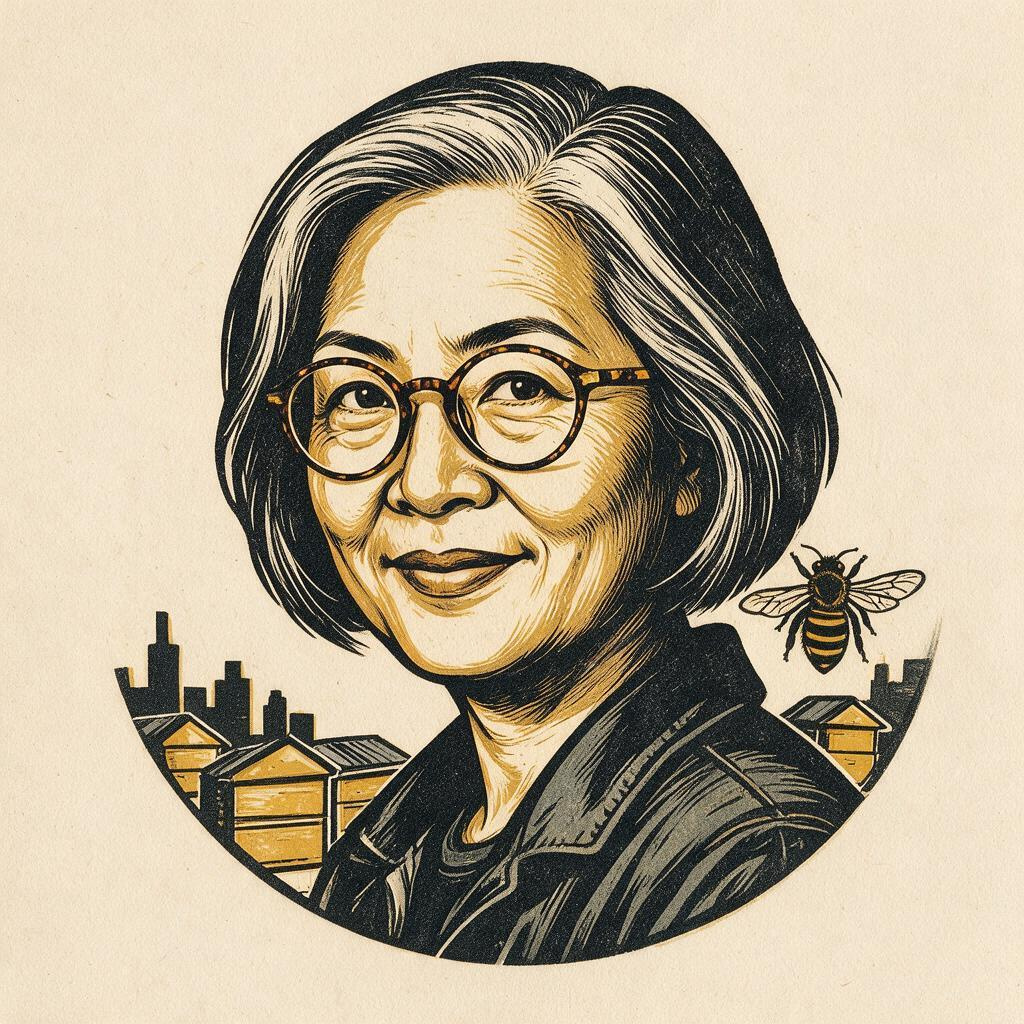
Create a finished square profile avatar for a professional urban beekeeper. Use reference image 1 as the identity reference: preserve the woman’s recognizable facial structure, short silver-streaked hair, round tortoiseshell glasses, warm eyes, and calm, capable expression. Translate her portrait into the handcrafted linocut visual language of reference image 2, including bold carved contours, slight ink irregularities, warm cream paper grain, deep charcoal shadows, and restrained mustard-yellow accents. Show a centered head-and-shoulders portrait in a practical dark work jacket, facing slightly three-quarters while maintaining direct eye contact. Integrate the second reference coherently: place a simplified honeybee motif behind one shoulder and a subtle arc of geometric rooftop hives and city rooflines around the lower background, like an emblem rather than a literal scene. Keep the face dominant, readable, and flattering at small icon size. Strong silhouette, balanced negative space, circular-crop-safe composition, warm expert personality, artisanal editorial finish. No words, initials, logos, watermark, photorealistic background, extra people, veil, or full beekeeping suit.
import { createClient } from '@runware/sdk'

const client = await createClient({ apiKey: process.env.RUNWARE_API_KEY })
await client.connect()

const [result] = await client.run({
  model: 'bytedance:seedream@5.0-pro',
  positivePrompt: 'Create a finished square profile avatar for a professional urban beekeeper. Use reference image 1 as the identity reference: preserve the woman’s recognizable facial structure, short silver-streaked hair, round tortoiseshell glasses, warm eyes, and calm, capable expression. Translate her portrait into the handcrafted linocut visual language of reference image 2, including bold carved contours, slight ink irregularities, warm cream paper grain, deep charcoal shadows, and restrained mustard-yellow accents. Show a centered head-and-shoulders portrait in a practical dark work jacket, facing slightly three-quarters while maintaining direct eye contact. Integrate the second reference coherently: place a simplified honeybee motif behind one shoulder and a subtle arc of geometric rooftop hives and city rooflines around the lower background, like an emblem rather than a literal scene. Keep the face dominant, readable, and flattering at small icon size. Strong silhouette, balanced negative space, circular-crop-safe composition, warm expert personality, artisanal editorial finish. No words, initials, logos, watermark, photorealistic background, extra people, veil, or full beekeeping suit.',
  settings: {
    thinking: true
  },
  inputs: {
    referenceImages: [
      'https://assets.runware.ai/assets/inputs/bd275b62-ab73-432b-a574-b56c92871c50.jpg',
      'https://assets.runware.ai/assets/inputs/203b31f5-9b1f-4fe7-b000-9d50e669a75e.jpg'
    ]
  }
})
import asyncio
import os
from runware import Runware
async def main():
async with Runware(api_key=os.environ["RUNWARE_API_KEY"]) as client:
results = await client.run({
"model": "bytedance:seedream@5.0-pro",
"positivePrompt": "Create a finished square profile avatar for a professional urban beekeeper. Use reference image 1 as the identity reference: preserve the woman’s recognizable facial structure, short silver-streaked hair, round tortoiseshell glasses, warm eyes, and calm, capable expression. Translate her portrait into the handcrafted linocut visual language of reference image 2, including bold carved contours, slight ink irregularities, warm cream paper grain, deep charcoal shadows, and restrained mustard-yellow accents. Show a centered head-and-shoulders portrait in a practical dark work jacket, facing slightly three-quarters while maintaining direct eye contact. Integrate the second reference coherently: place a simplified honeybee motif behind one shoulder and a subtle arc of geometric rooftop hives and city rooflines around the lower background, like an emblem rather than a literal scene. Keep the face dominant, readable, and flattering at small icon size. Strong silhouette, balanced negative space, circular-crop-safe composition, warm expert personality, artisanal editorial finish. No words, initials, logos, watermark, photorealistic background, extra people, veil, or full beekeeping suit.",
"settings": {
"thinking": True
},
"inputs": {
"referenceImages": [
"https://assets.runware.ai/assets/inputs/bd275b62-ab73-432b-a574-b56c92871c50.jpg",
"https://assets.runware.ai/assets/inputs/203b31f5-9b1f-4fe7-b000-9d50e669a75e.jpg"
]
}
})
asyncio.run(main())curl https://api.runware.ai/v1 \
-H "Authorization: Bearer $RUNWARE_API_KEY" \
-H "Content-Type: application/json" \
-d '[
{
  "taskType": "imageInference",
  "taskUUID": "29e5412f-953c-408a-9f85-b88c8ad6ab4c",
  "model": "bytedance:seedream@5.0-pro",
  "positivePrompt": "Create a finished square profile avatar for a professional urban beekeeper. Use reference image 1 as the identity reference: preserve the woman’s recognizable facial structure, short silver-streaked hair, round tortoiseshell glasses, warm eyes, and calm, capable expression. Translate her portrait into the handcrafted linocut visual language of reference image 2, including bold carved contours, slight ink irregularities, warm cream paper grain, deep charcoal shadows, and restrained mustard-yellow accents. Show a centered head-and-shoulders portrait in a practical dark work jacket, facing slightly three-quarters while maintaining direct eye contact. Integrate the second reference coherently: place a simplified honeybee motif behind one shoulder and a subtle arc of geometric rooftop hives and city rooflines around the lower background, like an emblem rather than a literal scene. Keep the face dominant, readable, and flattering at small icon size. Strong silhouette, balanced negative space, circular-crop-safe composition, warm expert personality, artisanal editorial finish. No words, initials, logos, watermark, photorealistic background, extra people, veil, or full beekeeping suit.",
  "settings": {
    "thinking": true
  },
  "inputs": {
    "referenceImages": [
      "https://assets.runware.ai/assets/inputs/bd275b62-ab73-432b-a574-b56c92871c50.jpg",
      "https://assets.runware.ai/assets/inputs/203b31f5-9b1f-4fe7-b000-9d50e669a75e.jpg"
    ]
  }
}
]'runware run bytedance:seedream@5.0-pro \
positivePrompt="Create a finished square profile avatar for a professional urban beekeeper. Use reference image 1 as the identity reference: preserve the woman’s recognizable facial structure, short silver-streaked hair, round tortoiseshell glasses, warm eyes, and calm, capable expression. Translate her portrait into the handcrafted linocut visual language of reference image 2, including bold carved contours, slight ink irregularities, warm cream paper grain, deep charcoal shadows, and restrained mustard-yellow accents. Show a centered head-and-shoulders portrait in a practical dark work jacket, facing slightly three-quarters while maintaining direct eye contact. Integrate the second reference coherently: place a simplified honeybee motif behind one shoulder and a subtle arc of geometric rooftop hives and city rooflines around the lower background, like an emblem rather than a literal scene. Keep the face dominant, readable, and flattering at small icon size. Strong silhouette, balanced negative space, circular-crop-safe composition, warm expert personality, artisanal editorial finish. No words, initials, logos, watermark, photorealistic background, extra people, veil, or full beekeeping suit." \
settings.thinking=true \
inputs.referenceImages.0=https://assets.runware.ai/assets/inputs/bd275b62-ab73-432b-a574-b56c92871c50.jpg \
inputs.referenceImages.1=https://assets.runware.ai/assets/inputs/203b31f5-9b1f-4fe7-b000-9d50e669a75e.jpg{
"taskType": "imageInference",
"taskUUID": "29e5412f-953c-408a-9f85-b88c8ad6ab4c",
"model": "bytedance:seedream@5.0-pro",
"positivePrompt": "Create a finished square profile avatar for a professional urban beekeeper. Use reference image 1 as the identity reference: preserve the woman’s recognizable facial structure, short silver-streaked hair, round tortoiseshell glasses, warm eyes, and calm, capable expression. Translate her portrait into the handcrafted linocut visual language of reference image 2, including bold carved contours, slight ink irregularities, warm cream paper grain, deep charcoal shadows, and restrained mustard-yellow accents. Show a centered head-and-shoulders portrait in a practical dark work jacket, facing slightly three-quarters while maintaining direct eye contact. Integrate the second reference coherently: place a simplified honeybee motif behind one shoulder and a subtle arc of geometric rooftop hives and city rooflines around the lower background, like an emblem rather than a literal scene. Keep the face dominant, readable, and flattering at small icon size. Strong silhouette, balanced negative space, circular-crop-safe composition, warm expert personality, artisanal editorial finish. No words, initials, logos, watermark, photorealistic background, extra people, veil, or full beekeeping suit.",
"settings": {
"thinking": true
},
"inputs": {
"referenceImages": [
"https://assets.runware.ai/assets/inputs/bd275b62-ab73-432b-a574-b56c92871c50.jpg",
"https://assets.runware.ai/assets/inputs/203b31f5-9b1f-4fe7-b000-9d50e669a75e.jpg"
]
}
}Response
{
  "taskType": "imageInference",
  "taskUUID": "29e5412f-953c-408a-9f85-b88c8ad6ab4c",
  "imageUUID": "317415ce-d2c2-4483-9872-f19fcca5bca9",
  "imageURL": "https://im.runware.ai/image/os/a01d21/ws/3/ii/317415ce-d2c2-4483-9872-f19fcca5bca9.jpg",
  "seed": 425052935,
  "cost": 0.05136
}