Kling IMAGE O1

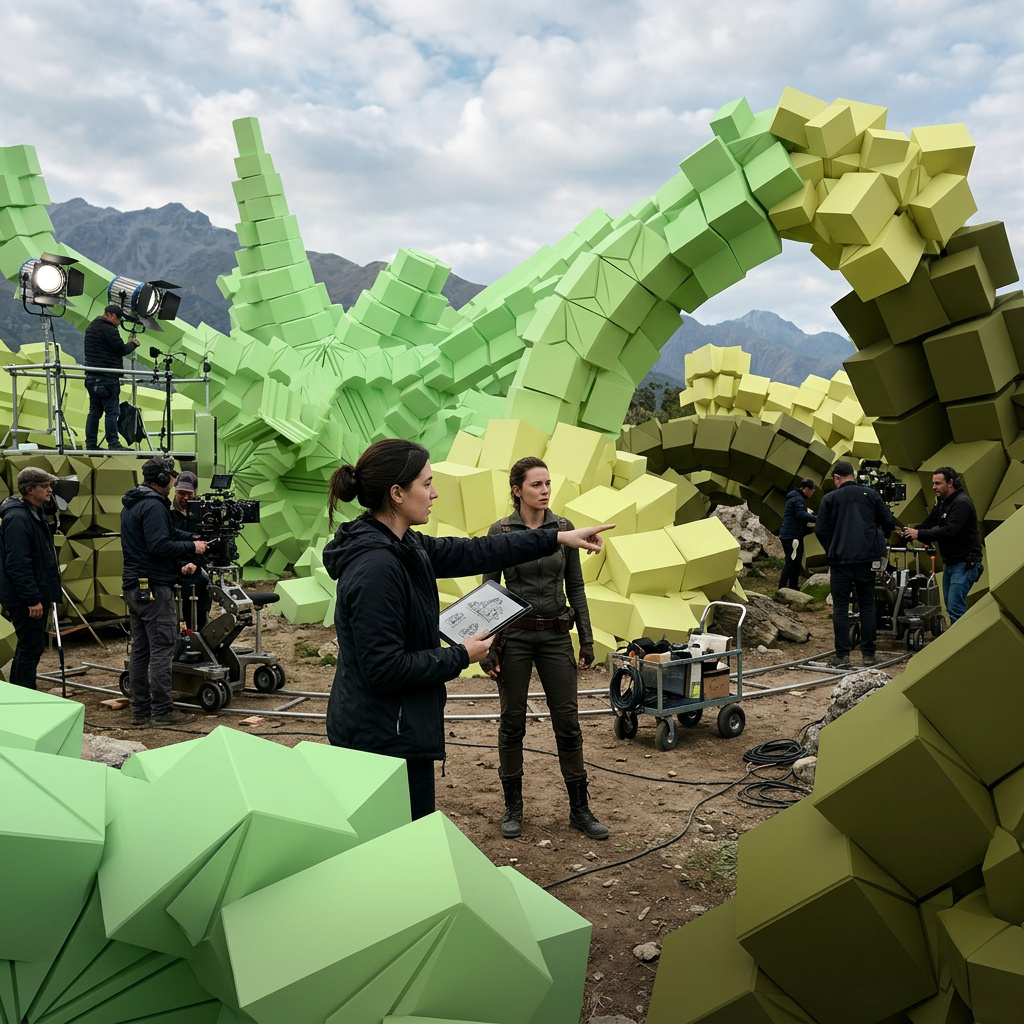
Kling IMAGE O1 is a high control image generation model for stable characters and precise edits. It supports detailed composition control, strong style handling, and localized modifications without structural drift. Ideal for pipelines that need repeatable shots and complex visual continuity.
text-to-image
Estuary Electronic Music Festival Poster$0.028~30s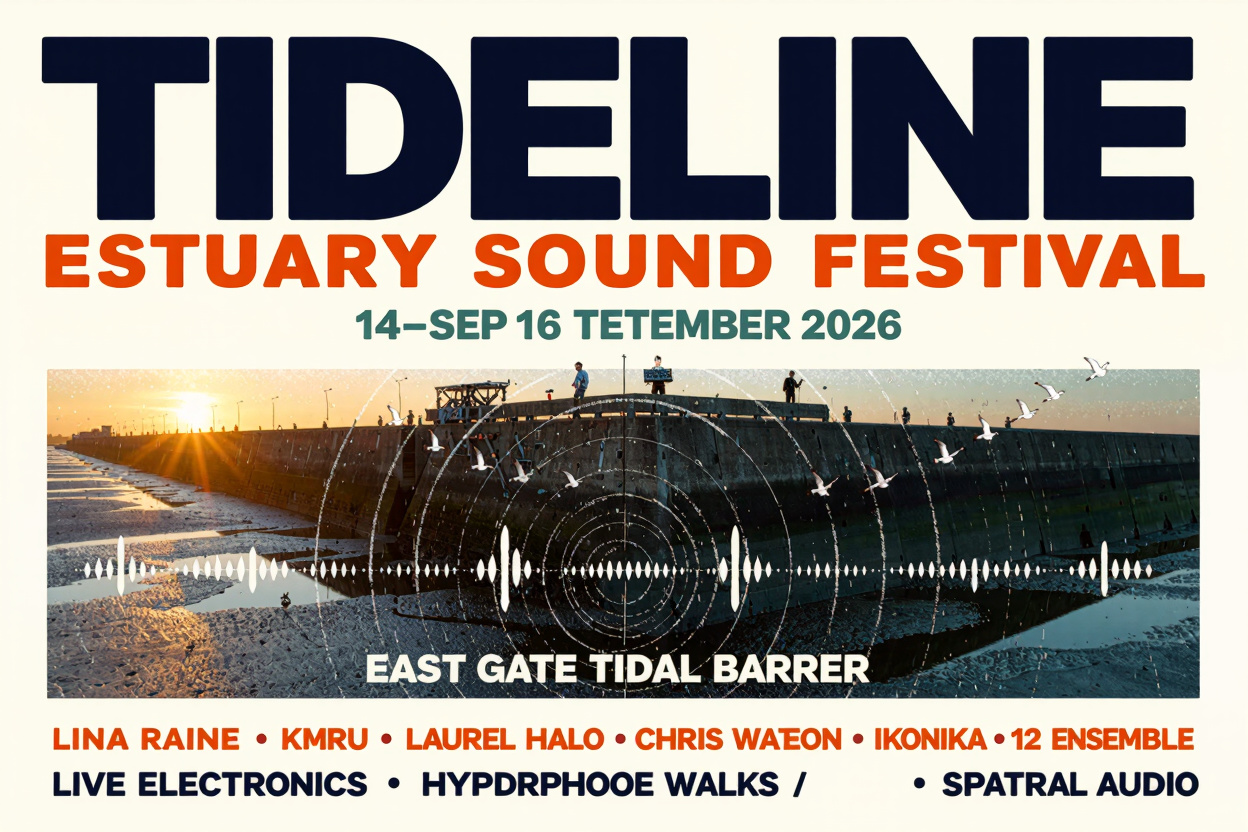
Finished landscape event poster artwork for TIDELINE, an experimental electronic music and field-recording festival held at a monumental coastal flood barrier. Edge-to-edge flat design, not a photographed poster or mockup. The central image is a stark side-on silhouette of a vast concrete storm-surge gate crossing a tidal estuary at low water; tiny performers with modular synthesizers and hydrophones stand on the maintenance deck, giving an immense sense of scale. Concentric sonar rings, waveform traces, tide-chart lines, and small flocks of shorebirds travel across the composition like musical notation. Bold contemporary screen-print aesthetic combining Dutch modernist graphics, technical maritime diagrams, and underground music-poster energy. Restricted palette of deep navy, safety orange, pale aqua, and warm off-white; rough ink texture, halftone gradients, crisp geometric forms, slight misregistration. Strong directional sunset light casts long angular shadows across reflective mudflats. Asymmetrical composition with generous negative space and an authoritative typographic grid. Large condensed sans-serif headline: “TIDELINE”. Directly beneath: “ESTUARY SOUND FESTIVAL”. Clear event details: “14–16 SEPTEMBER 2026” and “EAST GATE TIDAL BARRIER”. Smaller lineup block: “LINA RAINE • KMRU • LAUREL HALO • CHRIS WATSON • IKONIKA • 12 ENSEMBLE”. Footer line: “LIVE ELECTRONICS • HYDROPHONE WALKS • SPATIAL AUDIO”. Make all lettering clean, correctly spelled, highly legible, and integrated into the poster hierarchy. Sophisticated, atmospheric, industrial, windswept, culturally credible, print-ready festival identity.
import { createClient } from '@runware/sdk'

const client = await createClient({ apiKey: process.env.RUNWARE_API_KEY })
await client.connect()

const [result] = await client.run({
  model: 'klingai:kling-image@o1',
  positivePrompt: 'Finished landscape event poster artwork for TIDELINE, an experimental electronic music and field-recording festival held at a monumental coastal flood barrier. Edge-to-edge flat design, not a photographed poster or mockup. The central image is a stark side-on silhouette of a vast concrete storm-surge gate crossing a tidal estuary at low water; tiny performers with modular synthesizers and hydrophones stand on the maintenance deck, giving an immense sense of scale. Concentric sonar rings, waveform traces, tide-chart lines, and small flocks of shorebirds travel across the composition like musical notation. Bold contemporary screen-print aesthetic combining Dutch modernist graphics, technical maritime diagrams, and underground music-poster energy. Restricted palette of deep navy, safety orange, pale aqua, and warm off-white; rough ink texture, halftone gradients, crisp geometric forms, slight misregistration. Strong directional sunset light casts long angular shadows across reflective mudflats. Asymmetrical composition with generous negative space and an authoritative typographic grid. Large condensed sans-serif headline: “TIDELINE”. Directly beneath: “ESTUARY SOUND FESTIVAL”. Clear event details: “14–16 SEPTEMBER 2026” and “EAST GATE TIDAL BARRIER”. Smaller lineup block: “LINA RAINE • KMRU • LAUREL HALO • CHRIS WATSON • IKONIKA • 12 ENSEMBLE”. Footer line: “LIVE ELECTRONICS • HYDROPHONE WALKS • SPATIAL AUDIO”. Make all lettering clean, correctly spelled, highly legible, and integrated into the poster hierarchy. Sophisticated, atmospheric, industrial, windswept, culturally credible, print-ready festival identity.',
  width: 1248,
  height: 832
})
import asyncio
import os
from runware import Runware
async def main():
async with Runware(api_key=os.environ["RUNWARE_API_KEY"]) as client:
results = await client.run({
"model": "klingai:kling-image@o1",
"positivePrompt": "Finished landscape event poster artwork for TIDELINE, an experimental electronic music and field-recording festival held at a monumental coastal flood barrier. Edge-to-edge flat design, not a photographed poster or mockup. The central image is a stark side-on silhouette of a vast concrete storm-surge gate crossing a tidal estuary at low water; tiny performers with modular synthesizers and hydrophones stand on the maintenance deck, giving an immense sense of scale. Concentric sonar rings, waveform traces, tide-chart lines, and small flocks of shorebirds travel across the composition like musical notation. Bold contemporary screen-print aesthetic combining Dutch modernist graphics, technical maritime diagrams, and underground music-poster energy. Restricted palette of deep navy, safety orange, pale aqua, and warm off-white; rough ink texture, halftone gradients, crisp geometric forms, slight misregistration. Strong directional sunset light casts long angular shadows across reflective mudflats. Asymmetrical composition with generous negative space and an authoritative typographic grid. Large condensed sans-serif headline: “TIDELINE”. Directly beneath: “ESTUARY SOUND FESTIVAL”. Clear event details: “14–16 SEPTEMBER 2026” and “EAST GATE TIDAL BARRIER”. Smaller lineup block: “LINA RAINE • KMRU • LAUREL HALO • CHRIS WATSON • IKONIKA • 12 ENSEMBLE”. Footer line: “LIVE ELECTRONICS • HYDROPHONE WALKS • SPATIAL AUDIO”. Make all lettering clean, correctly spelled, highly legible, and integrated into the poster hierarchy. Sophisticated, atmospheric, industrial, windswept, culturally credible, print-ready festival identity.",
"width": 1248,
"height": 832
})
asyncio.run(main())curl https://api.runware.ai/v1 \
-H "Authorization: Bearer $RUNWARE_API_KEY" \
-H "Content-Type: application/json" \
-d '[
{
  "taskType": "imageInference",
  "taskUUID": "a29b2cab-1e70-4174-a108-011649c0be0f",
  "model": "klingai:kling-image@o1",
  "positivePrompt": "Finished landscape event poster artwork for TIDELINE, an experimental electronic music and field-recording festival held at a monumental coastal flood barrier. Edge-to-edge flat design, not a photographed poster or mockup. The central image is a stark side-on silhouette of a vast concrete storm-surge gate crossing a tidal estuary at low water; tiny performers with modular synthesizers and hydrophones stand on the maintenance deck, giving an immense sense of scale. Concentric sonar rings, waveform traces, tide-chart lines, and small flocks of shorebirds travel across the composition like musical notation. Bold contemporary screen-print aesthetic combining Dutch modernist graphics, technical maritime diagrams, and underground music-poster energy. Restricted palette of deep navy, safety orange, pale aqua, and warm off-white; rough ink texture, halftone gradients, crisp geometric forms, slight misregistration. Strong directional sunset light casts long angular shadows across reflective mudflats. Asymmetrical composition with generous negative space and an authoritative typographic grid. Large condensed sans-serif headline: “TIDELINE”. Directly beneath: “ESTUARY SOUND FESTIVAL”. Clear event details: “14–16 SEPTEMBER 2026” and “EAST GATE TIDAL BARRIER”. Smaller lineup block: “LINA RAINE • KMRU • LAUREL HALO • CHRIS WATSON • IKONIKA • 12 ENSEMBLE”. Footer line: “LIVE ELECTRONICS • HYDROPHONE WALKS • SPATIAL AUDIO”. Make all lettering clean, correctly spelled, highly legible, and integrated into the poster hierarchy. Sophisticated, atmospheric, industrial, windswept, culturally credible, print-ready festival identity.",
  "width": 1248,
  "height": 832
}
]'runware run klingai:kling-image@o1 \
positivePrompt="Finished landscape event poster artwork for TIDELINE, an experimental electronic music and field-recording festival held at a monumental coastal flood barrier. Edge-to-edge flat design, not a photographed poster or mockup. The central image is a stark side-on silhouette of a vast concrete storm-surge gate crossing a tidal estuary at low water; tiny performers with modular synthesizers and hydrophones stand on the maintenance deck, giving an immense sense of scale. Concentric sonar rings, waveform traces, tide-chart lines, and small flocks of shorebirds travel across the composition like musical notation. Bold contemporary screen-print aesthetic combining Dutch modernist graphics, technical maritime diagrams, and underground music-poster energy. Restricted palette of deep navy, safety orange, pale aqua, and warm off-white; rough ink texture, halftone gradients, crisp geometric forms, slight misregistration. Strong directional sunset light casts long angular shadows across reflective mudflats. Asymmetrical composition with generous negative space and an authoritative typographic grid. Large condensed sans-serif headline: “TIDELINE”. Directly beneath: “ESTUARY SOUND FESTIVAL”. Clear event details: “14–16 SEPTEMBER 2026” and “EAST GATE TIDAL BARRIER”. Smaller lineup block: “LINA RAINE • KMRU • LAUREL HALO • CHRIS WATSON • IKONIKA • 12 ENSEMBLE”. Footer line: “LIVE ELECTRONICS • HYDROPHONE WALKS • SPATIAL AUDIO”. Make all lettering clean, correctly spelled, highly legible, and integrated into the poster hierarchy. Sophisticated, atmospheric, industrial, windswept, culturally credible, print-ready festival identity." \
width=1248 \
height=832{
"taskType": "imageInference",
"taskUUID": "a29b2cab-1e70-4174-a108-011649c0be0f",
"model": "klingai:kling-image@o1",
"positivePrompt": "Finished landscape event poster artwork for TIDELINE, an experimental electronic music and field-recording festival held at a monumental coastal flood barrier. Edge-to-edge flat design, not a photographed poster or mockup. The central image is a stark side-on silhouette of a vast concrete storm-surge gate crossing a tidal estuary at low water; tiny performers with modular synthesizers and hydrophones stand on the maintenance deck, giving an immense sense of scale. Concentric sonar rings, waveform traces, tide-chart lines, and small flocks of shorebirds travel across the composition like musical notation. Bold contemporary screen-print aesthetic combining Dutch modernist graphics, technical maritime diagrams, and underground music-poster energy. Restricted palette of deep navy, safety orange, pale aqua, and warm off-white; rough ink texture, halftone gradients, crisp geometric forms, slight misregistration. Strong directional sunset light casts long angular shadows across reflective mudflats. Asymmetrical composition with generous negative space and an authoritative typographic grid. Large condensed sans-serif headline: “TIDELINE”. Directly beneath: “ESTUARY SOUND FESTIVAL”. Clear event details: “14–16 SEPTEMBER 2026” and “EAST GATE TIDAL BARRIER”. Smaller lineup block: “LINA RAINE • KMRU • LAUREL HALO • CHRIS WATSON • IKONIKA • 12 ENSEMBLE”. Footer line: “LIVE ELECTRONICS • HYDROPHONE WALKS • SPATIAL AUDIO”. Make all lettering clean, correctly spelled, highly legible, and integrated into the poster hierarchy. Sophisticated, atmospheric, industrial, windswept, culturally credible, print-ready festival identity.",
"width": 1248,
"height": 832
}Response
{
  "taskType": "imageInference",
  "taskUUID": "a29b2cab-1e70-4174-a108-011649c0be0f",
  "imageUUID": "ef4c7bc4-9c0d-4927-ab3e-b7fe2d1892d9",
  "imageURL": "https://im.runware.ai/image/os/a05d22/ws/3/ii/ef4c7bc4-9c0d-4927-ab3e-b7fe2d1892d9.jpg",
  "seed": 1127937499,
  "cost": 0.028
}
text-to-image
Varroa Mite Test Kit Carton$0.028~45s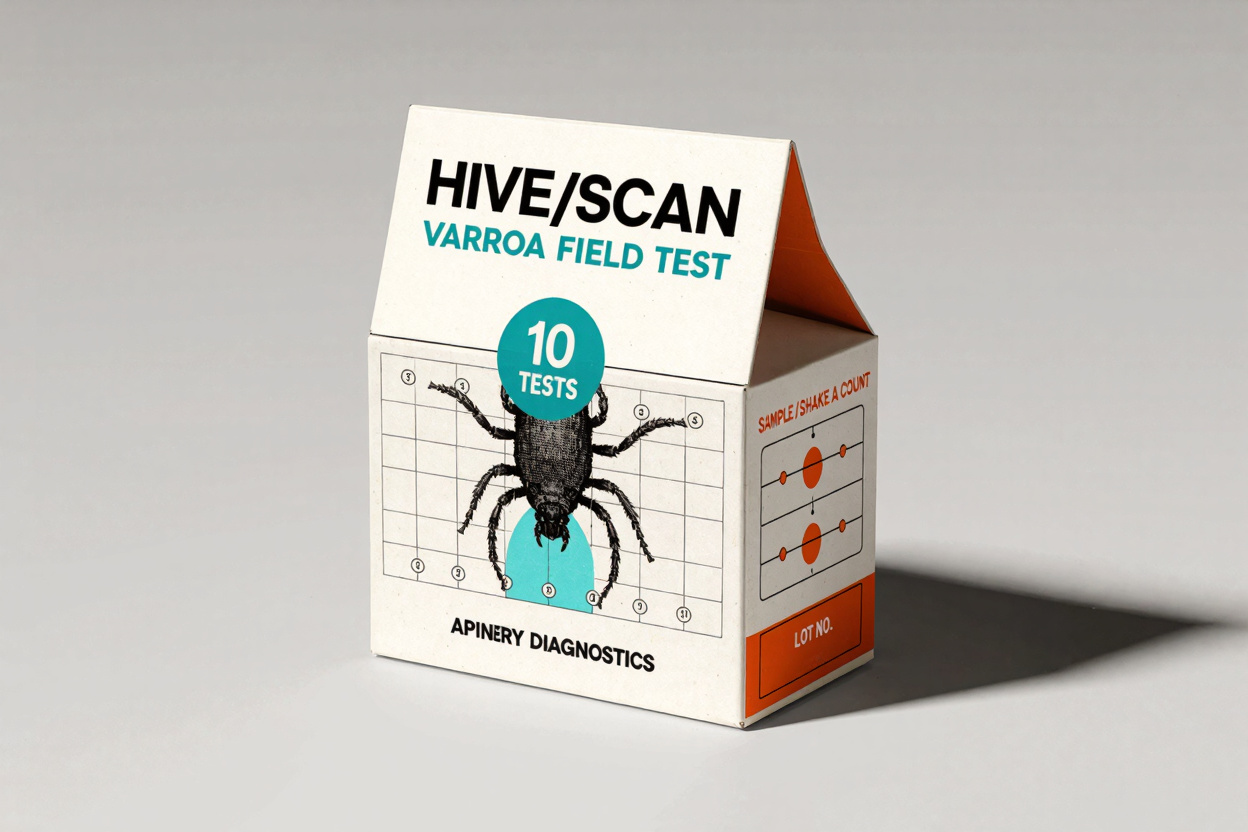
Create a polished packaging design presentation for HIVE/SCAN, a professional field test kit used by beekeepers to detect varroa mites. The clear hero subject is one compact rectangular folding carton, photographed at a three-quarter angle so the front and right side panels are both visible. Place it upright on a seamless pale gray studio surface with ample negative space, a crisp grounding shadow, and hard directional product lighting from the upper left. Design the carton in a bold Swiss scientific style: warm off-white uncoated paper stock, safety orange and electric cyan color blocks, precise black rules, modular grid, registration-mark details, small numbered specimen symbols, and one large abstract halftone illustration derived from the oval form and eight legs of a varroa mite. Keep the visual language clinical, contemporary, and trustworthy rather than rustic. No honey drips, honeycomb pattern, flowers, vintage engraving, or cute bee mascots. Typography must be clean, high-contrast, and deliberately composed. The front panel should clearly read “HIVE/SCAN” at the top, “VARROA FIELD TEST” as the primary product name, “10 TESTS” in a cyan circular badge, and “APIARY DIAGNOSTICS” in small type near the bottom. The side panel should feature a simple three-step pictogram sequence labeled “SAMPLE / SHAKE / COUNT” plus a compact orange lot-number field. Use only these prominent words; avoid filler copy and illegible pseudo-text. Premium commercial product visualization, tactile paper fibers, sharp carton folds, accurate perspective, immaculate print alignment, restrained shadows, realistic materials, editorial industrial-design photography. Landscape composition, carton occupying roughly two-thirds of the frame, no hands, no loose tools, no secondary packages, no retail shelf, no website interface.
import { createClient } from '@runware/sdk'

const client = await createClient({ apiKey: process.env.RUNWARE_API_KEY })
await client.connect()

const [result] = await client.run({
  model: 'klingai:kling-image@o1',
  positivePrompt: 'Create a polished packaging design presentation for HIVE/SCAN, a professional field test kit used by beekeepers to detect varroa mites. The clear hero subject is one compact rectangular folding carton, photographed at a three-quarter angle so the front and right side panels are both visible. Place it upright on a seamless pale gray studio surface with ample negative space, a crisp grounding shadow, and hard directional product lighting from the upper left.\n\nDesign the carton in a bold Swiss scientific style: warm off-white uncoated paper stock, safety orange and electric cyan color blocks, precise black rules, modular grid, registration-mark details, small numbered specimen symbols, and one large abstract halftone illustration derived from the oval form and eight legs of a varroa mite. Keep the visual language clinical, contemporary, and trustworthy rather than rustic. No honey drips, honeycomb pattern, flowers, vintage engraving, or cute bee mascots.\n\nTypography must be clean, high-contrast, and deliberately composed. The front panel should clearly read “HIVE/SCAN” at the top, “VARROA FIELD TEST” as the primary product name, “10 TESTS” in a cyan circular badge, and “APIARY DIAGNOSTICS” in small type near the bottom. The side panel should feature a simple three-step pictogram sequence labeled “SAMPLE / SHAKE / COUNT” plus a compact orange lot-number field. Use only these prominent words; avoid filler copy and illegible pseudo-text.\n\nPremium commercial product visualization, tactile paper fibers, sharp carton folds, accurate perspective, immaculate print alignment, restrained shadows, realistic materials, editorial industrial-design photography. Landscape composition, carton occupying roughly two-thirds of the frame, no hands, no loose tools, no secondary packages, no retail shelf, no website interface.',
  width: 1248,
  height: 832
})
import asyncio
import os
from runware import Runware
async def main():
async with Runware(api_key=os.environ["RUNWARE_API_KEY"]) as client:
results = await client.run({
"model": "klingai:kling-image@o1",
"positivePrompt": "Create a polished packaging design presentation for HIVE/SCAN, a professional field test kit used by beekeepers to detect varroa mites. The clear hero subject is one compact rectangular folding carton, photographed at a three-quarter angle so the front and right side panels are both visible. Place it upright on a seamless pale gray studio surface with ample negative space, a crisp grounding shadow, and hard directional product lighting from the upper left.\n\nDesign the carton in a bold Swiss scientific style: warm off-white uncoated paper stock, safety orange and electric cyan color blocks, precise black rules, modular grid, registration-mark details, small numbered specimen symbols, and one large abstract halftone illustration derived from the oval form and eight legs of a varroa mite. Keep the visual language clinical, contemporary, and trustworthy rather than rustic. No honey drips, honeycomb pattern, flowers, vintage engraving, or cute bee mascots.\n\nTypography must be clean, high-contrast, and deliberately composed. The front panel should clearly read “HIVE/SCAN” at the top, “VARROA FIELD TEST” as the primary product name, “10 TESTS” in a cyan circular badge, and “APIARY DIAGNOSTICS” in small type near the bottom. The side panel should feature a simple three-step pictogram sequence labeled “SAMPLE / SHAKE / COUNT” plus a compact orange lot-number field. Use only these prominent words; avoid filler copy and illegible pseudo-text.\n\nPremium commercial product visualization, tactile paper fibers, sharp carton folds, accurate perspective, immaculate print alignment, restrained shadows, realistic materials, editorial industrial-design photography. Landscape composition, carton occupying roughly two-thirds of the frame, no hands, no loose tools, no secondary packages, no retail shelf, no website interface.",
"width": 1248,
"height": 832
})
asyncio.run(main())curl https://api.runware.ai/v1 \
-H "Authorization: Bearer $RUNWARE_API_KEY" \
-H "Content-Type: application/json" \
-d '[
{
  "taskType": "imageInference",
  "taskUUID": "a53cd931-b38c-4ba8-9524-ccde283ad058",
  "model": "klingai:kling-image@o1",
  "positivePrompt": "Create a polished packaging design presentation for HIVE/SCAN, a professional field test kit used by beekeepers to detect varroa mites. The clear hero subject is one compact rectangular folding carton, photographed at a three-quarter angle so the front and right side panels are both visible. Place it upright on a seamless pale gray studio surface with ample negative space, a crisp grounding shadow, and hard directional product lighting from the upper left.\n\nDesign the carton in a bold Swiss scientific style: warm off-white uncoated paper stock, safety orange and electric cyan color blocks, precise black rules, modular grid, registration-mark details, small numbered specimen symbols, and one large abstract halftone illustration derived from the oval form and eight legs of a varroa mite. Keep the visual language clinical, contemporary, and trustworthy rather than rustic. No honey drips, honeycomb pattern, flowers, vintage engraving, or cute bee mascots.\n\nTypography must be clean, high-contrast, and deliberately composed. The front panel should clearly read “HIVE/SCAN” at the top, “VARROA FIELD TEST” as the primary product name, “10 TESTS” in a cyan circular badge, and “APIARY DIAGNOSTICS” in small type near the bottom. The side panel should feature a simple three-step pictogram sequence labeled “SAMPLE / SHAKE / COUNT” plus a compact orange lot-number field. Use only these prominent words; avoid filler copy and illegible pseudo-text.\n\nPremium commercial product visualization, tactile paper fibers, sharp carton folds, accurate perspective, immaculate print alignment, restrained shadows, realistic materials, editorial industrial-design photography. Landscape composition, carton occupying roughly two-thirds of the frame, no hands, no loose tools, no secondary packages, no retail shelf, no website interface.",
  "width": 1248,
  "height": 832
}
]'runware run klingai:kling-image@o1 \
positivePrompt="Create a polished packaging design presentation for HIVE/SCAN, a professional field test kit used by beekeepers to detect varroa mites. The clear hero subject is one compact rectangular folding carton, photographed at a three-quarter angle so the front and right side panels are both visible. Place it upright on a seamless pale gray studio surface with ample negative space, a crisp grounding shadow, and hard directional product lighting from the upper left.
Design the carton in a bold Swiss scientific style: warm off-white uncoated paper stock, safety orange and electric cyan color blocks, precise black rules, modular grid, registration-mark details, small numbered specimen symbols, and one large abstract halftone illustration derived from the oval form and eight legs of a varroa mite. Keep the visual language clinical, contemporary, and trustworthy rather than rustic. No honey drips, honeycomb pattern, flowers, vintage engraving, or cute bee mascots.
Typography must be clean, high-contrast, and deliberately composed. The front panel should clearly read “HIVE/SCAN” at the top, “VARROA FIELD TEST” as the primary product name, “10 TESTS” in a cyan circular badge, and “APIARY DIAGNOSTICS” in small type near the bottom. The side panel should feature a simple three-step pictogram sequence labeled “SAMPLE / SHAKE / COUNT” plus a compact orange lot-number field. Use only these prominent words; avoid filler copy and illegible pseudo-text.
Premium commercial product visualization, tactile paper fibers, sharp carton folds, accurate perspective, immaculate print alignment, restrained shadows, realistic materials, editorial industrial-design photography. Landscape composition, carton occupying roughly two-thirds of the frame, no hands, no loose tools, no secondary packages, no retail shelf, no website interface." \
width=1248 \
height=832{
"taskType": "imageInference",
"taskUUID": "a53cd931-b38c-4ba8-9524-ccde283ad058",
"model": "klingai:kling-image@o1",
"positivePrompt": "Create a polished packaging design presentation for HIVE/SCAN, a professional field test kit used by beekeepers to detect varroa mites. The clear hero subject is one compact rectangular folding carton, photographed at a three-quarter angle so the front and right side panels are both visible. Place it upright on a seamless pale gray studio surface with ample negative space, a crisp grounding shadow, and hard directional product lighting from the upper left.\n\nDesign the carton in a bold Swiss scientific style: warm off-white uncoated paper stock, safety orange and electric cyan color blocks, precise black rules, modular grid, registration-mark details, small numbered specimen symbols, and one large abstract halftone illustration derived from the oval form and eight legs of a varroa mite. Keep the visual language clinical, contemporary, and trustworthy rather than rustic. No honey drips, honeycomb pattern, flowers, vintage engraving, or cute bee mascots.\n\nTypography must be clean, high-contrast, and deliberately composed. The front panel should clearly read “HIVE/SCAN” at the top, “VARROA FIELD TEST” as the primary product name, “10 TESTS” in a cyan circular badge, and “APIARY DIAGNOSTICS” in small type near the bottom. The side panel should feature a simple three-step pictogram sequence labeled “SAMPLE / SHAKE / COUNT” plus a compact orange lot-number field. Use only these prominent words; avoid filler copy and illegible pseudo-text.\n\nPremium commercial product visualization, tactile paper fibers, sharp carton folds, accurate perspective, immaculate print alignment, restrained shadows, realistic materials, editorial industrial-design photography. Landscape composition, carton occupying roughly two-thirds of the frame, no hands, no loose tools, no secondary packages, no retail shelf, no website interface.",
"width": 1248,
"height": 832
}Response
{
  "taskType": "imageInference",
  "taskUUID": "a53cd931-b38c-4ba8-9524-ccde283ad058",
  "imageUUID": "7cd347ca-0ccc-4acb-b046-0525cca92275",
  "imageURL": "https://im.runware.ai/image/os/a01d21/ws/3/ii/7cd347ca-0ccc-4acb-b046-0525cca92275.jpg",
  "seed": 1391559569,
  "cost": 0.028
}
reference-to-image
Lowrider Bicycle Builder Editorial Portrait$0.028~48s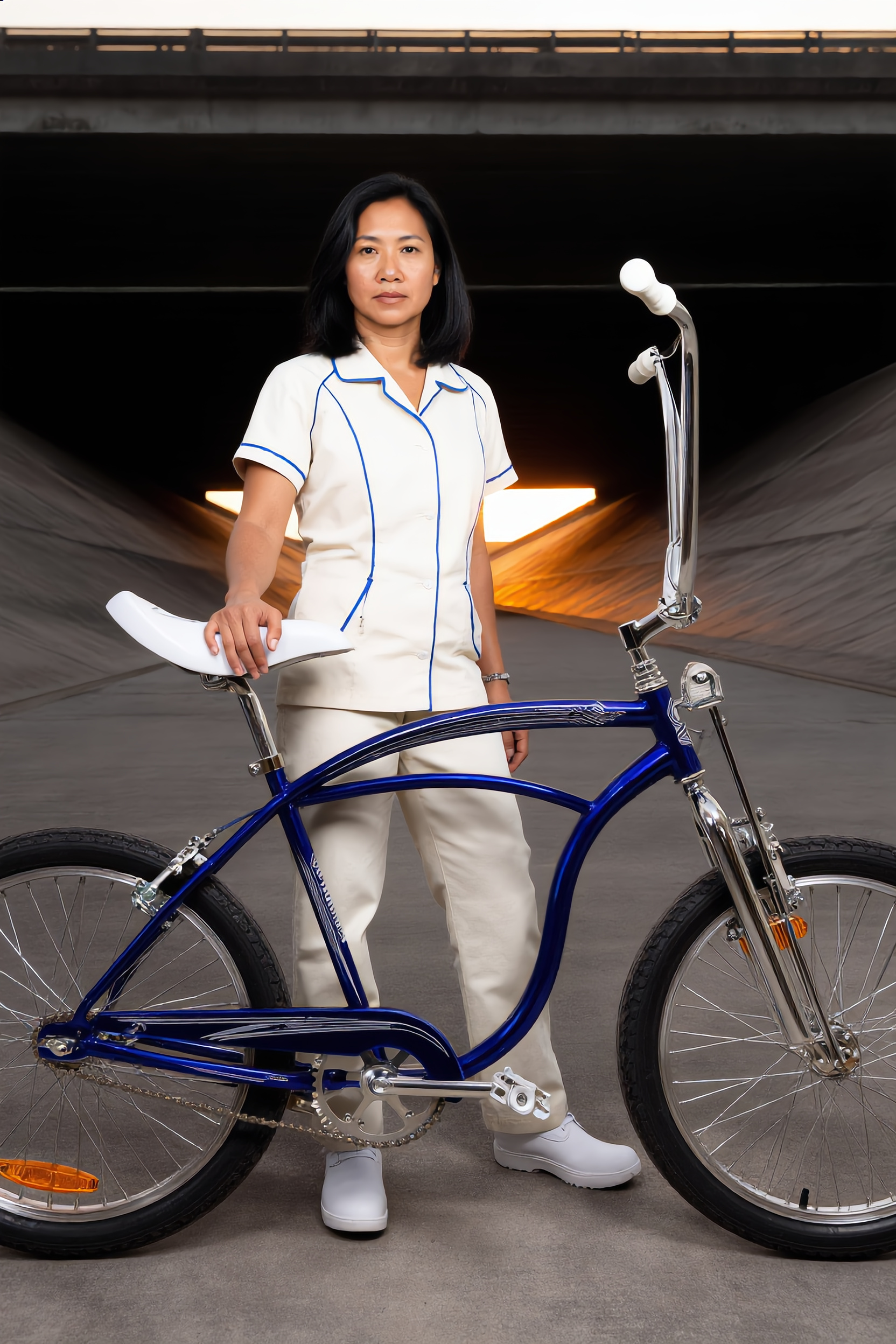
Create a finished vertical editorial photoshoot portrait using both reference images. Preserve the exact facial identity, age, skin tone, hair, and body proportions of the woman in reference image 1. Include the exact custom lowrider bicycle from reference image 2, retaining its cobalt frame, silver pinstriping, elongated chrome fork, high-rise handlebars, white banana saddle, twisted spokes, reflectors, and distinctive geometry. Photograph her as an accomplished custom bicycle builder in a monumental concrete flood-control channel beneath a broad overpass at sunrise. She stands beside the bicycle with one hand resting lightly on the saddle and the other holding a small chrome spoke wrench. Style her in an ecru short-sleeve mechanic jumpsuit tailored like high fashion, with cobalt topstitching, rolled cuffs, sturdy white work boots, and understated silver jewelry. Confident, composed expression directed toward the camera. Full-length environmental portrait with a slightly low camera position, generous vertical architecture, and the bicycle fully visible rather than cropped. Clean 1990s Japanese bicycle-catalog precision interpreted as contemporary editorial photography. Hard direct flash defines the subject and polished chrome while a narrow band of warm sunrise creates tangerine highlights in the background. Restrained palette of concrete gray, ecru, cobalt blue, chrome, and sunrise orange. Crisp realistic skin texture, believable fabric, accurate hands, mechanically coherent bicycle, subtle fine-grain finish. Premium magazine portrait, self-possessed and celebratory. No visible logos, captions, typography, borders, or watermarks.
import { createClient } from '@runware/sdk'

const client = await createClient({ apiKey: process.env.RUNWARE_API_KEY })
await client.connect()

const [result] = await client.run({
  model: 'klingai:kling-image@o1',
  positivePrompt: 'Create a finished vertical editorial photoshoot portrait using both reference images. Preserve the exact facial identity, age, skin tone, hair, and body proportions of the woman in reference image 1. Include the exact custom lowrider bicycle from reference image 2, retaining its cobalt frame, silver pinstriping, elongated chrome fork, high-rise handlebars, white banana saddle, twisted spokes, reflectors, and distinctive geometry.\n\nPhotograph her as an accomplished custom bicycle builder in a monumental concrete flood-control channel beneath a broad overpass at sunrise. She stands beside the bicycle with one hand resting lightly on the saddle and the other holding a small chrome spoke wrench. Style her in an ecru short-sleeve mechanic jumpsuit tailored like high fashion, with cobalt topstitching, rolled cuffs, sturdy white work boots, and understated silver jewelry. Confident, composed expression directed toward the camera.\n\nFull-length environmental portrait with a slightly low camera position, generous vertical architecture, and the bicycle fully visible rather than cropped. Clean 1990s Japanese bicycle-catalog precision interpreted as contemporary editorial photography. Hard direct flash defines the subject and polished chrome while a narrow band of warm sunrise creates tangerine highlights in the background. Restrained palette of concrete gray, ecru, cobalt blue, chrome, and sunrise orange. Crisp realistic skin texture, believable fabric, accurate hands, mechanically coherent bicycle, subtle fine-grain finish. Premium magazine portrait, self-possessed and celebratory. No visible logos, captions, typography, borders, or watermarks.',
  resolution: '2k',
  inputs: {
    referenceImages: [
      'https://assets.runware.ai/assets/inputs/6baa7fa0-8300-447c-93db-a11182118671.jpg',
      'https://assets.runware.ai/assets/inputs/d9a227d3-75d1-499e-b60b-e6c79f33fed8.jpg'
    ]
  }
})
import asyncio
import os
from runware import Runware
async def main():
async with Runware(api_key=os.environ["RUNWARE_API_KEY"]) as client:
results = await client.run({
"model": "klingai:kling-image@o1",
"positivePrompt": "Create a finished vertical editorial photoshoot portrait using both reference images. Preserve the exact facial identity, age, skin tone, hair, and body proportions of the woman in reference image 1. Include the exact custom lowrider bicycle from reference image 2, retaining its cobalt frame, silver pinstriping, elongated chrome fork, high-rise handlebars, white banana saddle, twisted spokes, reflectors, and distinctive geometry.\n\nPhotograph her as an accomplished custom bicycle builder in a monumental concrete flood-control channel beneath a broad overpass at sunrise. She stands beside the bicycle with one hand resting lightly on the saddle and the other holding a small chrome spoke wrench. Style her in an ecru short-sleeve mechanic jumpsuit tailored like high fashion, with cobalt topstitching, rolled cuffs, sturdy white work boots, and understated silver jewelry. Confident, composed expression directed toward the camera.\n\nFull-length environmental portrait with a slightly low camera position, generous vertical architecture, and the bicycle fully visible rather than cropped. Clean 1990s Japanese bicycle-catalog precision interpreted as contemporary editorial photography. Hard direct flash defines the subject and polished chrome while a narrow band of warm sunrise creates tangerine highlights in the background. Restrained palette of concrete gray, ecru, cobalt blue, chrome, and sunrise orange. Crisp realistic skin texture, believable fabric, accurate hands, mechanically coherent bicycle, subtle fine-grain finish. Premium magazine portrait, self-possessed and celebratory. No visible logos, captions, typography, borders, or watermarks.",
"resolution": "2k",
"inputs": {
"referenceImages": [
"https://assets.runware.ai/assets/inputs/6baa7fa0-8300-447c-93db-a11182118671.jpg",
"https://assets.runware.ai/assets/inputs/d9a227d3-75d1-499e-b60b-e6c79f33fed8.jpg"
]
}
})
asyncio.run(main())curl https://api.runware.ai/v1 \
-H "Authorization: Bearer $RUNWARE_API_KEY" \
-H "Content-Type: application/json" \
-d '[
{
  "taskType": "imageInference",
  "taskUUID": "e2e0d66d-6b78-432a-9e59-2bc0eb9a2a95",
  "model": "klingai:kling-image@o1",
  "positivePrompt": "Create a finished vertical editorial photoshoot portrait using both reference images. Preserve the exact facial identity, age, skin tone, hair, and body proportions of the woman in reference image 1. Include the exact custom lowrider bicycle from reference image 2, retaining its cobalt frame, silver pinstriping, elongated chrome fork, high-rise handlebars, white banana saddle, twisted spokes, reflectors, and distinctive geometry.\n\nPhotograph her as an accomplished custom bicycle builder in a monumental concrete flood-control channel beneath a broad overpass at sunrise. She stands beside the bicycle with one hand resting lightly on the saddle and the other holding a small chrome spoke wrench. Style her in an ecru short-sleeve mechanic jumpsuit tailored like high fashion, with cobalt topstitching, rolled cuffs, sturdy white work boots, and understated silver jewelry. Confident, composed expression directed toward the camera.\n\nFull-length environmental portrait with a slightly low camera position, generous vertical architecture, and the bicycle fully visible rather than cropped. Clean 1990s Japanese bicycle-catalog precision interpreted as contemporary editorial photography. Hard direct flash defines the subject and polished chrome while a narrow band of warm sunrise creates tangerine highlights in the background. Restrained palette of concrete gray, ecru, cobalt blue, chrome, and sunrise orange. Crisp realistic skin texture, believable fabric, accurate hands, mechanically coherent bicycle, subtle fine-grain finish. Premium magazine portrait, self-possessed and celebratory. No visible logos, captions, typography, borders, or watermarks.",
  "resolution": "2k",
  "inputs": {
    "referenceImages": [
      "https://assets.runware.ai/assets/inputs/6baa7fa0-8300-447c-93db-a11182118671.jpg",
      "https://assets.runware.ai/assets/inputs/d9a227d3-75d1-499e-b60b-e6c79f33fed8.jpg"
    ]
  }
}
]'runware run klingai:kling-image@o1 \
positivePrompt="Create a finished vertical editorial photoshoot portrait using both reference images. Preserve the exact facial identity, age, skin tone, hair, and body proportions of the woman in reference image 1. Include the exact custom lowrider bicycle from reference image 2, retaining its cobalt frame, silver pinstriping, elongated chrome fork, high-rise handlebars, white banana saddle, twisted spokes, reflectors, and distinctive geometry.
Photograph her as an accomplished custom bicycle builder in a monumental concrete flood-control channel beneath a broad overpass at sunrise. She stands beside the bicycle with one hand resting lightly on the saddle and the other holding a small chrome spoke wrench. Style her in an ecru short-sleeve mechanic jumpsuit tailored like high fashion, with cobalt topstitching, rolled cuffs, sturdy white work boots, and understated silver jewelry. Confident, composed expression directed toward the camera.
Full-length environmental portrait with a slightly low camera position, generous vertical architecture, and the bicycle fully visible rather than cropped. Clean 1990s Japanese bicycle-catalog precision interpreted as contemporary editorial photography. Hard direct flash defines the subject and polished chrome while a narrow band of warm sunrise creates tangerine highlights in the background. Restrained palette of concrete gray, ecru, cobalt blue, chrome, and sunrise orange. Crisp realistic skin texture, believable fabric, accurate hands, mechanically coherent bicycle, subtle fine-grain finish. Premium magazine portrait, self-possessed and celebratory. No visible logos, captions, typography, borders, or watermarks." \
resolution=2k \
inputs.referenceImages.0=https://assets.runware.ai/assets/inputs/6baa7fa0-8300-447c-93db-a11182118671.jpg \
inputs.referenceImages.1=https://assets.runware.ai/assets/inputs/d9a227d3-75d1-499e-b60b-e6c79f33fed8.jpg{
"taskType": "imageInference",
"taskUUID": "e2e0d66d-6b78-432a-9e59-2bc0eb9a2a95",
"model": "klingai:kling-image@o1",
"positivePrompt": "Create a finished vertical editorial photoshoot portrait using both reference images. Preserve the exact facial identity, age, skin tone, hair, and body proportions of the woman in reference image 1. Include the exact custom lowrider bicycle from reference image 2, retaining its cobalt frame, silver pinstriping, elongated chrome fork, high-rise handlebars, white banana saddle, twisted spokes, reflectors, and distinctive geometry.\n\nPhotograph her as an accomplished custom bicycle builder in a monumental concrete flood-control channel beneath a broad overpass at sunrise. She stands beside the bicycle with one hand resting lightly on the saddle and the other holding a small chrome spoke wrench. Style her in an ecru short-sleeve mechanic jumpsuit tailored like high fashion, with cobalt topstitching, rolled cuffs, sturdy white work boots, and understated silver jewelry. Confident, composed expression directed toward the camera.\n\nFull-length environmental portrait with a slightly low camera position, generous vertical architecture, and the bicycle fully visible rather than cropped. Clean 1990s Japanese bicycle-catalog precision interpreted as contemporary editorial photography. Hard direct flash defines the subject and polished chrome while a narrow band of warm sunrise creates tangerine highlights in the background. Restrained palette of concrete gray, ecru, cobalt blue, chrome, and sunrise orange. Crisp realistic skin texture, believable fabric, accurate hands, mechanically coherent bicycle, subtle fine-grain finish. Premium magazine portrait, self-possessed and celebratory. No visible logos, captions, typography, borders, or watermarks.",
"resolution": "2k",
"inputs": {
"referenceImages": [
"https://assets.runware.ai/assets/inputs/6baa7fa0-8300-447c-93db-a11182118671.jpg",
"https://assets.runware.ai/assets/inputs/d9a227d3-75d1-499e-b60b-e6c79f33fed8.jpg"
]
}
}Response
{
  "taskType": "imageInference",
  "taskUUID": "e2e0d66d-6b78-432a-9e59-2bc0eb9a2a95",
  "imageUUID": "15973523-15f9-49cb-94dd-27c464dbfc4f",
  "imageURL": "https://im.runware.ai/image/os/a02d21/ws/4/ii/15973523-15f9-49cb-94dd-27c464dbfc4f.jpg",
  "seed": 1803866684,
  "cost": 0.028
}
reference-to-image
Mobile Library Archive Photo Restoration$0.028~31s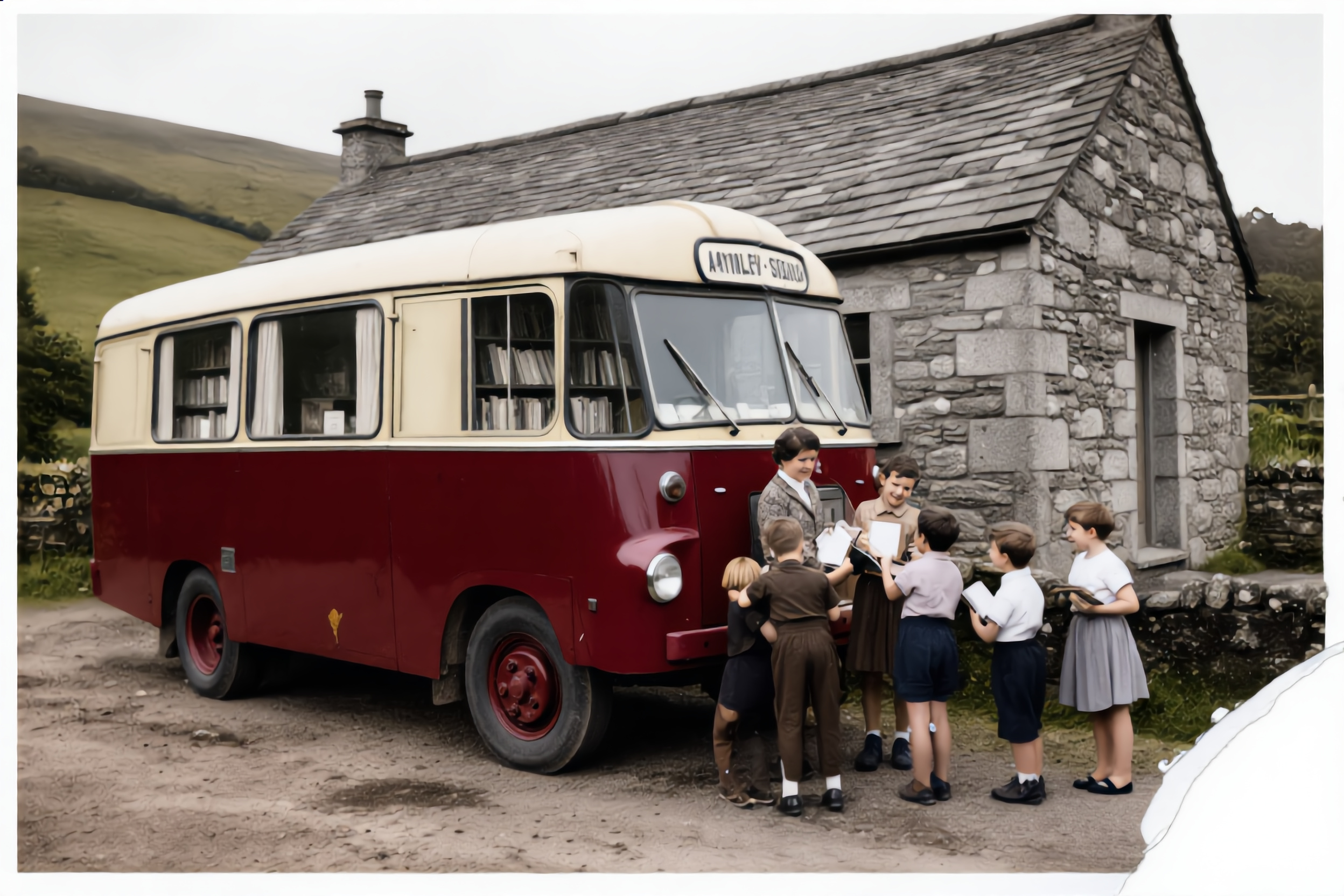
Create a museum-grade restoration and historically restrained colorization of reference image 1. Preserve its exact documentary composition, camera angle, people, poses, facial identities, clothing, stone village hall, road and natural 1950s photographic character. Repair the diagonal crease, missing lower-right corner, scratches, dust, silvering, water stains and faded tonal areas without smoothing away genuine film grain or changing anatomy. Use reference image 2 as the factual guide for reconstructing the damaged portions of the mobile-library bus: retain the same rounded body, chrome grille, windows, wheels and trim, with its deep burgundy lower body, warm cream upper panels and fine gold lining. Rebuild only details obscured or lost in the damaged source. Preserve any genuinely legible wording from reference image 1, but do not invent extra lettering. Apply subtle, plausible period color: natural British skin tones, modest wool clothing in muted navy, brown, moss and maroon, weathered gray stone, damp olive grass and a softly overcast sky. Keep realistic fabric texture, bus paint wear, chrome reflections and masonry detail. The finished image should look like a carefully conserved original 1956 color photograph prepared as a large archival exhibition print, not a modern reenactment, not glossy, not oversaturated, and not artificially sharpened. Landscape 3:2 framing with all original subjects retained.
import { createClient } from '@runware/sdk'

const client = await createClient({ apiKey: process.env.RUNWARE_API_KEY })
await client.connect()

const [result] = await client.run({
  model: 'klingai:kling-image@o1',
  positivePrompt: 'Create a museum-grade restoration and historically restrained colorization of reference image 1. Preserve its exact documentary composition, camera angle, people, poses, facial identities, clothing, stone village hall, road and natural 1950s photographic character. Repair the diagonal crease, missing lower-right corner, scratches, dust, silvering, water stains and faded tonal areas without smoothing away genuine film grain or changing anatomy. Use reference image 2 as the factual guide for reconstructing the damaged portions of the mobile-library bus: retain the same rounded body, chrome grille, windows, wheels and trim, with its deep burgundy lower body, warm cream upper panels and fine gold lining. Rebuild only details obscured or lost in the damaged source. Preserve any genuinely legible wording from reference image 1, but do not invent extra lettering. Apply subtle, plausible period color: natural British skin tones, modest wool clothing in muted navy, brown, moss and maroon, weathered gray stone, damp olive grass and a softly overcast sky. Keep realistic fabric texture, bus paint wear, chrome reflections and masonry detail. The finished image should look like a carefully conserved original 1956 color photograph prepared as a large archival exhibition print, not a modern reenactment, not glossy, not oversaturated, and not artificially sharpened. Landscape 3:2 framing with all original subjects retained.',
  resolution: '2k',
  inputs: {
    referenceImages: [
      'https://assets.runware.ai/assets/inputs/b638d0d2-5f8f-4f0f-a9c7-94d8fbb2927c.jpg',
      'https://assets.runware.ai/assets/inputs/e854e053-05e5-4f9f-89b6-4b41ba7ceeb2.jpg'
    ]
  }
})
import asyncio
import os
from runware import Runware
async def main():
async with Runware(api_key=os.environ["RUNWARE_API_KEY"]) as client:
results = await client.run({
"model": "klingai:kling-image@o1",
"positivePrompt": "Create a museum-grade restoration and historically restrained colorization of reference image 1. Preserve its exact documentary composition, camera angle, people, poses, facial identities, clothing, stone village hall, road and natural 1950s photographic character. Repair the diagonal crease, missing lower-right corner, scratches, dust, silvering, water stains and faded tonal areas without smoothing away genuine film grain or changing anatomy. Use reference image 2 as the factual guide for reconstructing the damaged portions of the mobile-library bus: retain the same rounded body, chrome grille, windows, wheels and trim, with its deep burgundy lower body, warm cream upper panels and fine gold lining. Rebuild only details obscured or lost in the damaged source. Preserve any genuinely legible wording from reference image 1, but do not invent extra lettering. Apply subtle, plausible period color: natural British skin tones, modest wool clothing in muted navy, brown, moss and maroon, weathered gray stone, damp olive grass and a softly overcast sky. Keep realistic fabric texture, bus paint wear, chrome reflections and masonry detail. The finished image should look like a carefully conserved original 1956 color photograph prepared as a large archival exhibition print, not a modern reenactment, not glossy, not oversaturated, and not artificially sharpened. Landscape 3:2 framing with all original subjects retained.",
"resolution": "2k",
"inputs": {
"referenceImages": [
"https://assets.runware.ai/assets/inputs/b638d0d2-5f8f-4f0f-a9c7-94d8fbb2927c.jpg",
"https://assets.runware.ai/assets/inputs/e854e053-05e5-4f9f-89b6-4b41ba7ceeb2.jpg"
]
}
})
asyncio.run(main())curl https://api.runware.ai/v1 \
-H "Authorization: Bearer $RUNWARE_API_KEY" \
-H "Content-Type: application/json" \
-d '[
{
  "taskType": "imageInference",
  "taskUUID": "46522561-253b-4a68-ad0e-53f5ca3f4bb0",
  "model": "klingai:kling-image@o1",
  "positivePrompt": "Create a museum-grade restoration and historically restrained colorization of reference image 1. Preserve its exact documentary composition, camera angle, people, poses, facial identities, clothing, stone village hall, road and natural 1950s photographic character. Repair the diagonal crease, missing lower-right corner, scratches, dust, silvering, water stains and faded tonal areas without smoothing away genuine film grain or changing anatomy. Use reference image 2 as the factual guide for reconstructing the damaged portions of the mobile-library bus: retain the same rounded body, chrome grille, windows, wheels and trim, with its deep burgundy lower body, warm cream upper panels and fine gold lining. Rebuild only details obscured or lost in the damaged source. Preserve any genuinely legible wording from reference image 1, but do not invent extra lettering. Apply subtle, plausible period color: natural British skin tones, modest wool clothing in muted navy, brown, moss and maroon, weathered gray stone, damp olive grass and a softly overcast sky. Keep realistic fabric texture, bus paint wear, chrome reflections and masonry detail. The finished image should look like a carefully conserved original 1956 color photograph prepared as a large archival exhibition print, not a modern reenactment, not glossy, not oversaturated, and not artificially sharpened. Landscape 3:2 framing with all original subjects retained.",
  "resolution": "2k",
  "inputs": {
    "referenceImages": [
      "https://assets.runware.ai/assets/inputs/b638d0d2-5f8f-4f0f-a9c7-94d8fbb2927c.jpg",
      "https://assets.runware.ai/assets/inputs/e854e053-05e5-4f9f-89b6-4b41ba7ceeb2.jpg"
    ]
  }
}
]'runware run klingai:kling-image@o1 \
positivePrompt="Create a museum-grade restoration and historically restrained colorization of reference image 1. Preserve its exact documentary composition, camera angle, people, poses, facial identities, clothing, stone village hall, road and natural 1950s photographic character. Repair the diagonal crease, missing lower-right corner, scratches, dust, silvering, water stains and faded tonal areas without smoothing away genuine film grain or changing anatomy. Use reference image 2 as the factual guide for reconstructing the damaged portions of the mobile-library bus: retain the same rounded body, chrome grille, windows, wheels and trim, with its deep burgundy lower body, warm cream upper panels and fine gold lining. Rebuild only details obscured or lost in the damaged source. Preserve any genuinely legible wording from reference image 1, but do not invent extra lettering. Apply subtle, plausible period color: natural British skin tones, modest wool clothing in muted navy, brown, moss and maroon, weathered gray stone, damp olive grass and a softly overcast sky. Keep realistic fabric texture, bus paint wear, chrome reflections and masonry detail. The finished image should look like a carefully conserved original 1956 color photograph prepared as a large archival exhibition print, not a modern reenactment, not glossy, not oversaturated, and not artificially sharpened. Landscape 3:2 framing with all original subjects retained." \
resolution=2k \
inputs.referenceImages.0=https://assets.runware.ai/assets/inputs/b638d0d2-5f8f-4f0f-a9c7-94d8fbb2927c.jpg \
inputs.referenceImages.1=https://assets.runware.ai/assets/inputs/e854e053-05e5-4f9f-89b6-4b41ba7ceeb2.jpg{
"taskType": "imageInference",
"taskUUID": "46522561-253b-4a68-ad0e-53f5ca3f4bb0",
"model": "klingai:kling-image@o1",
"positivePrompt": "Create a museum-grade restoration and historically restrained colorization of reference image 1. Preserve its exact documentary composition, camera angle, people, poses, facial identities, clothing, stone village hall, road and natural 1950s photographic character. Repair the diagonal crease, missing lower-right corner, scratches, dust, silvering, water stains and faded tonal areas without smoothing away genuine film grain or changing anatomy. Use reference image 2 as the factual guide for reconstructing the damaged portions of the mobile-library bus: retain the same rounded body, chrome grille, windows, wheels and trim, with its deep burgundy lower body, warm cream upper panels and fine gold lining. Rebuild only details obscured or lost in the damaged source. Preserve any genuinely legible wording from reference image 1, but do not invent extra lettering. Apply subtle, plausible period color: natural British skin tones, modest wool clothing in muted navy, brown, moss and maroon, weathered gray stone, damp olive grass and a softly overcast sky. Keep realistic fabric texture, bus paint wear, chrome reflections and masonry detail. The finished image should look like a carefully conserved original 1956 color photograph prepared as a large archival exhibition print, not a modern reenactment, not glossy, not oversaturated, and not artificially sharpened. Landscape 3:2 framing with all original subjects retained.",
"resolution": "2k",
"inputs": {
"referenceImages": [
"https://assets.runware.ai/assets/inputs/b638d0d2-5f8f-4f0f-a9c7-94d8fbb2927c.jpg",
"https://assets.runware.ai/assets/inputs/e854e053-05e5-4f9f-89b6-4b41ba7ceeb2.jpg"
]
}
}Response
{
  "taskType": "imageInference",
  "taskUUID": "46522561-253b-4a68-ad0e-53f5ca3f4bb0",
  "imageUUID": "5764aef3-3068-4a20-a803-e821bbe8e052",
  "imageURL": "https://im.runware.ai/image/os/a01d21/ws/4/ii/5764aef3-3068-4a20-a803-e821bbe8e052.jpg",
  "seed": 1162159803,
  "cost": 0.028
}