
HeyGen
How a leading AI video platform unlocked new product capabilities by replacing expensive managed providers with a single, cost-effective inference API.
Deploy your own models on autoscaling GPUs billed per second, or call open LLMs per token, on infrastructure we design and run ourselves.
Runware Serverless, with no commitment, is 39–40% lower than Baseten. Reserved capacity, on a 1 to 24 month term, is up to 62% lower.
Baseten dedicated-deployment prices from baseten.co/pricing (Basic plan), 11 Oct, 2026; Baseten publishes per-minute rates and the hourly figures are those × 60. Runware Serverless and reserved prices are our published Serverless pricing. Runware reserved rates require a 1–24 month term. Runware bills per second. GPU prices fluctuate, so list rates are subject to change.
Also on Runware: L40s, RTX PRO 6000, H200 and B300, from $0.63 per GPU-hour reserved.
What 730 hours on a single H100 costs per month, at the list rates in the table above. Reserve a baseline and burst above it on Serverless to land between the two Runware figures.
Runware is lower on 5 of the 7 models both of us serve, by up to 68% on gpt-oss-120b, and level on GLM-5.3-Flash and Kimi K3.
Baseten Model API prices from baseten.co/pricing, 11 Oct, 2026. Runware prices from runware.ai model pages, 21 Oct, 2026. USD per 1M tokens.
The tables here cover the models both platforms list. Every language model on Runware, with its per-token rate, is on the pricing page.
Lower price per GPU-hour and per token is the reason people look. What they stay for is a platform we run end to end, from the data centre to the autoscaler, with the open models on the same account.
A Baseten model is a container, and so is a Runware Serverless app. Bring the image, declare its endpoints in a container.yaml, and keep the GPU and scaling settings on the deploy command instead of in the package.
Truss packages a Baseten model as a Docker image. Bring that image, or any container that binds a port and answers POST per endpoint, with a container.yaml beside the Dockerfile that declares the port and the endpoints. The image runs your server exactly as it does on your machine.
GPU type, minimum and maximum workers and idle timeout are flags on the first deploy. Leave --min-workers at 0 to scale to zero, and change any of them later on a live app without a rebuild.
Send a taskId with each request so retries are safe, watch workers, logs and cost in the console, and wind the Baseten deployment down when you're happy.
configVersion: 1
port: 8080
endpoints:
  - path: generate
    input:
      type: object
      required: [prompt]
      properties:
        prompt: { type: string }
# probes and timeouts take their defaults when omittedrunware serverless deploy --id my-model --gpu-type h100 \
--container . --min-workers 0 --max-workers 4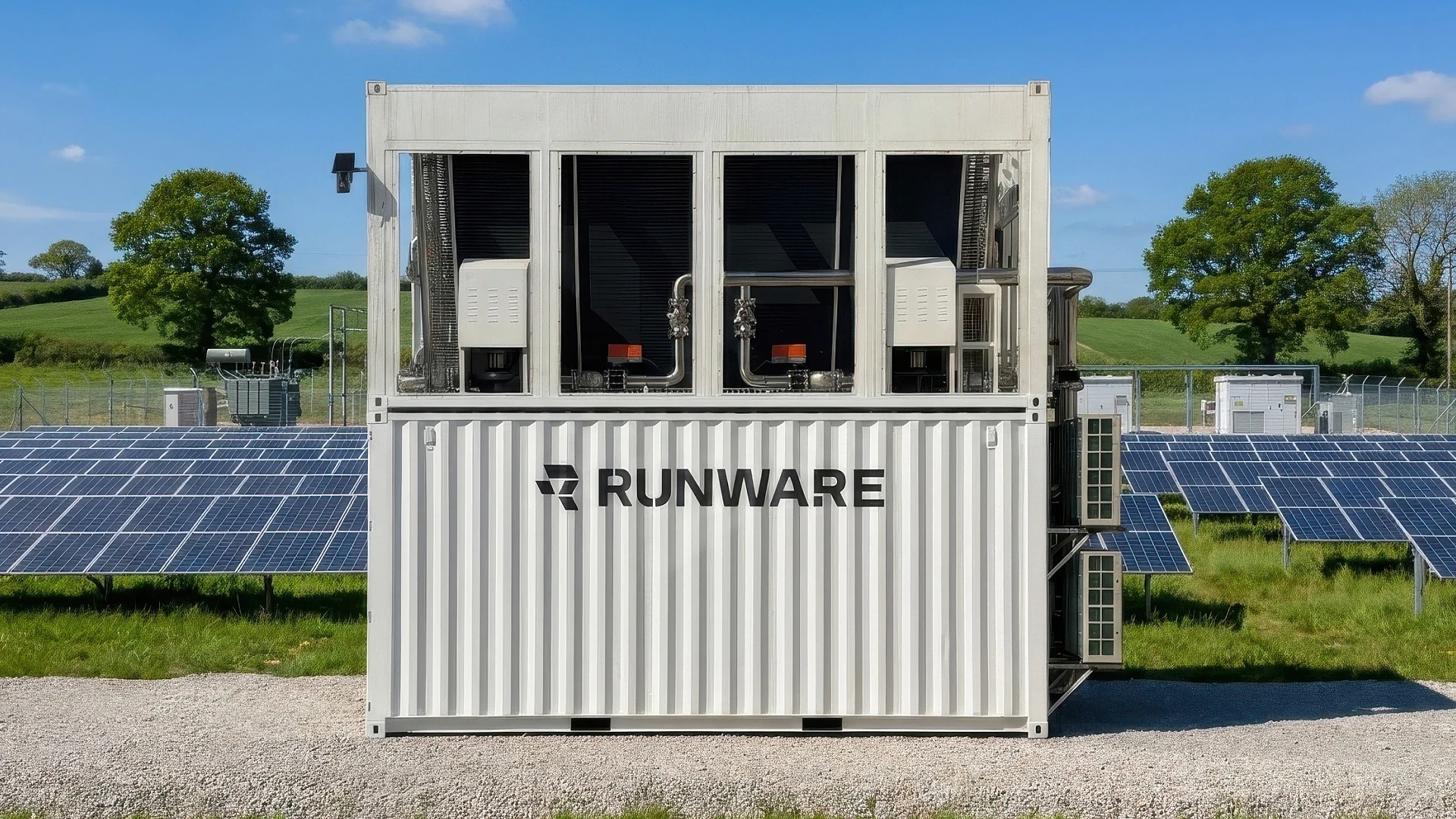
Runware Serverless runs on Sonic Pods, modular AI data centres we design, build and operate ourselves. Up to 1,200 directly liquid-cooled GPUs in a 20 ft container, with no oversized building, no overbuilt redundancy and no years of sunk cost in front of them. Every component inside exists to serve inference, so you pay for GPU time rather than someone else's overhead.
Lower bill, no GPU platform to run. Here's what moving to Runware looked like for teams shipping at production scale.
How a leading AI video platform unlocked new product capabilities by replacing expensive managed providers with a single, cost-effective inference API.
How OpenArt achieved sub-second image generation at scale with Runware's Sonic Engine.

How a fast-growing video generation startup deployed a major model release in hours.
How NightCafe scaled their AI art community without hiring a single infrastructure engineer.
Yes, for both halves. Runware Serverless runs your own containers or Python on GPUs that scale from zero to production capacity and back, billed per second, which is the shape of a Baseten dedicated deployment. The same account calls open LLMs per token through an OpenAI-compatible endpoint, which is the shape of Baseten's Model APIs, and adds 400K+ image, video, audio and 3D models.
An H100 is $6.50 per hour on Baseten and $3.95 on Runware Serverless, 39% lower with no commitment on either side; across the 2 GPUs both of us sell the saving is 39–40%. Reserved, on a 1 to 24 month term, the same H100 is as low as $2.45, 62% lower. Baseten prices are from baseten.co/pricing on 11 Oct, 2026, converted from per-minute to per-hour; Runware prices are our published Serverless rates.
Bring the container. Truss packages a Baseten model as a Docker image, and Runware Serverless deploys any image that binds a port, answers POST for each endpoint and serves a readiness route, declared in a container.yaml beside the Dockerfile. GPU type and worker limits are flags on the deploy. The container guide covers the contract, and our engineers help teams migrate.
Of the models on Baseten's Model API list, Runware serves gpt-oss-120b, DeepSeek-V4.1-Flash, GLM-5.2, DeepSeek-V4-Flash-0731, GLM-5.3, GLM-5.3-Flash and Kimi K3 per token through an OpenAI-compatible endpoint, with Claude, Gemini and GPT on the same key. GLM-5.3 Fast, GLM-5.2 Fast, DeepSeek V4.1 Flash Fast, DeepSeek V4 Pro 0813 and NVIDIA Nemotron 3 Ultra are not on Runware today; if you need one of them, get in touch. The full list is in the model directory.
No. Serverless bills by the second while a worker is allocated to your app. With the minimum worker count at zero an idle app costs nothing, and time spent waiting for a GPU, pulling your image or recovering from a failure on our side is not metered. Holding workers warm with a minimum worker count is billed at the Serverless rate for as long as they are held.
Serverless draws workers from the shared pool and bills by the second while a worker holds a GPU, with no commitment. Reserved commits you to a number of GPUs of a given type for a 1 to 24 month term at a lower rate, and those GPUs stay yours even when the pool is full. Anything above the reservation bursts into Serverless. Most production teams reserve a baseline and burst above it.
Reserved GPUs start as low as $2.45 per GPU-hour on a 1 to 24 month term, and anything above the reservation bursts into Serverless. Volume token pricing is a conversation too.