70% off Wan3.0 Standard and 50% off Wan3.0 Prime. Try Wan3.0
Keep AWS.Move the GPUs.
At Runware, we build our own modular data centers for AI workloads, so the same NVIDIA GPUs cost up to 63% less than on EC2 and SageMaker.
AWS GPU pricing vs Runware, per GPU-hour
RTX PRO 600096 GB
as low as
$0.63No AWS block
The same GPU on AWS
- EC2 Capacity BlocksNot available
H10080 GB
as low as
$2.4559% less
The same GPU on AWS
- EC2 Capacity Blocksp5.48xlarge$5.97
H200141 GB
as low as
$3.0062% less
The same GPU on AWS
- EC2 Capacity Blocksp5en.48xlarge$7.90
B200180 GB
as low as
$5.4961% less
The same GPU on AWS
- EC2 Capacity Blocksp6-b200.48xlarge$14.21
A new breed of modular data center
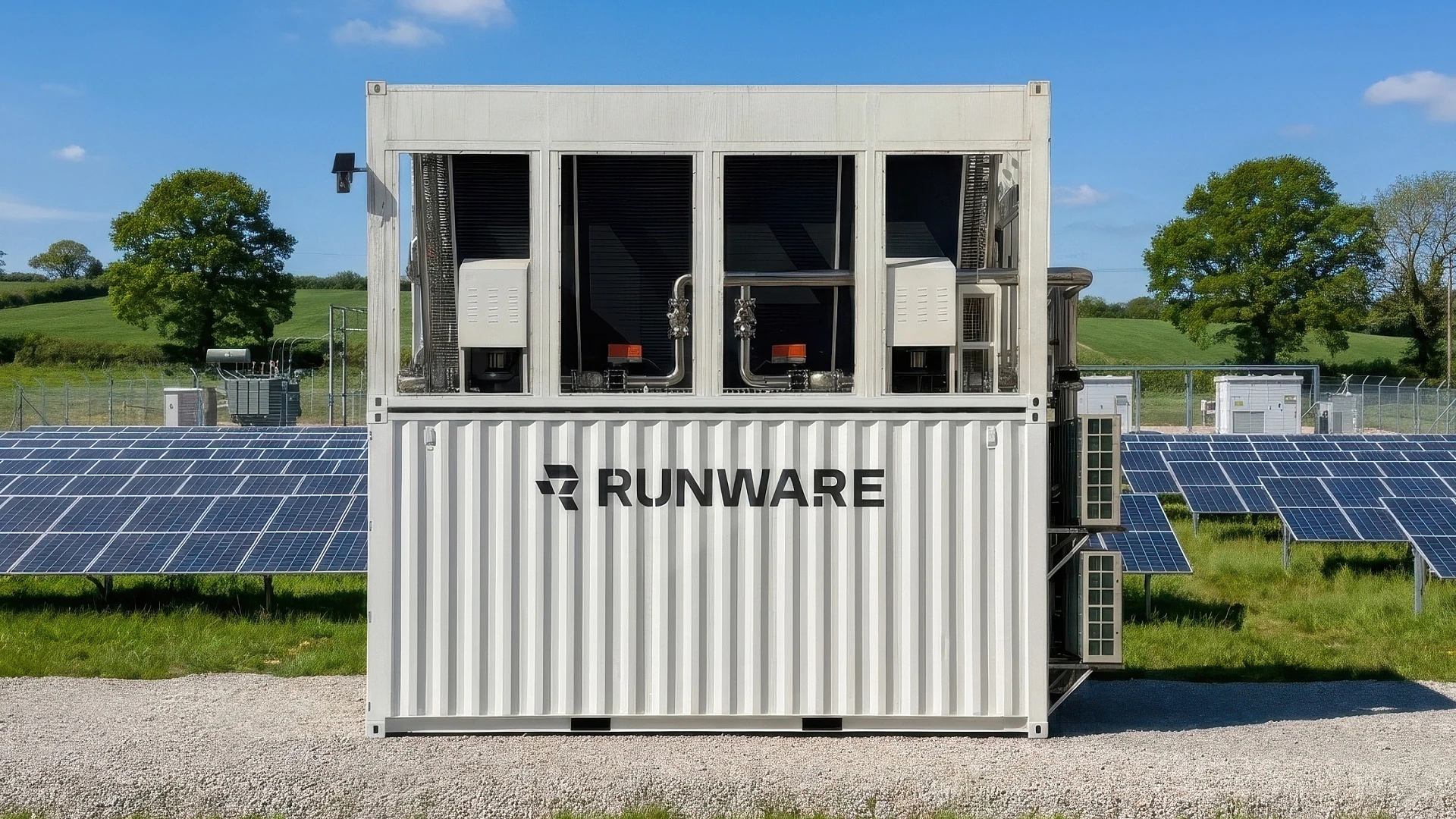
The lower rate comes from the building. A Sonic Pod is a complete AI data center in a 20 ft container. We build one in about three weeks, set it down where power is cheap and have it live in days.
- Uptime, in production since Q1 2026
- 100%
- Liquid-cooled GPUs per pod
- Up to 1,200
- Across 4 sites in the US
- 600 MW+
- Across 5 sites in Europe
- 2 GW+
What replaces what
Move one workload at a time. S3, RDS and the rest of your account stay where they are.
On AWS: SageMaker endpoints
On Runware: Serverless on demand
Your container image on the GPU you choose. Billed by the second and scaled to zero when traffic stops.
ServerlessOn AWS: EC2 Capacity Blocks
On Runware: Serverless reserved
GPUs held for you for 1 to 24 months. Anything above the reservation runs on demand.
Reserved ratesOn AWS: EC2 GPU instances
On Runware: GPU Compute
Bare-metal HGX B300, GB300 NVL72 and RTX PRO 6000 systems, reserved for 2 to 4 years. You run your own stack and Runware operates the hardware.
GPU ComputeOn AWS: Amazon Bedrock
On Runware: Models API
Claude, GPT, Kimi and GLM, paid by the token, on the same key as every major image, video and audio model.
Models API
Hardware sets the price.Software sets the bill.
Runware's platform starts workers fast, scales them to zero and meters them by the second, so you pay for the GPU-hours you use.
Fast cold starts
A worker's memory and processes are snapshotted, and models load from a filesystem built for it. Coming back from zero skips most of the warm-up.
01 · Start
Scale to zero
Workers follow traffic up to 1,000 GPUs and back down to none. An app with no requests holds no GPU and costs nothing.
02 · Scale
No fleet to run
Runware places each worker on the GPUs it asked for, routes requests to it and replaces it when it fails. One GPU or several per worker.
03 · Schedule
Paid by the second
GPU time is metered by the second while a worker runs. The console shows workers, queue depth, errors and cost for every app.
04 · Meter
Bedrock alternative
Need the model, not the GPU?
Claude, GPT, Kimi and GLM are on the Models API, on the same key as every major image, video and audio model. You pay per token or per output, and closed models cost what their makers charge.
Bring your AWS bill
Tell us the GPUs and hours you run today. An engineer will price the same workload on Runware, on demand or reserved.
What happens next
- You send the GPUs, regions and scale you run today.
- An engineer checks fit and capacity, then replies with a rate.
- You start with an onboarding or a short proof of concept.
Frequently asked questions
Is Runware an AWS alternative?
For GPUs and models, yes. Runware rents GPUs by the second or for a term and serves models through an API, which covers what teams run on EC2 GPU instances, SageMaker endpoints and Bedrock. It does not replace S3, RDS or the rest of your AWS account.
How do Runware GPU prices compare with EC2 and SageMaker?
Reserved, an H100 is as low as $2.45 an hour on Runware against $5.97 on EC2 Capacity Blocks. On demand it is $3.95 against $6.88 on EC2 on-demand and $7.91 on SageMaker real-time. Across the GPUs on this page, Runware is 59–62% lower reserved and 41–63% lower on demand. AWS figures are list prices for US East (N. Virginia) from the EC2 on-demand, Capacity Blocks and SageMaker pricing pages, checked 06 Nov, 2026. Where an instance has eight GPUs, its price is divided by eight. Spot and Savings Plans rates are not included. Runware's rates are on the Serverless rate card.
Do I need to request GPU quota?
Not per instance type. You request Serverless access once from your dashboard, and we check fit and capacity before turning it on for the workspace. After that you set your own worker limits. Reserved GPUs are held for you for the whole term.
What replaces a SageMaker endpoint?
A Serverless app running your container image. It scales with traffic, drops to zero when idle and bills by the second. See Serverless.
Is Runware a Bedrock alternative?
For the models, yes. Claude, GPT, Kimi and GLM are on the Models API with one key, next to image, video and audio models. Closed models cost what their makers charge. See the LLM API.
Who owns the GPUs?
Runware does. We design, build and operate the Sonic Pods they run in, with 600 MW+ across 4 sites in the US and 2 GW+ across 5 sites in Europe. A reservation sits on hardware we own. See Sonic Pods.