Engineering leaders from NVIDIA, OpenAI, and NetApp join Runware
Senior hires from NVIDIA, OpenAI, and NetApp take over Runware's infrastructure and security, with further senior additions from Amazon Web Services and Juniper Networks.
Three senior engineering leaders have joined Runware's team: Risto Haukioja from NVIDIA as Head of Infrastructure Engineering, Matti Oikarinen from OpenAI as Chief Information Security Officer, and Matt Baldwin from NVIDIA as Principal Engineer, AI Infrastructure. All three are based in the US and give us a real engineering presence in the Bay Area for the first time.
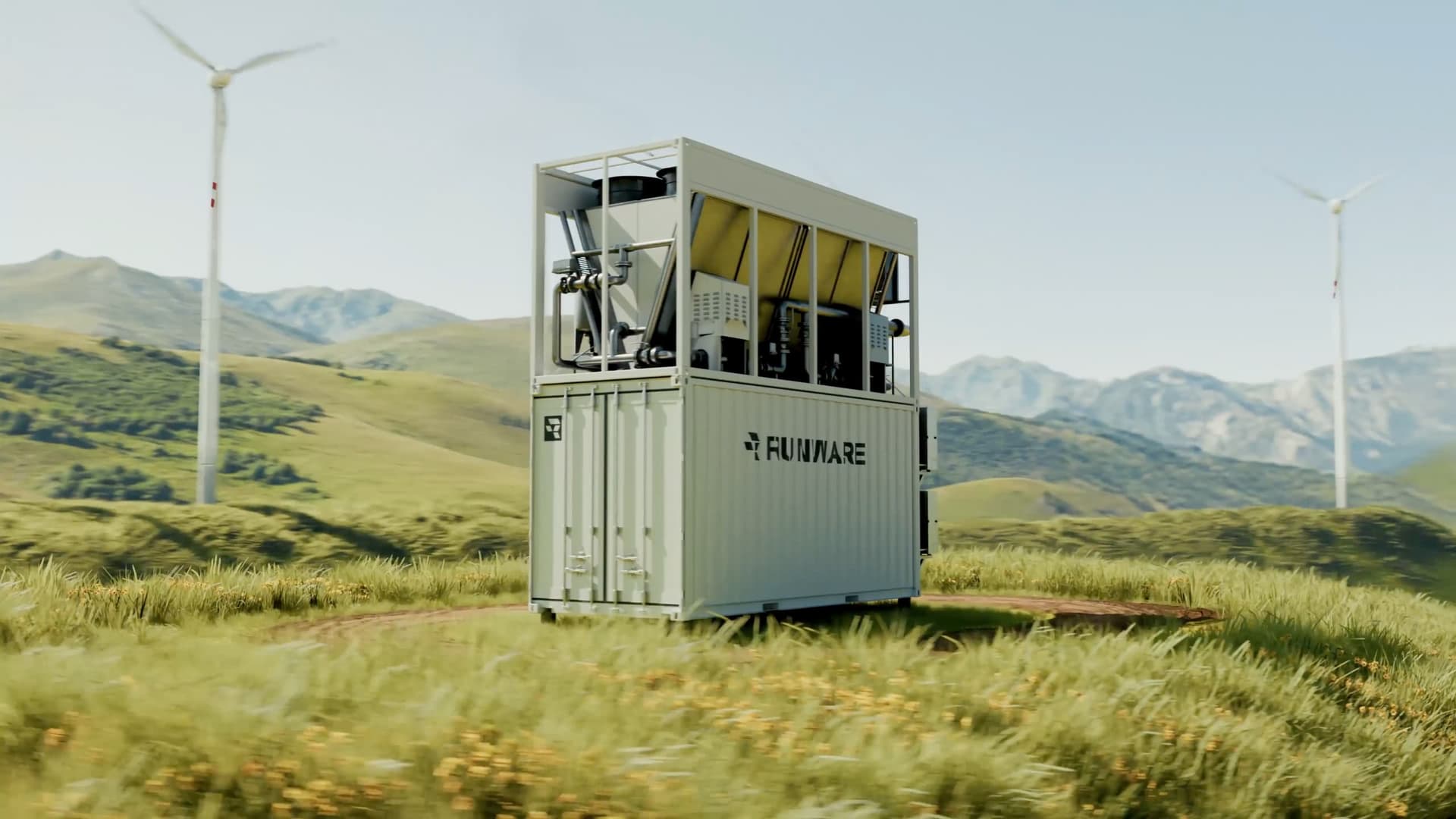
Two weeks ago at GTC Berlin, NVIDIA announced the DSX POD reference design: complete AI data centers built in shipping containers, tested in the factory, and installed at a prepared site in days rather than months. Runware was featured on stage among the AI companies "building the next industrial revolution." This is the approach we've been building towards from the start, and we're one of the earliest to market with a fully working, productionized version. Sonic Pods, our modular containerized data centers, have been running our own inference in production since Q1 2026 with 100% uptime.
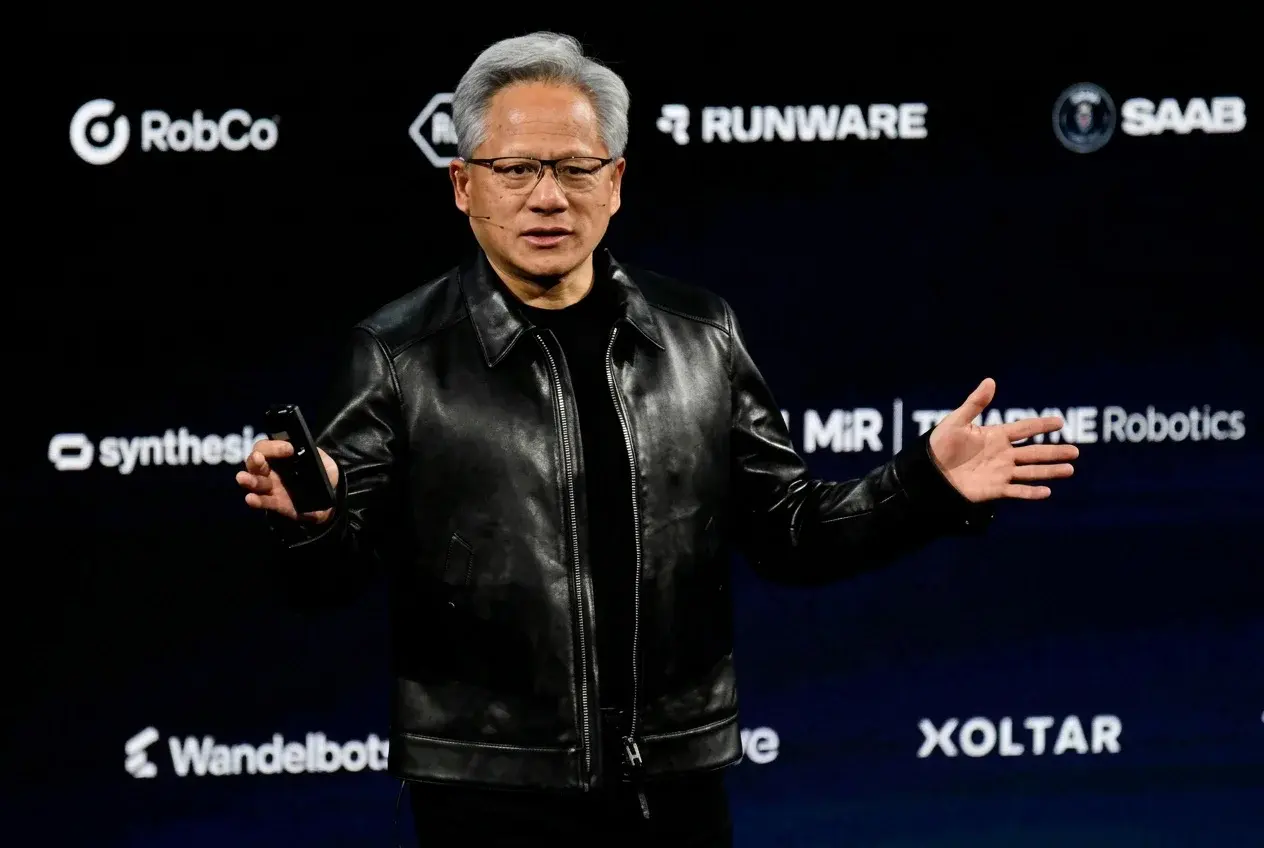
NVIDIA CEO Jensen Huang at GTC Berlin, October 2026, with Runware among the partners featured.
Last week we unveiled the factory that turns this into a production line: a 50,000-square-meter campus in Europe that will build 1MW and 2MW Sonic Pods on an assembly line at up to 30 megawatts of capacity a day from Q1 2027, supporting NVIDIA Vera Rubin reference architectures including DSX POD. It's one of the fastest validated routes to getting GPUs into production anywhere, and it's what lets us offer compute at around half the cost of a conventional neocloud and an order of magnitude below the hyperscalers. Runware Serverless already puts that capacity in developers' hands from $0.63 per GPU-hour, and dedicated compute on Sonic Pods is open to reserve now.
The approach is validated and the factory is coming. The job now is rolling it out across Europe and the US, and running a large distributed GPU fleet reliably, orchestrating workloads across it, and securing it to the standard enterprise customers expect. That takes people who have done it before at the companies that defined how this industry builds. So we've brought in some of the most senior infrastructure leaders in the US: between them they've built NVIDIA's inference microservices platform, run the control plane for NVIDIA's own GPU data centers, founded and sold a Kubernetes company, and worked on security at OpenAI.
Risto Haukioja, Head of Infrastructure Engineering
Risto spent the last eight years at NVIDIA as a senior engineering leader focused on AI inference. His most recent project was NVIDIA NIM, the inference microservices platform, where he built and led the performance engineering teams that take models from research into production at scale.
His career goes back more than 20 years, including large-scale enterprise systems work at Hewlett Packard on both sides of the Atlantic and an early stint in cloud computing, where he co-authored Cloud Computing Architected: Solution Design Handbook (2011). He's also co-founded three software companies, so he knows what it's like to build from zero as well as inside a large organization. He holds a master's degree from Aalto University in Helsinki.
At Runware, Risto leads the engineering behind the systems that run and manage our GPU infrastructure. His job is to turn a rapidly expanding hardware footprint into a reliable, high-performance platform.
Matti Oikarinen, Chief Information Security Officer
Matti joins us from OpenAI, where he worked on frontier AI security. Before that he held senior roles at Goldman Sachs (Managing Director), Yahoo (VP Architect and Distinguished Engineer), Amazon (Principal Software Engineer, and an architect of AWS Elastic File System), and Nokia (Chief Architect). That's more than two decades building and securing large platforms in some of the most demanding environments in the industry, backed by an extensive patent portfolio.
At Runware, Matti leads information security. As more enterprise customers move production workloads onto our platform, his focus is on strengthening our security foundations, meeting their requirements, and making sure the platform earns the trust that running at this scale demands.
Matt Baldwin, Principal Engineer, AI Infrastructure
Matt joins from NVIDIA, where he was Director of Engineering for large-scale Kubernetes across DGX Cloud. His teams built the control plane that runs NVIDIA's GPU data centers, which is the same class of problem we're solving as our own fleet grows.
Before NVIDIA, Matt founded StackPointCloud in Seattle in 2014, a platform for deploying and managing Kubernetes across the major public clouds. He bootstrapped it to more than 10,000 users before NetApp acquired it in 2018, then became NetApp's Director of Cloud Native Engineering and Chief Kubernetes Architect, where he created and led the NetApp Kubernetes Service.
At Runware, Matt is applying that background directly to deploying, orchestrating, and scaling the infrastructure that powers the platform.
Also joining
Risto's team has also added a Senior Staff Engineer, Infrastructure Systems with more than 30 years in networking and systems software, including at Juniper Networks. They join a leadership team that already includes a Head of Partnerships from Amazon Web Services and founders who spent two decades building bare-metal infrastructure for the likes of Vodafone, Booking.com, and Transport for London.
What this means for the platform
We've spent two years proving that a small team can build and run its own GPU infrastructure and redefine what the compute layer for AI costs: a new kind of cloud running on modular data centers, at half the price of a neocloud and a fraction of what the hyperscalers charge. The next phase is scale: more modular data centers, more customers running dedicated and serverless compute on them, and a fleet that has to behave like a single reliable platform rather than a collection of machines.
Risto, Matt, and the wider infrastructure team own the systems that make that happen: orchestration, scheduling, lifecycle management, and performance across the whole fleet. Matti makes sure it's secure enough for the enterprises already moving production workloads onto it.
NVIDIA has now put its name behind the modular, factory-built approach. We're already building it. Our mission is to power the world's intelligence, and these hires are how we go from being early to being the team that runs this architecture at scale, on both sides of the Atlantic.
If you're building on Runware, nothing changes for you today except that the platform underneath you is in very experienced hands. If you'd like to join them, we're hiring across infrastructure and engineering.

Written by
Runware
Runware Team
The Runware team builds the infrastructure powering the next generation of AI applications. We write about AI models, APIs, developer tooling, and the latest in generative AI.
More posts by RunwareKeep reading

Runware unveils AI factory to build modular AI data centers just like cars
Runware's new European factory will build complete, AI-native data centers on an assembly line: 1MW and 2MW Sonic Pods, up to 30MW a day, 10GW a year, from Q1 2027.