ImagineArt 2.0
Request
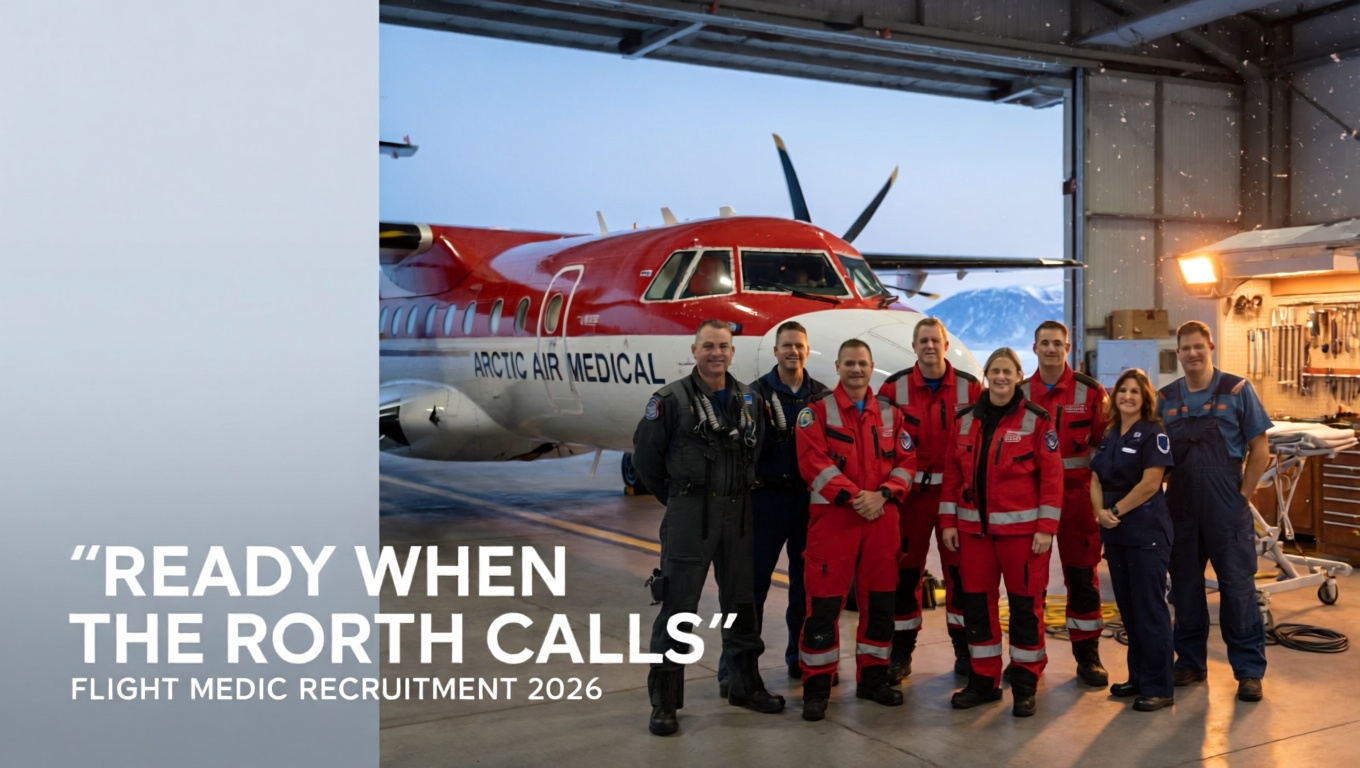
Create a finished landscape recruitment banner for an Arctic air-ambulance service, photographed with polished editorial realism. Show an established seven-person emergency aviation crew standing together inside a working aircraft hangar beside a red-and-white twin-engine turboprop medical plane. Seamlessly incorporate the newest team member into the group: a female flight paramedic in her early 30s wearing a clean red rescue suit with reflective silver bands, positioned center-right among the other six staff as if she was present in the original portrait. Match her scale, eye line, stance, lens perspective, soft shadows and cool hangar lighting perfectly to the group. Everyone must look distinct and naturally connected, with relaxed confident expressions and subtle shoulder overlap. Include two pilots, three additional paramedics, a flight nurse and a mechanic, with credible uniforms and equipment. No duplicated faces, floating figures or obvious compositing artifacts. The open hangar reveals a pale blue Arctic dawn, distant snow-covered mountains and windblown ice crystals. Warm work lights illuminate tool cabinets, stretcher hardware, coiled cables and the aircraft's brushed metal details, creating a refined contrast of glacier blue, crisp white, signal red and small amber highlights. Use a wide 35mm documentary composition, crew occupying the right two-thirds, full figures visible, aircraft wing and propeller framing them without obscuring faces. Reserve clean atmospheric space on the left for strong campaign typography. Render this exact headline in large, highly legible condensed white sans-serif capitals on two lines: “READY WHEN THE NORTH CALLS”. Beneath it, render the exact smaller line: “FLIGHT MEDIC RECRUITMENT 2026”. The typography should feel professionally typeset and integrated into the image, with correct spelling and no extra words. Add restrained aircraft fuselage lettering reading exactly “ARCTIC AIR MEDICAL”. Premium annual recruitment campaign photography, authentic human anatomy, realistic fabric textures, precise environmental text, balanced commercial composition, no logos, no buttons, no interface, no watermark.
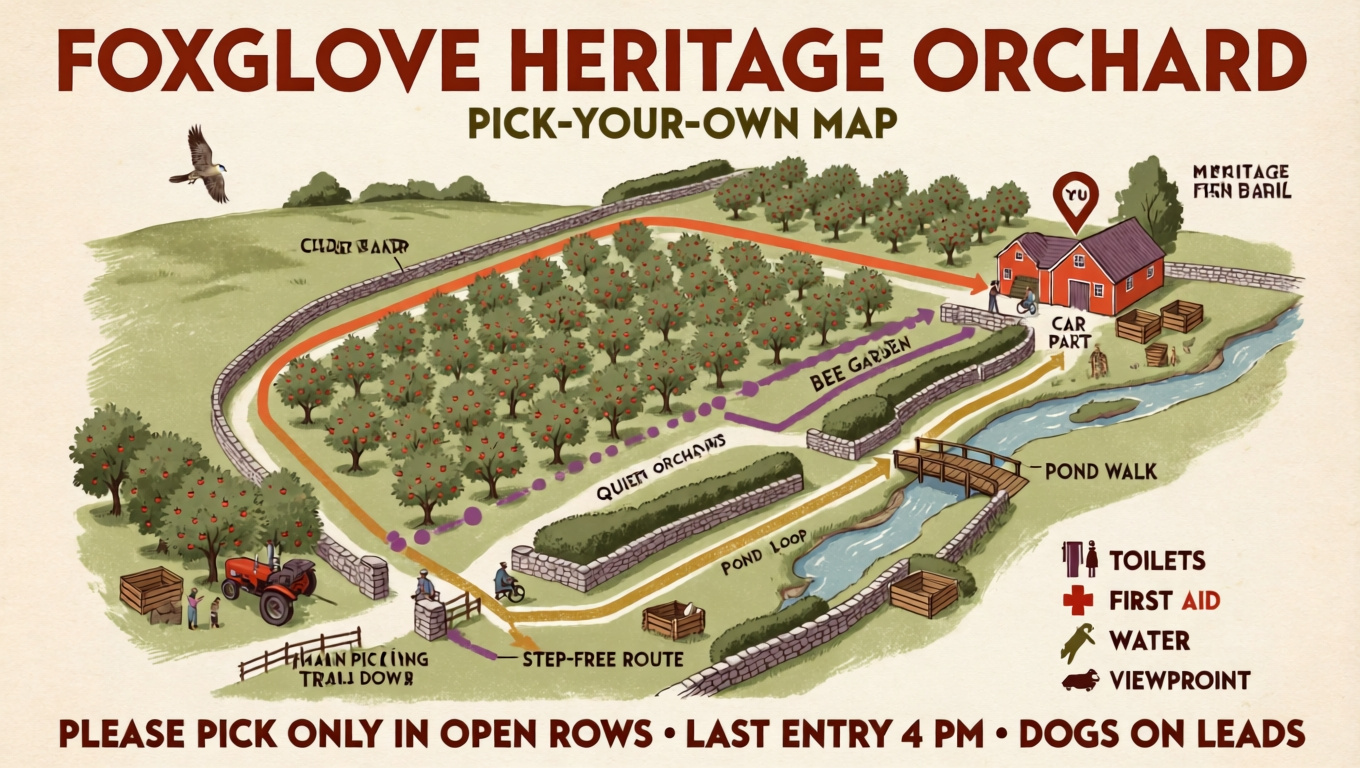
Create the finished flat artwork for a public-facing visitor wayfinding sign at a heritage apple orchard, composed in a clear 16:9 landscape format. This is the sign artwork itself, not a photograph or mockup. Art direction: contemporary information design blended with a 1930s agricultural lithograph, crisp screen-printed shapes, subtle paper grain, warm cream ground, persimmon red, orchard green, muted plum, golden yellow and dark brown ink. Across the top, set a strong, perfectly legible title: “FOXGLOVE HERITAGE ORCHARD” with the smaller subtitle “PICK-YOUR-OWN MAP”. Below, create a charming oblique illustrated site map with neat rows of fruit trees, tiny apples visible among the leaves, low stone walls, hedgerows, a winding creek, footbridges and gently rolling terrain. Make the layout geographically convincing and easy to scan. Label these destinations clearly in clean uppercase lettering: “FARM SHOP”, “CIDER BARN”, “PICNIC MEADOW”, “HERITAGE ROWS”, “FAMILY ORCHARD”, “QUIET ORCHARD”, “BEE GARDEN”, “POND WALK” and “CAR PARK”. Place a bold “YOU ARE HERE” marker beside the Farm Shop entrance. Show three clearly differentiated routes integrated into the map: a solid persimmon line for “MAIN PICKING TRAIL”, a dotted plum line for “POND LOOP”, and a wide golden line for “STEP-FREE ROUTE”. Include a compact legend in the lower right with those exact three route names plus simple, readable icons for “TOILETS”, “FIRST AID”, “WATER” and “VIEWPOINT”. Add a small but legible information strip along the bottom reading: “PLEASE PICK ONLY IN OPEN ROWS • LAST ENTRY 4 PM • DOGS ON LEADS”. Use decorative details purposefully: a small kestrel over the meadow, wooden picking crates, a red orchard tractor and a few restrained human figures for scale, including a wheelchair user on the step-free path. Maintain strong visual hierarchy, generous spacing, accurate typography, clean label placement and high contrast. No extra wording, no logos, no QR codes, no UI elements, no frame, no wall, no perspective distortion.
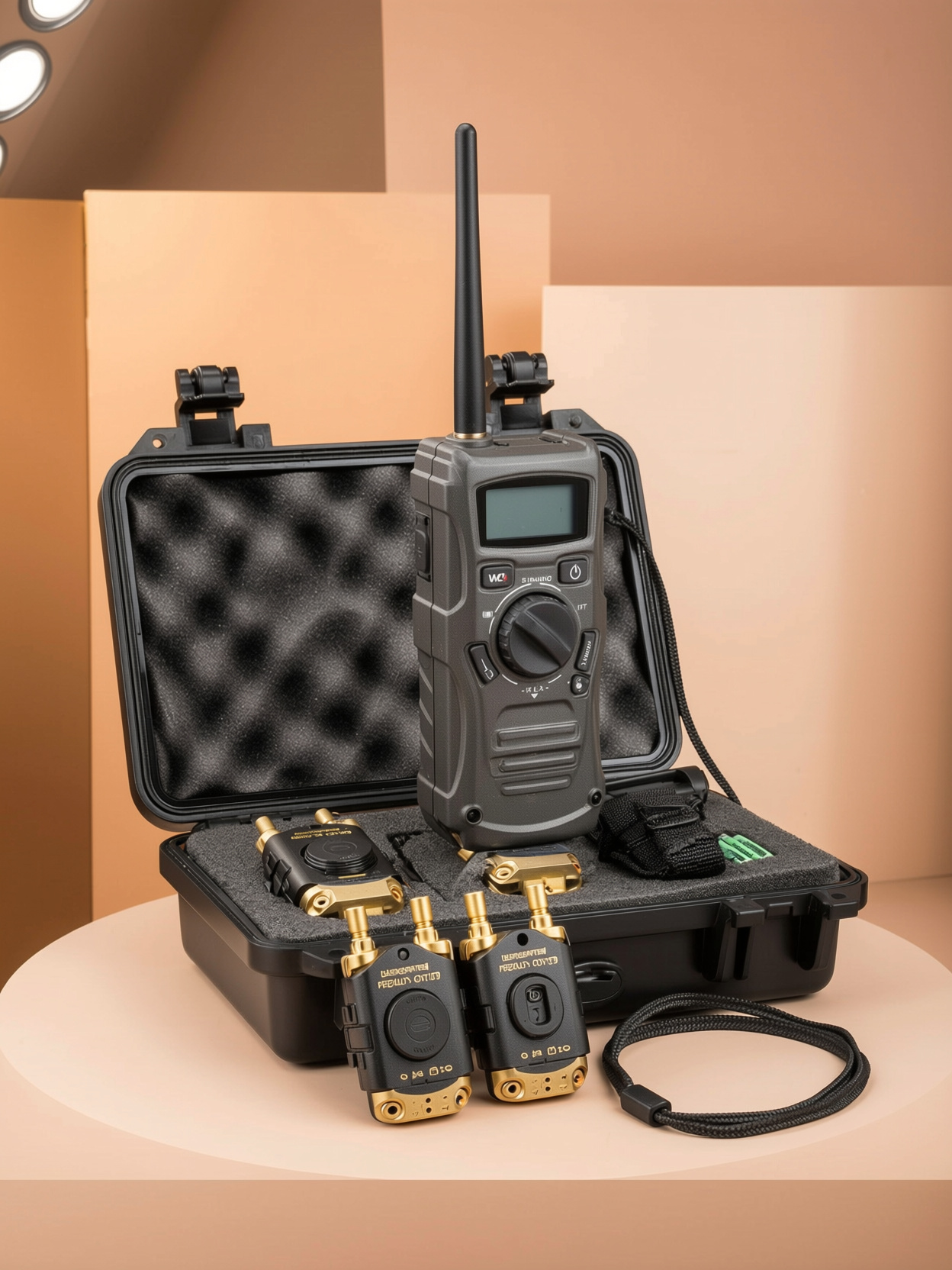
Create one finished premium ecommerce hero packshot for a professional falconry telemetry bundle, using both reference images as complementary product references. Preserve the distinctive shape, proportions, rugged graphite housing, antenna, dial and lanyard of the handheld receiver from reference 1. Preserve the open fitted case, two miniature transmitters, charging dock, straps and spare batteries from reference 2. Arrange everything as one coherent retail bundle: receiver standing at a slight three-quarter angle as the dominant central object, antenna rising diagonally within the portrait frame; open accessory case placed lower and slightly behind; two small accessories removed from their slots and aligned neatly in front to clarify what is included. Warm pale sandstone seamless background with a matching matte pedestal, restrained graphite, brass and muted signal-orange palette. Crisp high-end catalog photography, large softbox from upper left, narrow rim light, controlled natural shadows, accurate metal and polymer textures, sharp edges, realistic scale, clean separation between every component. Portrait 3:4 composition with generous breathing room, front-facing product visibility, polished but practical expedition-equipment mood. No people, birds, outdoor scenery, dust, packaging graphics, logos, labels, legible text, duplicate components or decorative props.
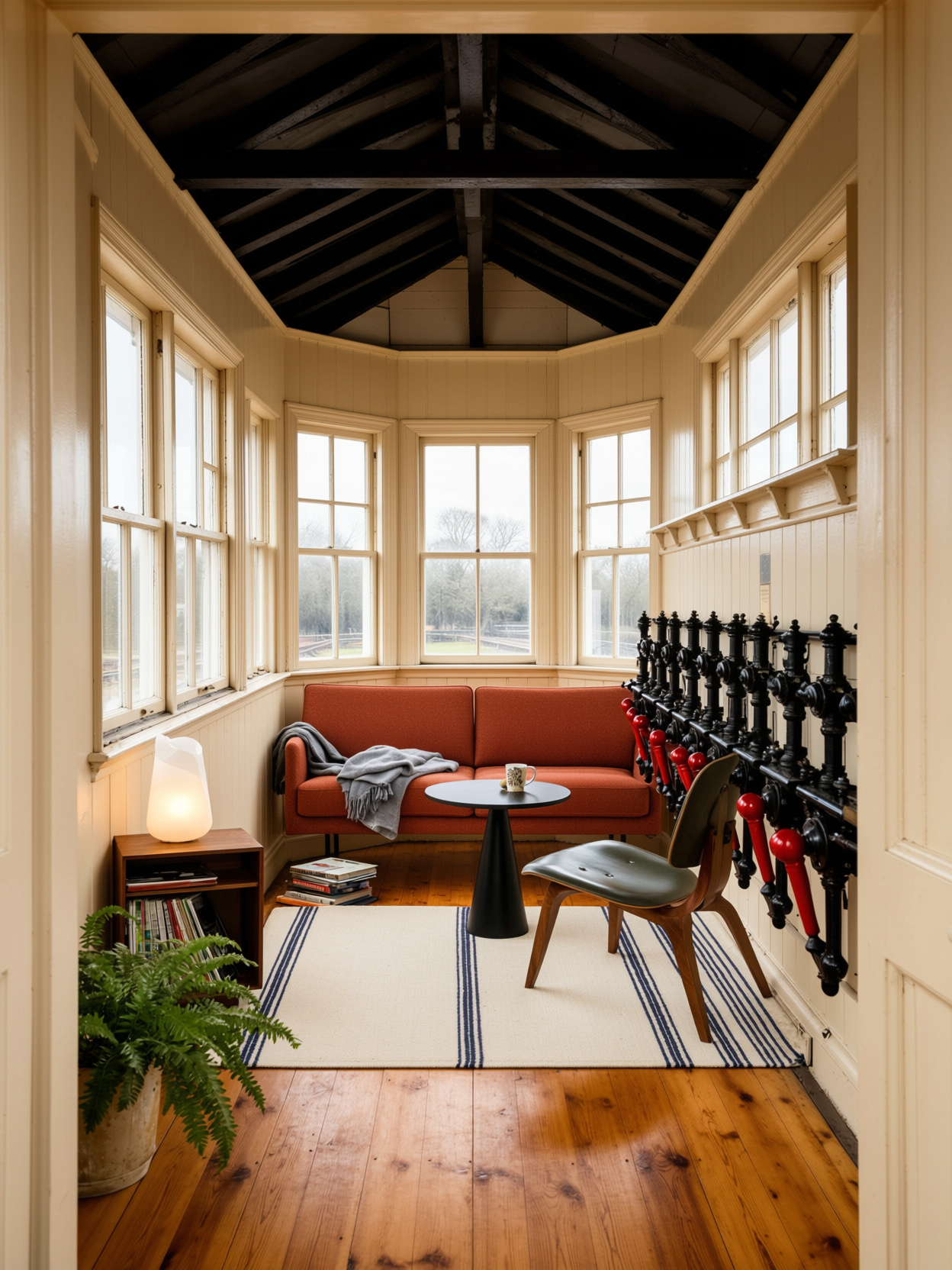
Create a finished, ultra-photorealistic vertical real-estate listing photograph of the converted heritage railway signal box. Use reference image 1 as the exact architectural source: preserve its room proportions, doorway viewpoint, wraparound multi-pane windows, cream-painted timber walls, honey pine floorboards, dark exposed roof trusses, and the complete vintage black-and-red signal lever frame along the right wall. Do not alter, remove, duplicate, or cover the heritage controls. Use reference image 2 as the furnishing and material reference, virtually staging the vacant room with that same rust wool two-seat sofa, dark olive bent-plywood lounge chair, round black pedestal table, slim walnut record cabinet, cream rug with narrow navy stripes, and opal-glass floor lamp. Arrange the compact furniture believably in the open left and central floor area, maintaining generous circulation from the doorway and a clear working aisle beside the levers. The sofa should face inward rather than blocking the windows; place the record cabinet beneath a window where it fits naturally. Add only restrained lived-in details: one folded charcoal throw, two ceramic cups, a small stack of railway-history books, and a healthy potted fern. Soft bright overcast morning light enters from three sides, producing natural window reflections, gentle shadows, and a calm welcoming atmosphere. Show glimpses of green countryside and railway tracks outside, softly focused so the interior remains primary. Professional adaptive-reuse property photography, realistic wood grain, aged painted joinery, wool upholstery, glass and metal, balanced exposure, neutral true-to-life color, subtle HDR without an artificial look. Eye-level camera near the doorway, approximately 24mm tilt-shift lens, corrected verticals, deep but natural focus, spacious portrait composition. No people, no signage, no captions, no logos, no fisheye distortion, and no structural additions.