GPT Image 1
Request
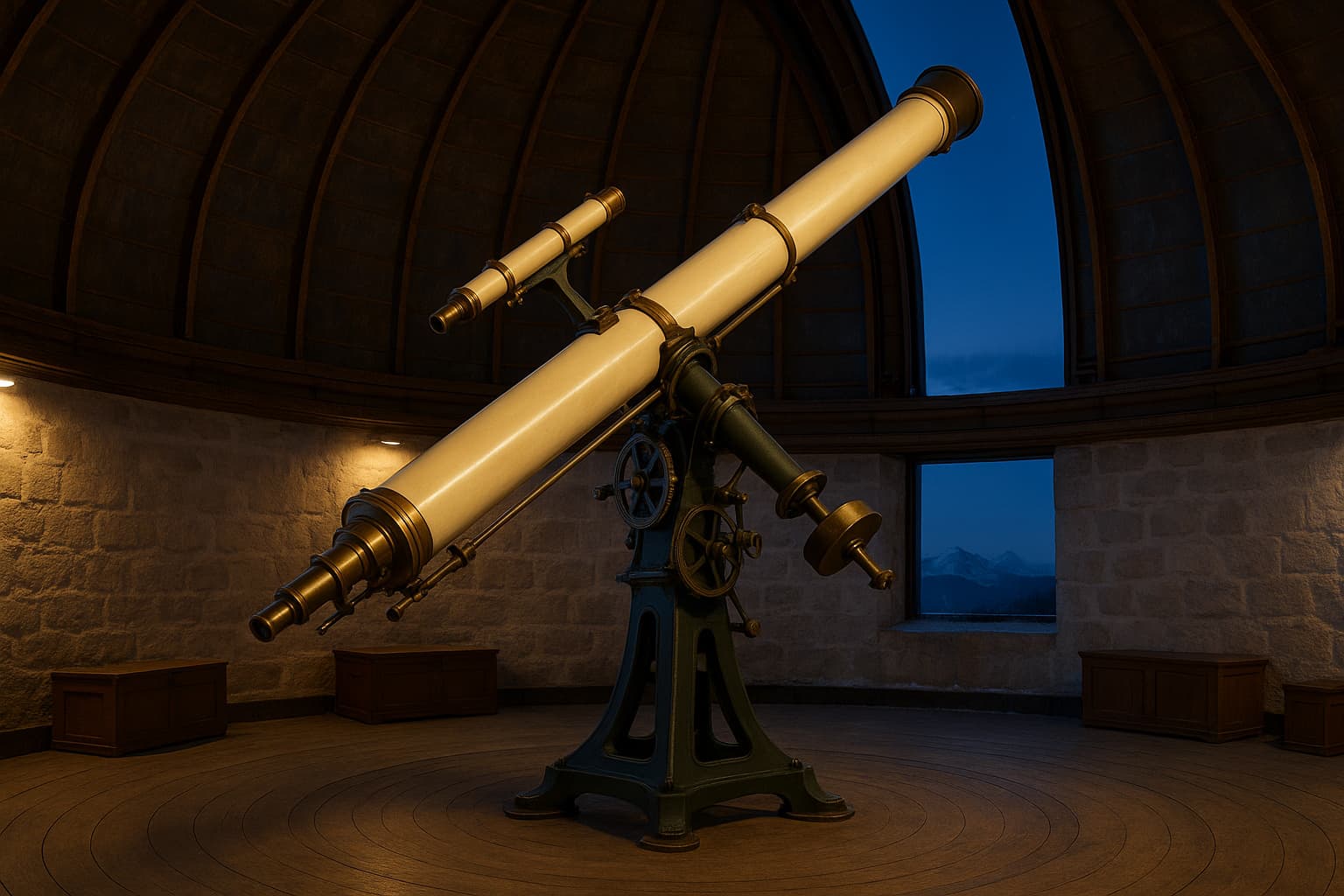
Create a production-ready, photorealistic wide landscape hero image for a scientific heritage foundation. The preserved hero subject is a meticulously restored late-19th-century brass refracting telescope: a long cream-painted optical tube with polished brass fittings, a large glass objective lens, small finder scope, focusing wheels, and an imposing dark green cast-iron German equatorial mount with authentic engraved setting circles, counterweights, gears, and hand controls. Present the telescope as though a clean catalog photograph of this exact subject has been expertly placed into a completely new environment while retaining crisp construction details, accurate proportions, clean edges, and its distinctive patina. Replace the implied studio background with the interior of a restored stone mountaintop observatory at blue hour. Include a weathered copper-lined rotating dome, curved timber ribs, a narrow open observation slit, limewashed stone walls, a worn circular oak floor, discreet conservation lighting, and a few historically plausible wooden instrument cases at the perimeter. Through the open dome slit, show a cold indigo sky above a distant alpine ridge, with only subtle natural stars rather than an exaggerated fantasy galaxy. A faint trace of windblown snow rests outside the threshold, but the interior remains dry and carefully maintained. Compose for a 3:2 landscape canvas. Position the telescope slightly left of center, its tube rising diagonally toward the upper-right opening in the dome. Show the entire mount and enough surrounding floor to establish scale. Preserve generous architectural space on the right for editorial cropping, without adding text. Use restrained cinematic documentary art direction: cool cobalt ambient light entering through the slit, warm low tungsten conservation lamps grazing the brass and green ironwork, believable contact shadows beneath the mount, subtle reflections on polished metal, and consistent perspective and depth of field so the subject feels physically present in the room. Rich but natural palette of oxidized copper, deep bottle green, aged brass, limestone gray, oak brown, and twilight blue. Quiet, scholarly, aspirational mood. Highly realistic materials, museum-grade historical detail, no people, no logos, no labels, no captions, no border, no collage seams, and no surreal celestial effects.
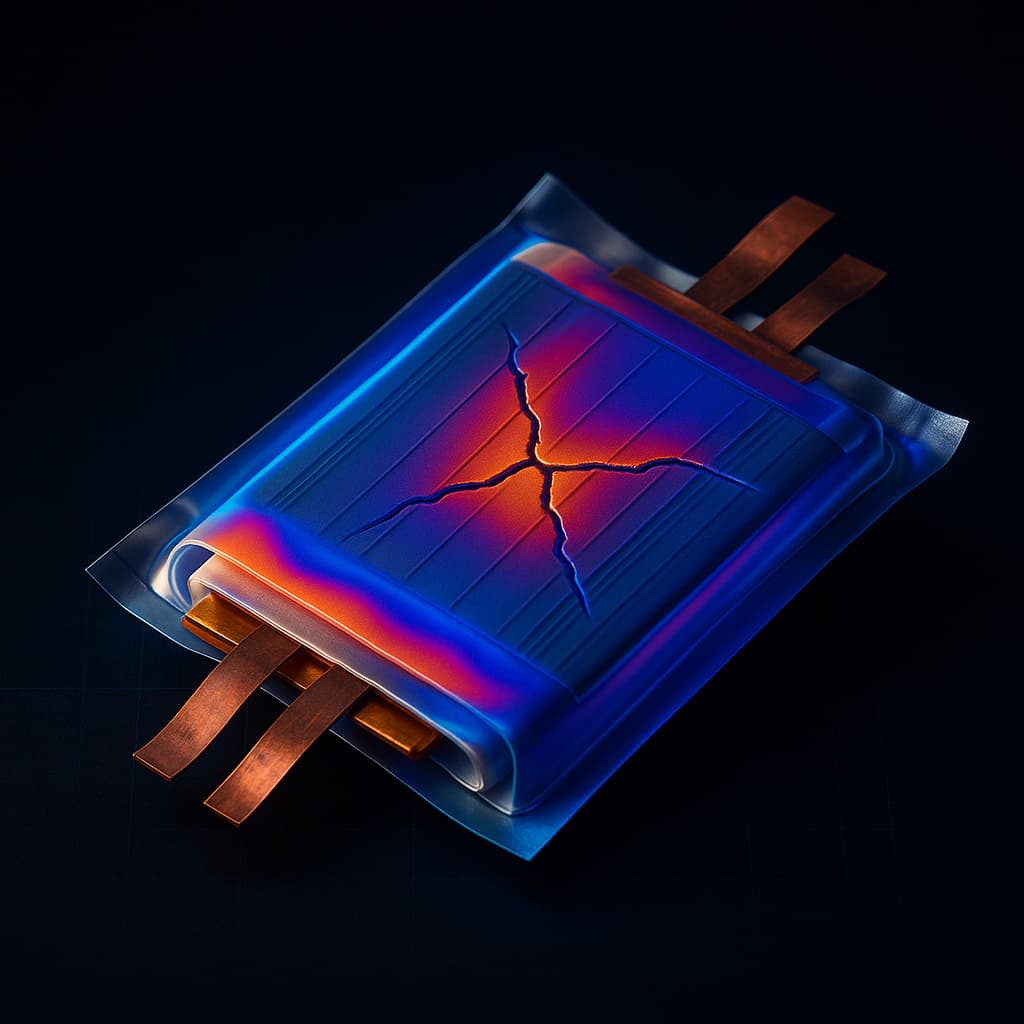
Create a polished square blog hero image for a respected engineering publication covering the investigation of failure patterns inside solid-state batteries. Use reference image 1 to preserve the recognizable battery subject: retain the opened pouch cell's overall three-quarter orientation, layered electrode construction, ceramic separator, copper tabs, and distinctive branching fracture. The cell should remain physically credible and look like a real laboratory specimen rather than a futuristic prop. Use reference image 2 only as the visual and color-direction reference: translate its coral, amber, violet, and electric-blue thermal contour bands into a diagnostic heat map that appears to emanate from the fracture and travel through the battery layers. Do not copy any object or composition from reference image 2. Compose for immediate thumbnail readability in a 1024x1024 square. Make the opened cell large and dominant, entering from the lower left and pointing toward the upper right. Place the branching crack near the optical center as the clear focal point. Surround it with controlled darkness and ample uncluttered negative space, especially in the upper-left quadrant, so an editor could add a headline later. Show a few separated layers curling upward at the cut edge to clarify the internal construction, with realistic thin materials and exact industrial detail. Render the thermal colors as a restrained scientific overlay integrated with the specimen: hottest white-amber at the fracture origin, coral and violet contours spreading outward, then fading into cool electric blue. Add only a few subtle floating dust particles and faint measurement-grid traces in the background for laboratory atmosphere. Art direction: premium investigative science journalism, cinematic macro product photography combined with accurate diagnostic visualization. Near-black charcoal backdrop, crisp edge lighting, soft cool fill, controlled specular highlights on metal foil, shallow but sufficient depth of field, tactile ceramic and metallic textures, sophisticated high contrast, clean editorial finish. No people, hands, tools, flames, smoke, explosion, logos, labels, interface elements, charts, captions, or embedded text. Deliver one finished standalone image, not a website or device mockup.
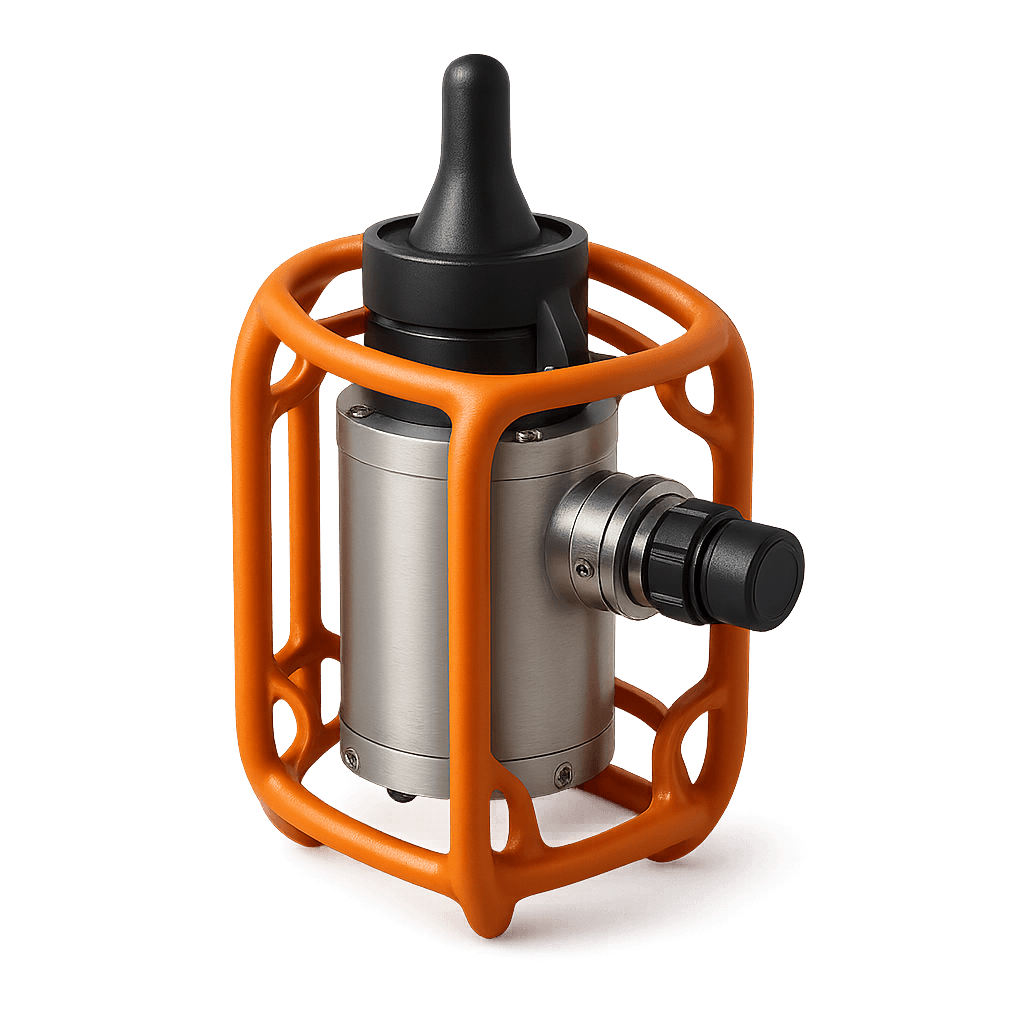
Create a high-end isolated product visualization of one compact oceanographic conductivity-temperature-depth sensor used for deep-sea research. The instrument has a cylindrical pressure-rated titanium body, a protective open cage of matte safety-orange struts, a black ceramic sensor head, small stainless fasteners, and one neatly capped wet-mate connector. Plausible marine engineering with precise construction and realistic materials. Three-quarter front view at a slight downward angle, entire device visible, centered in a square composition with generous even clearance on every side. Crisp continuous silhouette, clean edges, sharp professional catalog detail, controlled studio highlights on titanium, subtle material texture, accurate proportions, no visible branding, no labels, no lettering. Exactly one self-contained product and nothing else: no mounting platform, cable, water, bubbles, seabed, scenery, border, pedestal, floor, cast shadow, or background objects. Transparent background outside the product, suitable as a reusable production cutout.
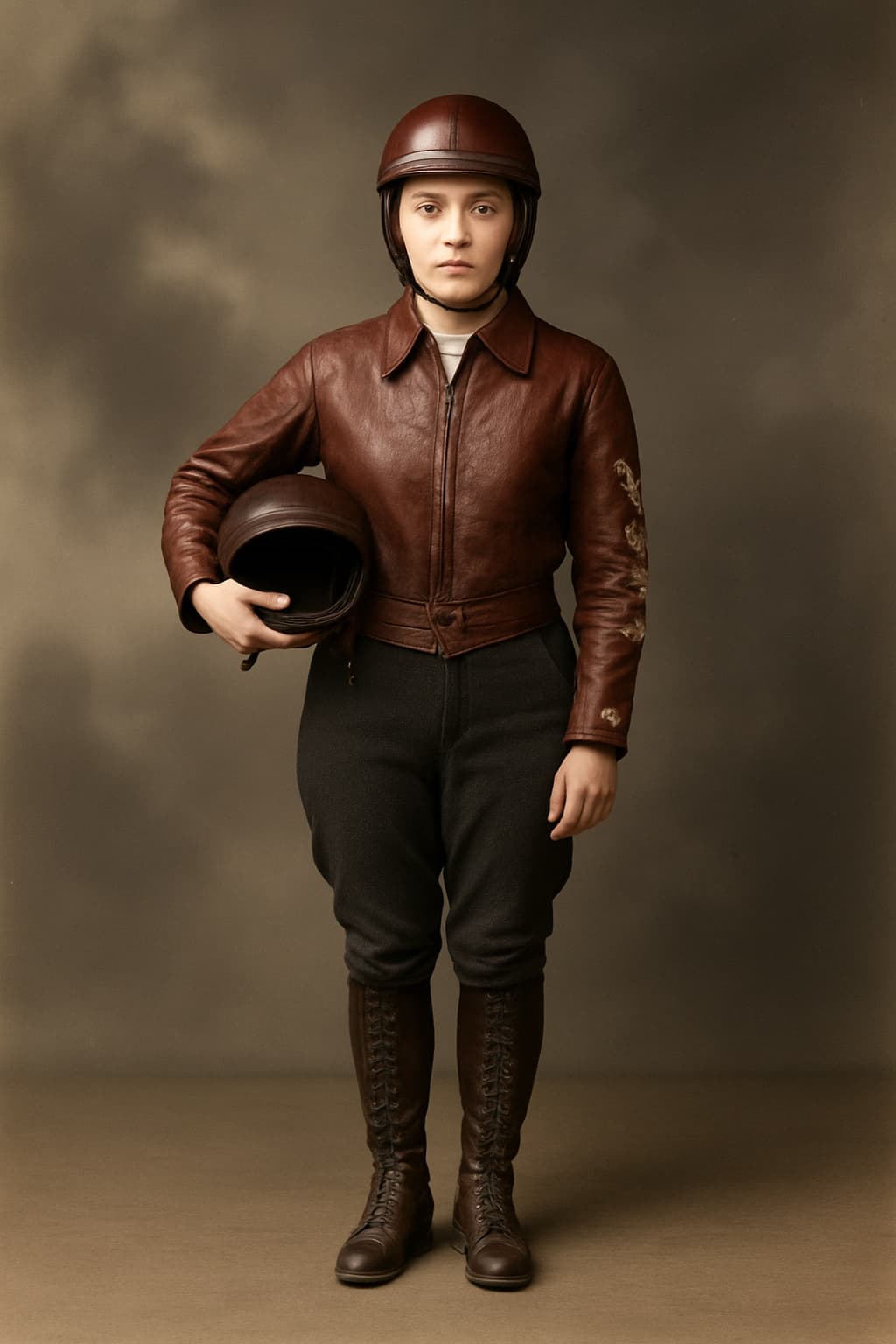
Create a meticulous archival restoration and historically informed colorization of the masked wall-of-death rider in the supplied 1920s studio portrait. Transform the entire masked figure while preserving her exact identity, expression, pose, proportions, silhouette, clothing construction and position. Repair the fold crossing her face and torso, reconstruct the missing photographic emulsion on her sleeve and boot, remove scratches and dust from the figure, and recover natural facial detail without beautifying or modernizing her. Restore anatomically correct hands, believable leather seams, period fastenings and the original worn texture of the riding clothes. Colorize only the masked rider in restrained, research-based tones: weathered oxblood-brown leather jacket and helmet, charcoal wool jodhpurs, dark brown lace-up boots, aged brass buckles, a muted cream blouse, natural fair skin with subtle outdoor weathering, and auburn-brown hair. Keep saturation modest and tonal relationships faithful to the source photograph. The result should look like expert museum photo conservation followed by delicate hand colorization, not a newly photographed reenactment. Preserve the surrounding mottled studio canvas exactly as it appears in the reference: unchanged composition, monochrome sepia-gray color, texture, grain, illumination, shadows and period wear. Do not replace, clean, recolor or extend the background. Maintain authentic silver-gelatin grain, gentle 1920s lens softness and the original directional studio lighting across the restored figure. Seamlessly integrate all repairs at the mask boundary. No added objects, motorcycle, scenery, frame, caption, watermark or text.